

Posted on March 17 2026
Top 10 Countries for Caregivers to Work Abroad: Salary, Demand & PR Opportunities Compared

By , Editor
Updated March 17 2026
The top countries for caregivers to work abroad include Canada, the United Kingdom, Australia, Germany, Ireland, New Zealand, Japan, Switzerland, Singapore, and the United Arab Emirates. These countries offer strong demand for caregivers, stable job opportunities in aged care and home care services, and competitive salaries compared to many other regions.
Global demand for caregivers is rising rapidly due to aging populations and increasing long-term care needs. The World Health Organization estimates a global shortage of around 10 million health and care workers by 2030, while the number of people aged 65 and older is expected to double worldwide by 2050. As a result, many countries are expanding international recruitment and offering work visas, employer-sponsored permits, and pathways to permanent residency for qualified caregivers.
*Want to work abroad? Sign up with Y-Axis Resume Marketing Services to find right job faster.
How to Choose the Best Country for Caregiver Jobs Abroad?
When choosing a country for caregiver jobs abroad, it is important to consider several key factors. Different countries offer varying levels of job demand, salary, and visa opportunities for international caregivers. Understanding these factors can help you select the best destination for long-term career growth.
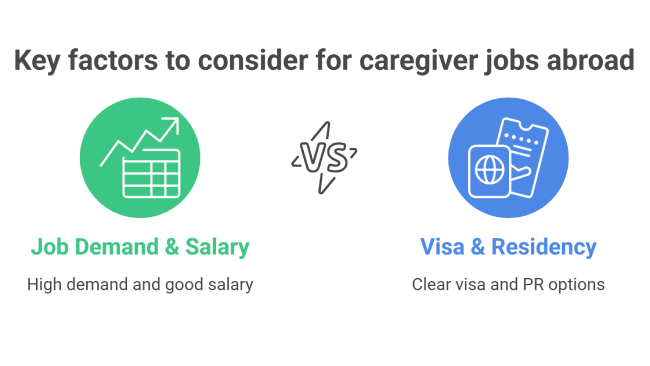
Some of the key factors to consider for caregiver jobs abroad:
- Job Demand: Choose countries with strong demand for caregivers due to aging populations.
- Salary and Cost of Living: Compare salaries with living costs to understand real earning potential.
- Work Visa Options: Look for countries offering clear work visas and employer-sponsored permits.
- Permanent Residency Pathways: Some countries offer PR options after gaining work experience.
- Training and Language Requirements: Check caregiving qualifications and language requirements before applying.
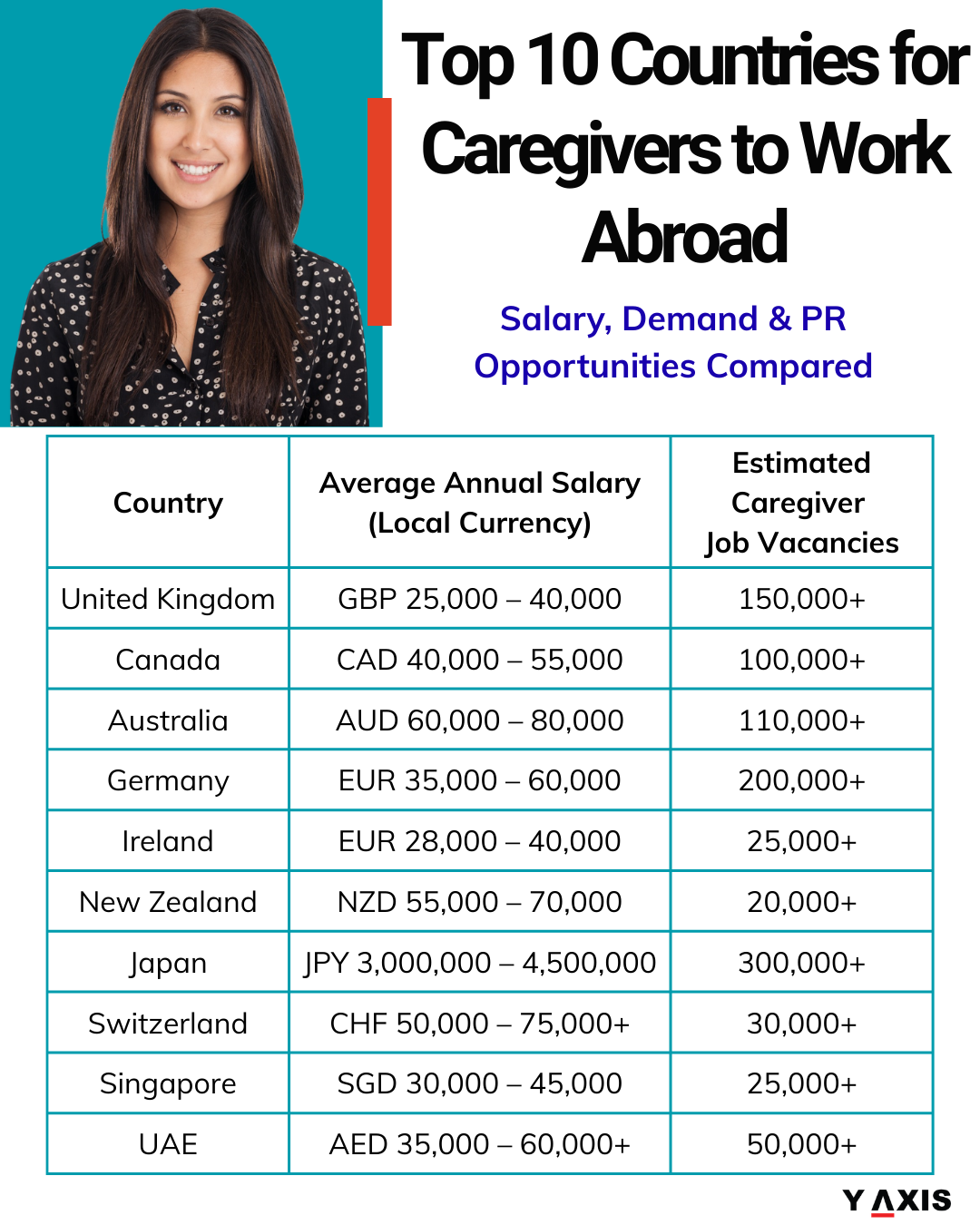
Top 10 Highest-Paying Countries for Caregiver Jobs Abroad
The highest-paying countries for caregiver jobs abroad include Switzerland, Australia, Germany, Canada, and New Zealand, where roles such as personal care assistants, home support workers, and elderly care aides can earn over $30,000 to $70,000 per year globally. Demand for caregivers is rising rapidly due to aging populations and increasing long-term care needs. Experts estimate that OECD countries could face a shortage of around 13.5 million care workers by 2040, driving stronger international recruitment.
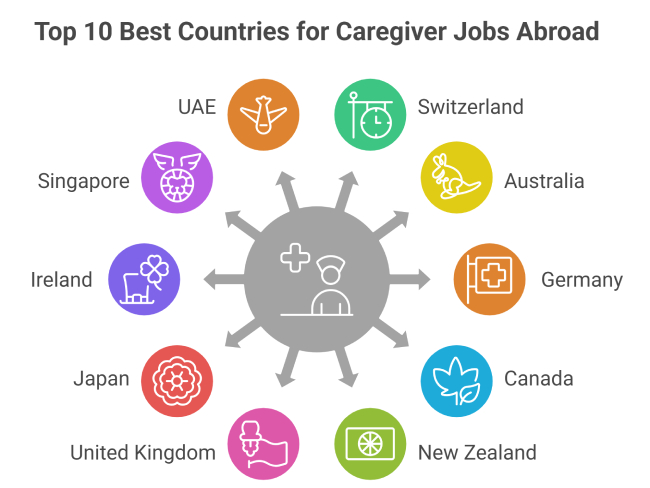
Many countries also offer visa sponsorship, employer-supported work permits, health insurance, and pathways to permanent residency, making caregiver jobs abroad attractive for long-term career opportunities.
Some of the highest-paying countries for caregiver jobs abroad include:
|
Country |
Average Annual Salary (Local Currency) |
Estimated Caregiver Job Vacancies |
|
United Kingdom |
GBP 25,000 – 40,000 |
150,000+ |
|
Canada |
CAD 40,000 – 55,000 |
100,000+ |
|
Australia |
AUD 60,000 – 80,000 |
110,000+ |
|
Germany |
EUR 35,000 – 60,000 |
200,000+ |
|
Ireland |
EUR 28,000 – 40,000 |
25,000+ |
|
New Zealand |
NZD 55,000 – 70,000 |
20,000+ |
|
Japan |
JPY 3,000,000 – 4,500,000 |
300,000+ |
|
Switzerland |
CHF 50,000 – 75,000+ |
30,000+ |
|
Singapore |
SGD 30,000 – 45,000 |
25,000+ |
|
UAE |
AED 35,000 – 60,000+ |
50,000+ |
Best Countries for Caregivers to Work and Settle Abroad
The best countries for caregivers to work and settle abroad include Canada, Australia, Germany, the United Kingdom, and New Zealand, where strong demand for elderly care workers creates stable job opportunities. Many of these countries face growing workforce shortages in aged care, with thousands of caregiver vacancies expected over the next decade due to aging populations. Countries such as Canada and Australia also offer clear permanent residency pathways, making them attractive destinations for caregivers seeking long-term careers and settlement abroad.
Some of the top countries offering caregiver jobs with opportunities to work and settle abroad include:
Caregiver Jobs in Canada
Canada is one of the best countries for caregiver jobs abroad due to strong demand in its expanding aged care and healthcare job market. With a rapidly aging population, caregivers are increasingly needed in private homes, nursing facilities, and community care services. Many employers recruit international workers by offering caregiver jobs with visa sponsorship and relocation support to help address workforce shortages.
Caregivers in Canada can earn more than CAD 55,000 per year, particularly in roles such as personal support worker (PSW), home support worker, live-in caregiver, and elderly care assistant. Canada offers fast-track hiring options such as employer-sponsored work permits and clear immigration pathways to permanent residency through category-based Express Entry draws and Provincial Nominee Programs (PNPs), making it an attractive destination for long-term caregiver careers abroad.
|
Factor |
Details |
|
Caregiver Job Market & Vacancies for Next Decade |
Canada’s care sector remains stable with strong demand, with over 100,000 caregiver vacancies expected over the next decade due to workforce shortages across long-term care homes, home care services, and community health support. |
|
Investment in Healthcare & Long-Term Care |
Canada is increasing healthcare and long-term care investment, including up to $14.3 million for workforce initiatives and nearly $200 billion in healthcare funding over 10 years, supporting aged care expansion and workforce development. |
|
In-Demand Caregiver Roles & Skills |
Caregivers, personal support workers (PSWs), home support workers, healthcare aides, and disability support workers. Key skills include elderly care, patient support, mobility assistance, and communication. |
|
Work Visa Options for Caregivers |
Employer-specific work permits, Express Entry pathways, and Provincial Nominee Programs (PNPs) are common routes for international caregivers. |
|
Fast-Track Hiring Options |
Category-based Express Entry draws and provincial healthcare recruitment streams often prioritise caregivers and healthcare support workers. |
|
PR / Long-Term Residence Opportunities |
Permanent residence is available through Express Entry and Provincial Nominee Programs, with healthcare and caregiver roles often prioritised. |
|
Licensing / Training Requirements |
Many caregiver roles require Personal Support Worker (PSW) training or equivalent healthcare aide certification, depending on the province. |
|
Language Requirements |
English or French proficiency is required, typically demonstrated through approved language tests such as IELTS or TEF. |
|
Eligibility for Dependents |
Work permits and PR programs generally allow spouses and dependent children to accompany the applicant. |
|
Benefits for Family Members |
Family members may receive spouse work rights, access to public healthcare, and public education for children. |
*Want to Work in Canada? Let Y-Axis guide you through application process.
Caregiver Jobs in the United Kingdom
The United Kingdom is one of the top destinations for caregiver jobs abroad due to strong demand in its healthcare and social care sector. With an aging population and ongoing workforce shortages, caregivers are widely needed in nursing homes, assisted living facilities, and home care services. Many care providers actively recruit international workers by offering caregiver jobs with visa sponsorship through the Health and Care Worker visa, helping fill critical roles across the country.
Caregivers in the UK can earn more than GBP 40,000 per year, particularly in roles such as care assistant, senior care worker, support worker, and home care assistant. The UK job market offers fast-track hiring options and also clear immigration pathways for long-term employment, and experienced caregivers may eventually qualify for settlement (Indefinite Leave to Remain) after meeting residency requirements. This makes the UK a popular destination for international caregiver careers.
|
Factor |
Details |
|
Caregiver Job Market & Vacancies for Next Decade |
The UK care sector remains stable with strong demand, with over 150,000 caregiver and care worker vacancies expected over the next decade due to workforce shortages across nursing homes, community care services, and home care providers. |
|
Investment in Healthcare & Social Care |
The UK invests over £200 billion annually in the NHS and social care sector, supporting hospitals, community care services, digital health systems, and workforce expansion, driving strong demand for caregivers and healthcare staff. |
|
In-Demand Caregiver Roles & Skills |
Care assistants, senior care workers, home care assistants, support workers, and community care workers. Key skills include elderly care, patient support, mobility assistance, and communication. |
|
Work Visa Options for Caregivers |
Health and Care Worker Visa, Skilled Worker Visa, and UK employer-sponsored work visas are the most common pathways for international caregivers. |
|
Fast-Track Hiring Options |
The Health and Care Worker Visa offers faster processing and lower visa fees for eligible care occupations. |
|
PR / Long-Term Residence Opportunities |
Care workers may become eligible for Indefinite Leave to Remain (ILR) after completing the required residence period in the UK. |
|
Licensing / Training Requirements |
Most caregiver roles do not require licensing, but employers often prefer Level 2 or Level 3 Health and Social Care qualifications or equivalent experience. |
|
Language Requirements |
English proficiency is required, usually demonstrated through IELTS or other approved English tests for visa applications. |
|
Eligibility for Dependents |
Skilled work visas generally allow spouses and dependent children to accompany the primary applicant. |
|
Benefits for Family Members |
Family members may receive spouse work rights, access to public education, and NHS healthcare, depending on visa conditions. |
* Want to Work in the UK? Let Y-Axis guide you through the steps.
Caregiver Jobs in Australia
Australia is one of the major destinations for caregiver jobs abroad due to strong demand in its growing aged care and disability support sectors. With a rapidly aging population, caregivers are increasingly needed in residential aged care facilities, community care services, and private homes. Many employers recruit international workers to address workforce shortages, offering caregiver jobs with visa sponsorship and relocation support.
Caregivers in Australia can earn more than AUD 80,000 per year, particularly in roles such as aged care worker, personal care assistant, disability support worker, and home care worker. Australian job market offers fast-track hiring options and also clear immigration pathways through skilled migration programs and employer-sponsored work visas. With strong demand, competitive salaries, and permanent residency opportunities, Australia remains a popular destination for caregivers seeking work abroad.
|
Factor |
Details |
|
Caregiver Job Market & Vacancies for Next Decade |
Australia’s aged care job market remains stable with strong demand, with over 110,000 caregiver and aged care worker vacancies projected over the next decade due to the country’s aging population and expansion of home and residential care services. |
|
Investment in Aged Care & Healthcare |
Australia is increasing healthcare funding, with $140 billion allocated to the health system and $537 billion committed over four years, supporting aged care reforms, home care programs, and workforce expansion. |
|
In-Demand Caregiver Roles & Skills |
Personal care assistants, aged care workers, home support workers, and disability support workers. Key skills include elderly care, mobility assistance, patient support, and communication. |
|
Work Visa Options for Caregivers |
Skills in Demand Visa (482), Skilled Independent (189), Skilled Nominated (190), Employer Nomination Scheme (186), and Skilled Work Regional Visa (491). |
|
Fast-Track Hiring Options |
Employer-sponsored visas and state or territory nomination programs for priority aged care occupations. |
|
PR / Long-Term Residence Opportunities |
PR pathways through points-based visas (189/190), employer-sponsored PR (186), and regional pathways (491 leading to PR). |
|
Licensing / Training Requirements |
Many roles require Certificate III or IV in Individual Support (Aged Care or Disability) or equivalent training. |
|
Language Requirements |
English proficiency required, usually demonstrated through IELTS or equivalent tests. |
|
Eligibility for Dependents |
Skilled migration visas generally allow spouses and dependent children to accompany the applicant. |
|
Benefits for Family Members |
Spouse work rights, access to public education, and Medicare eligibility, depending on visa conditions. |
*Planning to Work in Australia? Let Y-Axis guide you through every step of the process.
Caregiver Jobs in Germany
Germany is one of the leading European countries for caregiver jobs abroad due to strong demand in its healthcare and elderly care sector. With one of the oldest populations in Europe, the country faces a growing shortage of caregivers in nursing homes, hospitals, and home care services. Many healthcare providers recruit international workers to fill these gaps, offering caregiver jobs with visa sponsorship and relocation support.
Caregivers in Germany can earn more than EUR 60,000 per year, especially in roles such as elderly care assistant, nursing assistant, home care worker, and care support worker. German job market provides fast-track hiring options and also clear immigration pathways through skilled worker visas and long-term residence permits. With stable employment, strong worker protections, and rising demand, Germany offers promising opportunities for international caregivers seeking careers abroad.
|
Factor |
Details |
|
Caregiver Job Market & Vacancies for Next Decade |
Germany’s care sector remains stable with strong demand, with over 200,000 caregiver vacancies expected over the next decade due to workforce shortages in nursing homes, home care services, and long-term elderly care facilities. |
|
Investment in Healthcare & Elderly Care |
Germany spends over €538 billion annually on healthcare and has launched a €50 billion Hospital Transformation Fund to modernise hospitals and expand care services by 2030, supporting workforce growth in healthcare and elderly care. |
|
In-Demand Caregiver Roles & Skills |
Caregivers, elderly care assistants, nursing assistants, and home care workers. Key skills include elderly care, patient support, mobility assistance, and communication. |
|
Work Visa Options for Caregivers |
EU Blue Card, Skilled Worker Visa, and employer-sponsored work visas are common pathways for international care workers. |
|
Fast-Track Hiring Options |
The Accelerated Skilled Worker Procedure (ASVP) allows faster visa processing and qualification recognition for eligible healthcare and care occupations. |
|
PR / Long-Term Residence Opportunities |
Skilled workers may become eligible for permanent residence after meeting residence duration and language requirements. |
|
Licensing / Training Requirements |
Many care roles require qualification recognition (Anerkennung) or vocational training in elderly care or nursing assistance. |
|
Language Requirements |
German language proficiency is typically required, usually B1–B2 level depending on the role. |
|
Eligibility for Dependents |
Skilled worker visas generally allow spouses and dependent children to accompany the applicant. |
|
Benefits for Family Members |
Family members may receive spouse work rights, access to public education, and comprehensive public healthcare coverage. |
*Want to Work in Germany? Let Y-Axis guide you through every step of the process.
Caregiver Jobs in Ireland
Ireland is becoming a popular destination for caregiver jobs abroad due to increasing demand in its healthcare and social care sectors. With a growing elderly population, caregivers are needed in nursing homes, residential care facilities, and home support services. Many healthcare providers recruit international workers to fill shortages, offering caregiver jobs with visa sponsorship and relocation support.
Caregivers in Ireland can earn more than EUR 40,000 per year, particularly in roles such as healthcare assistant, home care worker, support worker, and elderly care assistant. Ireland also offers employment work permits and potential pathways to long-term residence for eligible caregivers. With rising demand and stable job opportunities, Ireland is an attractive destination for caregivers seeking international work experience.
|
Factor |
Details |
|
Caregiver Job Market & Vacancies for Next Decade |
Ireland’s care sector remains stable with strong demand, with over 25,000 caregiver and care assistant vacancies expected over the next decade across nursing homes, home care services, and community health support. |
|
Investment in Healthcare & Social Care |
Ireland is making major healthcare investments, with €9.25 billion allocated under the National Development Plan and a €27.4 billion health budget, supporting hospital expansion, community care services, digital health, and workforce growth. |
|
In-Demand Caregiver Roles & Skills |
Healthcare assistants, care assistants, home care workers, disability support workers, and community care assistants. Key skills include elderly care, patient support, mobility assistance, and communication. |
|
Work Visa Options for Caregivers |
Critical Skills Employment Permit, General Employment Permit, and employer-sponsored work permits are common pathways for international caregivers. |
|
Fast-Track Hiring Options |
The Critical Skills Employment Permit offers faster processing for certain healthcare occupations. |
|
PR / Long-Term Residence Opportunities |
Workers may qualify for Stamp 4 (long-term residence) after meeting employment and residence requirements. |
|
Licensing / Training Requirements |
Many caregiver roles require Health Care Assistant training or QQI Level 5 Healthcare Support qualification or equivalent experience. |
|
Language Requirements |
English proficiency is required, typically demonstrated through IELTS or other recognised English tests. |
|
Eligibility for Dependents |
Employment permits usually allow spouses and dependent children to accompany the primary applicant. |
|
Benefits for Family Members |
Family members may receive spouse work rights, access to public education, and healthcare services, depending on permit conditions. |
*Want to Work in Ireland? Let Y-Axis guide you through application process.
Caregiver Jobs in New Zealand
New Zealand is a growing destination for caregiver jobs abroad due to strong demand in its aged care and community health sectors. With an aging population, caregivers are increasingly needed in residential care homes, retirement villages, and home support services. Many employers recruit international workers to fill shortages, offering caregiver jobs with visa sponsorship and relocation assistance.
Caregivers in New Zealand can earn more than NZD 70,000 per year, particularly in roles such as aged care worker, healthcare assistant, support worker, and home care assistant. The country also offers immigration pathways through Accredited Employer Work Visas and skilled residence programs. With stable employment and growing demand, New Zealand provides promising opportunities for caregivers seeking work abroad.
|
Factor |
Details |
|
Caregiver Job Market & Vacancies for Next Decade |
New Zealand’s aged care job market remains strong, with over 20,000 caregiver and aged care worker vacancies projected over the next decade due to workforce shortages across residential aged care facilities, home care services, and community health support. |
|
Investment in Healthcare & Aged Care |
New Zealand is increasing healthcare investment, with over $5.5 billion allocated for healthcare system improvements, digital health, and workforce development, while long-term infrastructure upgrades are expected to exceed $14 billion, supporting demand for caregivers and healthcare workers. |
|
In-Demand Caregiver Roles & Skills |
Aged care workers, healthcare assistants, home support workers, disability support workers, and community care assistants. Key skills include elderly care, mobility assistance, patient support, and communication. |
|
Work Visa Options for Caregivers |
Accredited Employer Work Visa (AEWV) and employer-sponsored work visas are common pathways for caregivers recruited by approved employers. |
|
Fast-Track Hiring Options |
Some healthcare and aged care occupations appear on the Green List, allowing faster visa processing and potential residence pathways. |
|
PR / Long-Term Residence Opportunities |
Residence pathways are available through the Green List and Skilled Migrant Category, depending on qualifications and work experience. |
|
Licensing / Training Requirements |
Many caregiver roles require Level 3 or Level 4 Health and Wellbeing qualifications or equivalent aged care training. |
|
Language Requirements |
English proficiency is typically required, usually demonstrated through IELTS or other recognised English tests. |
|
Eligibility for Dependents |
Skilled work visas generally allow spouses and dependent children to accompany the primary applicant. |
|
Benefits for Family Members |
Family members may receive spouse work rights, access to public education, and public healthcare services, depending on visa conditions. |
*Want to Work in New Zealand? Let Y-Axis guide you through every step of the process.
Caregiver Jobs in Japan
Japan is increasingly opening opportunities for caregiver jobs abroad due to its rapidly aging population. As one of the oldest societies in the world, Japan faces a growing shortage of caregivers in nursing homes, hospitals, and long-term care facilities. To address this, the government and healthcare providers actively recruit international caregivers and offer structured training programs.
Caregivers in Japan can earn more than JPY 4.5 million per year, particularly in roles such as care worker, elderly care assistant, nursing aide, and home care helper. Japan also provides work visa programs, fast-track hiring options and training pathways for foreign caregivers. With strong demand and government-supported recruitment programs, Japan is becoming an attractive destination for international caregivers seeking stable career opportunities abroad.
|
Factor |
Details |
|
Caregiver Job Market & Vacancies for Next Decade |
Japan’s care sector remains stable with very strong demand, with over 300,000 caregiver vacancies expected over the next decade due to the country’s rapidly aging population and rising need for elderly care services. |
|
Investment in Healthcare & Elderly Care |
Japan spends over ¥44 trillion annually on healthcare, representing one of the largest healthcare budgets globally. Significant investment in long-term care services, robotics, and digital health technologies continues to support demand for caregivers and elderly care workers. |
|
In-Demand Caregiver Roles & Skills |
Caregivers, elderly care assistants, nursing assistants, and home care workers. Key skills include elderly care, mobility assistance, patient support, and communication. |
|
Work Visa Options for Caregivers |
Specified Skilled Worker (SSW) Visa, Technical Intern Training Program (TITP), and employer-sponsored work visas are common pathways for foreign caregivers. |
|
Fast-Track Hiring Options |
The Specified Skilled Worker (SSW) program allows employers to recruit international caregivers to address labour shortages in Japan’s long-term care sector. |
|
PR / Long-Term Residence Opportunities |
Workers may become eligible for long-term residence or permanent residency after meeting residence and employment requirements. |
|
Licensing / Training Requirements |
Some roles require caregiver training certification or passing Japan’s caregiving skill tests for foreign workers. |
|
Language Requirements |
Japanese language proficiency is typically required, usually JLPT N4 or higher, depending on the visa program. |
|
Eligibility for Dependents |
Some visa categories allow spouses and dependent children to accompany the primary applicant. |
|
Benefits for Family Members |
Family members may receive access to public education, healthcare services, and residence rights, depending on visa conditions. |
*Want to Work in Japan? Let Y-Axis guide you through every step of the process.
Caregiver Jobs in Switzerland
Switzerland is one of the highest-paying countries for caregiver jobs abroad due to strong demand in its healthcare and elderly care sectors. With a growing aging population, caregivers are needed in nursing homes, assisted living facilities, and private home care services. Many healthcare providers and care agencies recruit international workers to help address workforce shortages.
Caregivers in Switzerland can earn more than CHF 75,000 per year, particularly in roles such as care assistant, elderly care worker, nursing aide, and home care support worker. While work permits are usually required for foreign workers, skilled caregivers may find opportunities through employer sponsorship. With high salaries, long-term residence options and strong healthcare standards, Switzerland offers attractive career opportunities for experienced caregivers abroad.
|
Factor |
Details |
|
Caregiver Job Market & Vacancies for Next Decade |
Switzerland’s care sector remains stable with strong demand, with over 30,000 caregiver vacancies expected over the next decade due to workforce shortages in elderly care homes, home care services, and long-term care facilities. |
|
Investment in Healthcare & Elderly Care |
Switzerland spends around CHF 90 billion on healthcare annually (about 12.5% of GDP). Strong investment in healthcare infrastructure, digital health, and innovation continues to support demand for caregivers and healthcare support workers. |
|
In-Demand Caregiver Roles & Skills |
Caregivers, elderly care assistants, nursing assistants, and home care workers. Key skills include elderly care, patient support, mobility assistance, and communication. |
|
Work Visa Options for Caregivers |
Employer-sponsored work permits (L and B permits) and skilled worker permits are the main pathways for foreign care workers. |
|
Fast-Track Hiring Options |
Employer-sponsored permits processed through cantonal authorities can help employers recruit caregivers for priority care roles. |
|
PR / Long-Term Residence Opportunities |
Workers may become eligible for permanent residence (C Permit) after meeting residence and integration requirements. |
|
Licensing / Training Requirements |
Some roles require recognition of foreign qualifications through cantonal authorities or the Swiss Red Cross for care-related professions. |
|
Language Requirements |
Proficiency in German, French, or Italian is typically required depending on the canton. |
|
Eligibility for Dependents |
Work permits generally allow spouses and dependent children to accompany the primary applicant. |
|
Benefits for Family Members |
Family members may receive spouse work rights, access to public education, and high-quality healthcare coverage. |
*Want to Work in Switzerland? Let Y-Axis guide you through every step of the process.
Caregiver Jobs in Singapore
Singapore is a key destination for caregiver jobs abroad due to rising demand in its healthcare and eldercare sectors. As the population ages, caregivers are increasingly needed in private homes, nursing homes, and community care centers. Many families and healthcare providers hire international workers to fill these roles, often providing caregiver jobs with visa sponsorship and accommodation support.
Caregivers in Singapore can earn more than SGD 45,000 per year, particularly in roles such as caregiver, nursing aide, home care assistant, and elderly support worker. Foreign caregivers typically work under a Work Permit for Foreign Domestic Workers or healthcare-related permits. With stable employment, long-term residence options and growing demand, Singapore offers good opportunities for caregivers seeking jobs abroad.
|
Factor |
Details |
|
Caregiver Job Market & Vacancies for Next Decade |
Singapore’s care sector remains stable with growing demand, with over 25,000 caregiver vacancies expected over the next decade due to the country’s rapidly aging population and expansion of elderly care and home care services. |
|
Investment in Healthcare & Elderly Care |
Singapore invests heavily in healthcare, with over SGD 18 billion allocated annually and continued expansion of hospitals, community care centres, and elderly care services supporting workforce demand. |
|
In-Demand Caregiver Roles & Skills |
Caregivers, healthcare assistants, home care workers, and elderly care support workers. Key skills include patient support, elderly care, mobility assistance, and communication. |
|
Work Visa Options for Caregivers |
Work Permit for Foreign Domestic Workers (FDW), S Pass, and employer-sponsored work permits are common pathways for foreign caregivers. |
|
Fast-Track Hiring Options |
Employers can recruit caregivers through employer-sponsored work permits and healthcare recruitment programs. |
|
PR / Long-Term Residence Opportunities |
Eligible workers may apply for Permanent Residency (PR) through Singapore’s immigration system after meeting work and residency requirements. |
|
Licensing / Training Requirements |
Some caregiving roles require basic caregiver training or healthcare support certification, depending on the employer and role. |
|
Language Requirements |
English proficiency is generally required, while additional languages can be beneficial when supporting elderly patients. |
|
Eligibility for Dependents |
Some work pass holders may sponsor spouses and dependent children, depending on the visa type. |
|
Benefits for Family Members |
Family members may receive access to education and healthcare services, depending on residency or visa status. |
Caregiver Jobs in the United Arab Emirates (UAE)
The United Arab Emirates is an emerging destination for caregiver jobs abroad due to growing demand for home care and elderly support services. Cities such as Dubai and Abu Dhabi have seen increasing demand for caregivers in private households, home care agencies, and healthcare facilities. Many employers recruit international workers by offering caregiver jobs with visa sponsorship, accommodation, and other benefits.
Caregivers in the UAE can earn more than AED 60,000 per year, particularly in roles such as home caregiver, personal care assistant, elderly care aide, and live-in caregiver. With tax-free income, fast-track hiring options and employer-supported work visas, the UAE offers attractive opportunities for caregivers seeking international work experience and stable employment abroad.
|
Factor |
Details |
|
Caregiver Job Market & Vacancies for Next Decade |
The UAE care sector is growing steadily, with over 50,000 caregiver vacancies expected over the next decade due to rising demand for elderly care, home care services, and healthcare support roles. |
|
Investment in Healthcare & Care Services |
The UAE is increasing healthcare investment toward 2030, with strong focus on digital health, AI, and medical tourism. The healthcare market is projected to exceed $50 billion by 2029, supporting continued demand for caregivers and healthcare support workers. |
|
In-Demand Caregiver Roles & Skills |
Caregivers, home care assistants, personal care aides, and elderly care workers. Key skills include patient support, elderly care, mobility assistance, and communication. |
|
Work Visa Options for Caregivers |
Employer-sponsored UAE Work Visa, Green Visa, and Golden Visa (for highly skilled professionals) are common pathways for foreign workers. |
|
Fast-Track Hiring Options |
Employer-sponsored UAE Work Visas are commonly used to recruit caregivers and healthcare support staff. |
|
PR / Long-Term Residence Opportunities |
Long-term residence options are available through Golden Visas and renewable employment visas. |
|
Licensing / Training Requirements |
Some roles may require professional licensing or caregiver training, depending on the employer and emirate regulations. |
|
Language Requirements |
English proficiency is generally required, while Arabic is beneficial but not mandatory. |
|
Eligibility for Dependents |
Workers may sponsor spouses and dependent children under UAE residency rules. |
|
Benefits for Family Members |
Family sponsorship, access to private education and healthcare, and long-term residency options. |
*Want to Work in the UAE? Avail Y-Axis Resume Marketing Services to find right job faster.
Eligibility Requirements for Caregivers to Work Abroad
To work as a caregiver abroad, candidates must meet certain requirements set by employers and immigration authorities. These typically include caregiver training, relevant work experience, language proficiency, and eligibility for a work visa.
Some of the key requirements to work abroad as a caregiver include:
- Education or Training: A caregiving qualification such as Certificate III/IV in Individual Support, Healthcare Assistant training, or equivalent caregiver certification is commonly required.
- Work Experience: Many employers require at least 1–2 years of experience in elderly care, disability support, or patient care roles.
- Language Proficiency: Countries like Canada, Australia, and the UK often require English proficiency tests such as IELTS (usually around 5.5–6.0) or equivalent exams.
- Work Visa Eligibility: Caregivers must qualify for employer-sponsored work visas or skilled worker visas depending on the country.
- Medical and Background Checks: Most countries require medical fitness tests and police clearance certificates before approving work permits.
Step-by-Step Application Process for Caregiver Jobs Abroad
Step 1: Check your eligibility, including caregiver training, work experience, language requirements, and visa eligibility.
Step 2: Prepare your resume and supporting documents such as certificates, passport, and references.
Step 3: Search and apply for caregiver jobs abroad through job portals, recruitment agencies, or employer websites.
Step 4: Attend interviews and secure a job offer or employment contract from an employer.
Step 5: Apply for a work visa or employer-sponsored work permit with the required documents.
Step 6: Travel to the destination country and start working as a caregiver.
*Want to work abroad? Sign up with Y-Axis Resume Marketing Services to find right job faster.
Job Outlook for Caregivers over the Next Decade
The job outlook for caregivers is expected to remain very strong over the next decade as global populations continue to age. According to international workforce projections, the world could face a shortage of nearly 10 million health and care workers by 2030, increasing the demand for caregivers in many countries. In developed economies, the need for long-term care services is rising rapidly, with around 12% of people aged 65 and older already receiving long-term care support.
Many developed countries such as Canada, Australia, Germany, and Japan are expanding recruitment and attracting international caregivers to fill workforce shortages. As healthcare systems continue to grow, caregiver jobs abroad are expected to offer stable employment opportunities and strong long-term career prospects.
*Want to work abroad? Sign up with Y-Axis Resume Marketing Services to find right job faster.
FAQs
What are the best countries for caregiver jobs abroad?
The best countries for caregiver jobs abroad include Canada, the United Kingdom, Australia, Germany, Ireland, New Zealand, Japan, Switzerland, Singapore, and the United States. These countries have strong demand for caregivers due to aging populations and expanding healthcare systems. Many employers offer caregiver jobs with visa sponsorship and competitive salaries. Some countries also provide immigration pathways, allowing caregivers to apply for permanent residency after gaining work experience.
Which countries are hiring caregivers in the next decade?
Countries hiring caregivers in the next decade include Canada, the United Kingdom, Australia, Germany, Ireland, Japan, and New Zealand. These countries are experiencing growing demand for caregivers due to aging populations and increasing long-term care needs. Many employers offer caregiver jobs abroad with visa sponsorship, and some countries also provide pathways to permanent residency for international caregivers.
How much is the average caregiver salary abroad?
The average caregiver salary abroad varies by country and experience. In Australia and Canada, caregivers typically earn around AUD 60,000 or CAD 45,000 per year. In the United Kingdom and Germany, annual salaries are usually about GBP 25,000 or EUR 35,000. Countries such as Switzerland and the United States often pay higher wages due to strong demand for caregivers and well-developed healthcare systems.
Are caregiver jobs abroad in high demand?
Yes, caregiver jobs abroad are in high demand across many developed countries due to rapidly aging populations. Countries such as Canada, Germany, Australia, and the United Kingdom face shortages in the aged care workforce. As a result, many employers offer caregiver jobs with visa sponsorship to attract international workers. This growing demand also creates better job stability, competitive salaries, and long-term opportunities for caregivers seeking work abroad.
Do caregivers get visa sponsorship to work abroad?
Yes, many countries offer caregiver jobs with visa sponsorship to address shortages in healthcare and aged care. Countries such as Canada, the United Kingdom, Australia, Germany, and Ireland regularly recruit international caregivers through employer-sponsored work visas. These visas allow caregivers to work legally and often include benefits like relocation support and health coverage. In some cases, caregiver jobs abroad can also lead to permanent residency opportunities.
Which country pays the highest salary for caregivers?
Countries such as Switzerland, the United States, Australia, and Canada offer some of the highest caregiver salaries abroad. Switzerland often pays the most due to strong demand and a high-income economy. Caregivers in the United States and Australia can also earn competitive wages, especially in specialized care roles. However, when choosing caregiver jobs abroad, workers should also consider living costs, working conditions, and immigration opportunities.
Can caregiver jobs abroad lead to permanent residency?
Yes, many caregiver jobs abroad can lead to permanent residency in countries with strong immigration programs. Canada, Australia, and New Zealand offer PR opportunities for caregivers after gaining relevant work experience. In Canada, caregiver immigration programs allow workers to transition from temporary permits to permanent residency. Choosing countries with clear immigration pathways can provide long-term stability and better career opportunities for international caregivers.
What qualifications are required for caregiver jobs abroad?
Most caregiver jobs abroad require relevant training, education, and practical experience in aged care or healthcare support. Employers often prefer candidates with certifications in caregiving, nursing assistance, or personal care. Some countries may also require language tests such as IELTS. Experience in elderly care or disability support can improve job prospects and increase chances of securing caregiver jobs with visa sponsorship.
Is experience required for international caregiver jobs?
Yes, experience is often required for international caregiver jobs, though some entry-level roles may be available. Many employers prefer caregivers with one or two years of experience in elderly care, disability support, or patient assistance. Having relevant experience improves the chances of securing caregiver jobs abroad with visa sponsorship and can also lead to better salaries and career growth opportunities.
What types of caregiver jobs are available abroad?
There are several types of caregiver jobs abroad depending on the employer and healthcare system. Common roles include elderly caregivers, live-in caregivers, home health aides, personal care assistants, and disability support workers. Caregivers may work in hospitals, nursing homes, assisted living facilities, or private homes. These international caregiver jobs often involve daily care, companionship, and basic health support for elderly or disabled individuals.
Which European countries hire caregivers?
Several European countries actively hire caregivers to support their aging populations. Germany, Ireland, Switzerland, and the United Kingdom are among the top destinations for caregiver jobs abroad in Europe. Germany in particular has strong demand due to its large elderly population. Many care homes and healthcare providers offer caregiver jobs with visa sponsorship and stable employment opportunities for international workers.
Is Germany a good country for caregiver jobs?
Germany is one of the best countries for caregiver jobs abroad due to strong demand for healthcare workers. Its aging population has increased the need for trained caregivers and nursing assistants. Many employers offer caregiver jobs with visa sponsorship for qualified international candidates. With stable employment, training opportunities, and competitive caregiver salaries, Germany remains a popular destination for international caregivers.
Are caregiver jobs available in Canada for foreigners?
Yes, Canada offers many caregiver jobs for foreign workers through dedicated immigration programs. The country has introduced caregiver pilot programs to address shortages in home care and elderly care services. Many employers provide caregiver jobs with visa sponsorship, allowing international workers to live and work in Canada. With competitive salaries and clear immigration pathways, Canada is one of the best countries for caregiver jobs abroad.
Are caregivers in demand in Australia?
Caregivers are in strong demand in Australia due to its growing elderly population and expanding aged care sector. Many employers recruit international workers to fill shortages in care facilities and home support services. Caregiver jobs abroad in Australia offer stable employment and competitive salaries. Skilled caregivers may also benefit from migration pathways that can lead to permanent residency.
Can caregivers work in Japan?
Yes, Japan is increasingly hiring international caregivers to support its rapidly aging population. The country has introduced programs to recruit caregivers from overseas. Caregiver jobs abroad in Japan often involve assisting elderly individuals with daily activities and basic healthcare support. Although language skills may be required, training programs are available. With rising demand, Japan is becoming a growing destination for international caregiver jobs.
What is the demand for caregivers worldwide?
Global demand for caregivers is rising as populations age and healthcare services expand. Countries such as Canada, Germany, Japan, and Australia face shortages in caregiving roles. This has increased caregiver jobs abroad for international workers. Governments and healthcare providers continue investing in aged care services, creating stable employment opportunities and steady growth in international caregiver jobs.
Are live-in caregiver jobs available abroad?
Yes, live-in caregiver jobs abroad are widely available in many countries. In these roles, caregivers live in the employer’s home while assisting elderly individuals or people with disabilities. Duties often include personal care, daily support, meal preparation, and companionship. Many employers also provide accommodation and meals. These jobs offer valuable experience and stable opportunities for those seeking caregiver jobs abroad.
How can I apply for caregiver jobs abroad?
Applying for caregiver jobs abroad usually involves preparing a strong resume, gaining relevant caregiving qualifications, and searching through international job portals or recruitment agencies. Candidates should focus on countries that hire foreign caregivers and offer visa sponsorship. Understanding visa requirements and work permit processes also helps improve the chances of securing international caregiver jobs.
What skills are important for caregivers working abroad?
Caregivers working abroad need a mix of practical healthcare skills and strong interpersonal abilities. Important skills include patient care, communication, empathy, time management, and basic medical knowledge. Caregivers must assist with daily activities, monitor health conditions, and provide emotional support. Employers hiring for caregiver jobs abroad value compassion, reliability, and professionalism in candidates.
Why are caregiver jobs becoming more popular abroad?
Caregiver jobs abroad are becoming more popular as demand for elderly care and healthcare services continue to grow worldwide. Many developed countries face shortages of care workers, creating opportunities for international caregivers. In addition to competitive salaries, some countries offer visa sponsorship and pathways to permanent residency, making international caregiver jobs attractive for long-term career opportunities.
Tags:
caregiver jobs abroad
caregiver visa sponsorship
caregiver salary by country
aged care jobs overseas
international caregiver jobs
caregiver immigration
Share
Latest Article
Popular Post
Trending Article
Posted On March 17 2026
Top 10 Countries for Caregivers to Work Abroad: Salary, Demand & PR Opportunities Compared