

Posted on May 12 2026
Top 10 Countries for Pharmacists to Work Abroad: Salary, Demand & PR Opportunities Compared

By , Editor & Director
Updated May 12 2026
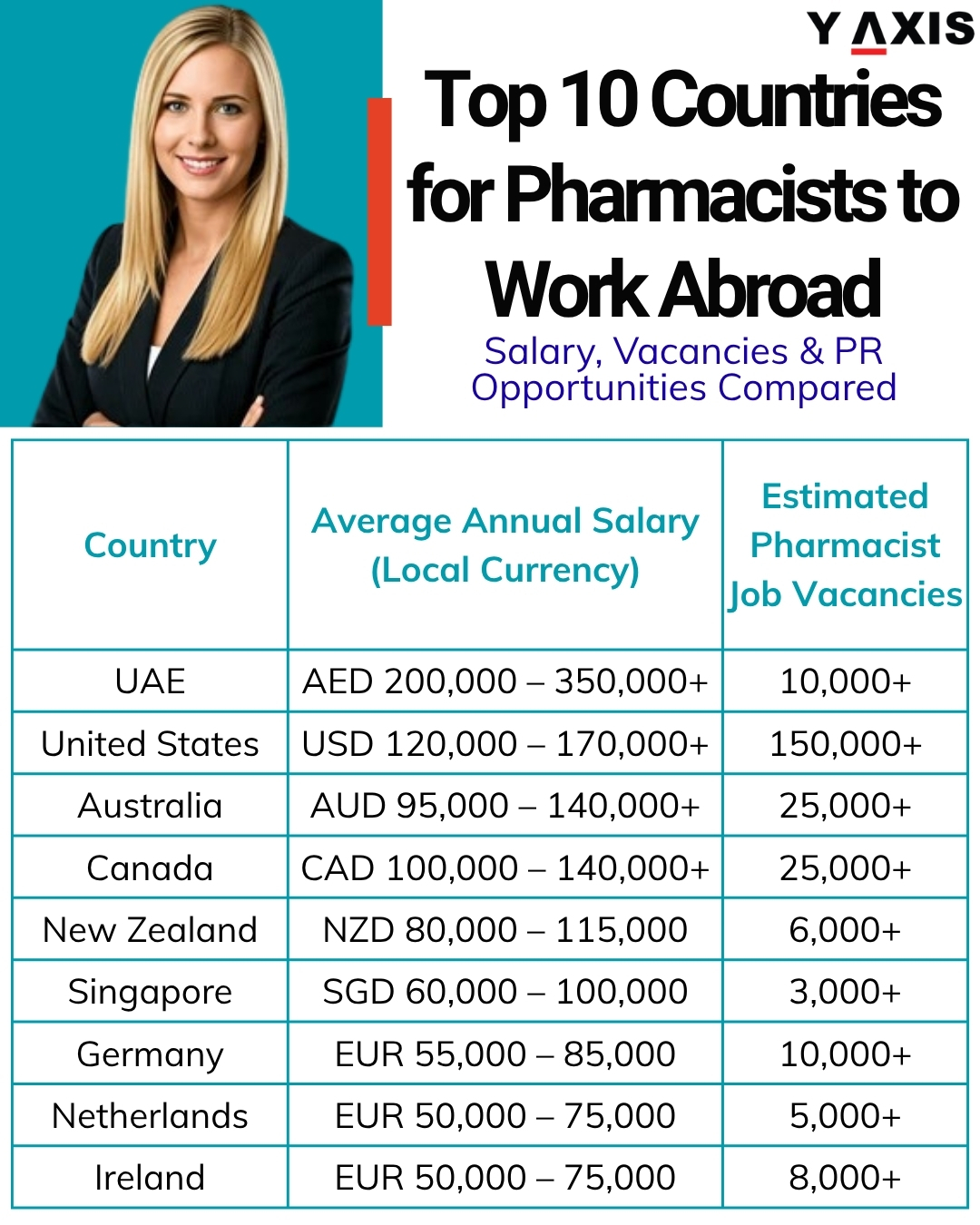
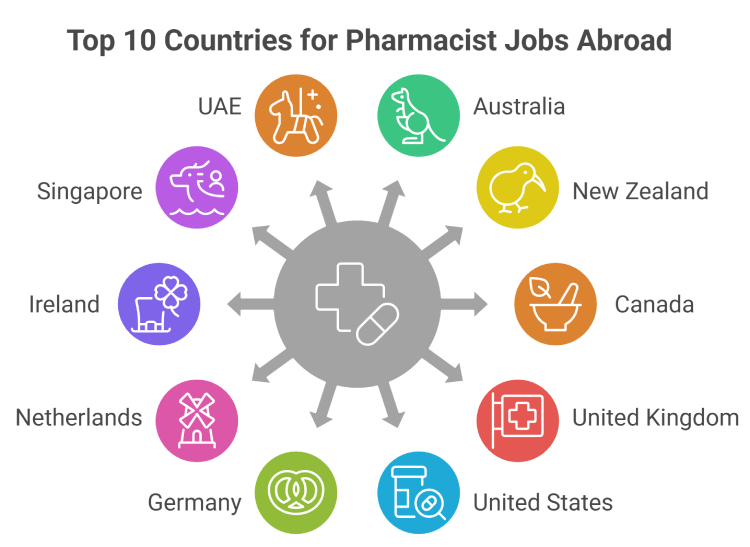
The top 10 countries for pharmacists to work abroad are Australia, Canada, the United Kingdom, New Zealand, Ireland, the United States, Germany, Singapore, the United Arab Emirates, and the Netherlands. These countries offer high salaries, strong healthcare demand, work visa sponsorship, and clear PR pathways for overseas pharmacists.
According to global healthcare workforce reports, the world could face a shortage of around 11 million healthcare workers by 2030. Recent pharmacy workforce studies suggest global demand for pharmacists could rise by nearly 40% over the next decade. To meet growing healthcare needs, many countries are actively recruiting international pharmacists through skilled migration and employer-sponsored visa programs.
*Want to work abroad? Avail Y-Axis Resume Marketing Services to find the right job faster.
Benefits of Working Abroad as a Pharmacist
Working abroad as a pharmacist provides access to higher salaries, global career exposure, and long-term settlement opportunities. Many countries are actively hiring skilled pharmacists to support growing healthcare and pharmacy workforce needs.
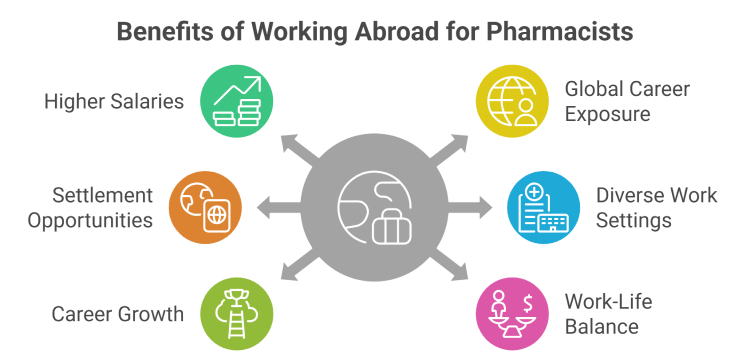
- Earn over AUD 120,000 in top healthcare markets
- Global demand for pharmacists is projected to rise by nearly 40% over the next decade
- Access work visa sponsorship and clear PR pathways in multiple countries
- Work across hospitals, retail pharmacies, aged care facilities, and pharmaceutical companies
- Gain international healthcare experience and accelerate career growth
- Enjoy better work-life balance and stronger long-term earning potential
Top 10 High-Paying Countries for Pharmacists to Work Abroad
Countries such as Australia, Canada, the United States, and the United Kingdom are experiencing growing demand for pharmacists due to healthcare workforce shortages and expanding clinical pharmacy services.
Pharmacists in top destinations can earn over AUD 140,000 in Australia and USD 170,000 in the United States, with opportunities across hospitals, retail pharmacies, aged care, and pharmaceutical companies. Many of these countries actively recruit overseas pharmacists through skilled migration and employer-sponsored visa programs.
|
Country |
Average Annual Salary (Local Currency) |
Estimated Pharmacist |
|
Australia |
AUD 95,000 – AUD 140,000+ |
25,000+ |
|
New Zealand |
NZD 80,000 – NZD 115,000 |
6,000+ |
|
Canada |
CAD 100,000 – CAD 140,000+ |
25,000+ |
|
United Kingdom |
GBP 45,000 – GBP 70,000 |
16,000+ |
|
United States |
USD 120,000 – USD 170,000+ |
150,000+ |
|
Germany |
EUR 55,000 – EUR 85,000 |
10,000+ |
|
Netherlands |
EUR 50,000 – EUR 75,000 |
5,000+ |
|
Ireland |
EUR 50,000 – EUR 75,000 |
8,000+ |
|
Singapore |
SGD 60,000 – SGD 100,000 |
3,000+ |
|
UAE |
AED 200,000 – AED 350,000+ |
10,000+ |
*Want to work abroad? Avail Y-Axis Resume Marketing Services to find the right job faster.
Best Countries for Pharmacists to Work and Settle Abroad
Healthcare destinations like Australia, Canada, the United Kingdom, and Ireland continue to attract overseas pharmacists seeking long-term career growth and settlement opportunities. These countries offer stable healthcare systems, clear PR pathways, competitive salaries, and strong demand for skilled pharmacy professionals. Pharmacists can also access career opportunities across hospitals, retail pharmacies, and clinical healthcare settings while benefiting from advanced infrastructure and a high quality of life.
Pharmacist Jobs in Australia
Australia is one of the top destinations for pharmacists due to its strong healthcare system, high salaries, and growing demand for skilled healthcare professionals. Pharmacists are needed across hospitals, retail pharmacies, aged care, and regional healthcare services, creating strong employment opportunities for overseas professionals.
The country actively recruits overseas pharmacists through skilled migration and employer-sponsored visa programs to address workforce shortages across several states and regional areas. In addition to competitive salaries and career growth, Australia offers clear permanent residency pathways, advanced healthcare infrastructure, and a high quality of life, making it one of the best countries for pharmacists to work and settle abroad.
|
Factor |
Details |
|
Job Market & Demand |
Australia's pharmacy sector is projected to see more than 25,000 job openings in the next decade, driven by workforce shortages, an aging population, and rising demand for clinical and prescription pharmacy services |
|
Healthcare Investment |
The Australian government has committed more than AUD 140 billion to healthcare, with sustained funding directed toward workforce expansion, aged care, and pharmacy services |
|
In-Demand Roles & Skills |
Clinical, hospital, retail, aged care, and community pharmacists. Key skills include medication management, patient counselling, prescription review, and clinical support |
|
Work Visa Options |
Skilled Independent Visa (189), Skilled Nominated Visa (190), Employer Nomination Scheme (186), Skills in Demand Visa (482), Skilled Work Regional Visa (491) |
|
PR Opportunities |
Permanent residency is available through points-based visas (189/190), employer-sponsored PR (186), and regional pathways (491 leading to PR) |
|
Registration Requirements |
Overseas pharmacists are required to complete registration through the Pharmacy Board of Australia and meet all qualification assessment requirements |
|
Language Requirements |
Overseas pharmacists are required to demonstrate English proficiency through IELTS, OET, or equivalent approved tests |
|
Dependents |
Skilled migration visas generally allow spouses and dependent children to accompany the applicant, with family members eligible for work rights, education access, and healthcare benefits depending on visa conditions |
*Planning to Work in Australia? Let Y-Axis guide you through every step of the process.
Pharmacist Jobs in Canada
Canada is one of the best countries for pharmacists seeking high salaries, strong job demand, and permanent residency opportunities. Pharmacists are in demand across hospitals, community pharmacies, long-term care facilities, and healthcare centres due to growing healthcare needs and workforce shortages in several provinces. Pharmacists in Canada can earn between CAD 100,000 and CAD 140,000 annually, depending on experience, province, and specialisation.
Provinces such as Ontario, British Columbia, and Alberta continue to recruit overseas healthcare professionals through provincial nomination and skilled migration programs. Canada also offers clear PR pathways, employer-sponsored work permits, and excellent healthcare infrastructure for skilled pharmacists.
|
Factor |
Details |
|
Job Market & Demand |
Canada's pharmacy sector is projected to see more than 25,000 job openings in the next decade, driven by healthcare workforce shortages, an aging population, and rising demand across hospitals, community pharmacies, and long-term care |
|
Healthcare Investment |
The Canadian government has committed nearly CAD 200 billion to healthcare funding over the next decade, with sustained investment directed toward workforce development, patient care services, and healthcare expansion |
|
In-Demand Roles & Skills |
Clinical, hospital, community, retail, and long-term care pharmacists. Key skills include medication management, patient counselling, prescription review, and clinical support |
|
Work Visa Options |
Express Entry, Provincial Nominee Programs (PNPs), and employer-sponsored work permits |
|
PR Opportunities |
Permanent residency is available through Express Entry and Provincial Nominee Programs, with healthcare occupations frequently prioritised in selection draws |
|
Registration Requirements |
Overseas pharmacists are required to complete licensing and registration through the pharmacy regulatory authority of the relevant province or territory |
|
Language Requirements |
Overseas pharmacists are required to demonstrate English or French proficiency through approved language tests such as IELTS or TEF |
|
Dependents |
Work permits and PR pathways generally allow spouses and dependent children to accompany the applicant, with family members eligible for work rights, public healthcare, and education access |
*Want to Work in Canada? Let Y-Axis guide you through application process.
Pharmacist Jobs in the UK
The United Kingdom offers strong career opportunities for pharmacists through the NHS, private healthcare providers, and community pharmacy networks. Growing pressure on healthcare services and ongoing workforce shortages have increased demand for qualified pharmacists across England, Scotland, Wales, and Northern Ireland. Pharmacists in the UK can earn between GBP 45,000 and GBP 70,000 annually, with experienced and clinical pharmacists often earning more.
The UK Skilled Worker visa allows overseas pharmacists to work with employer sponsorship, while long-term residency options are available for eligible healthcare professionals. Pharmacists can also access job opportunities in hospital pharmacy, clinical services, research, and retail pharmacy.
|
Factor |
Details |
|
Job Market & Demand |
The UK pharmacy sector is projected to face more than 16,000 pharmacist shortages in the next decade, driven by rising healthcare demand and workforce gaps across NHS hospitals, community pharmacies, and clinical care services |
|
Healthcare Investment |
The UK government has committed more than GBP 200 billion annually to the NHS and healthcare sector, with funding directed toward hospitals, community healthcare, digital health systems, and workforce expansion |
|
In-Demand Roles & Skills |
Clinical, hospital, community, retail, and prescribing pharmacists. Key skills include medication management, prescription review, patient counselling, and clinical support |
|
Work Visa Options |
Skilled Worker Visa, Health and Care Worker Visa |
|
PR Opportunities |
Overseas pharmacists may become eligible for Indefinite Leave to Remain (ILR) after completing the required residence period in the UK |
|
Registration Requirements |
Overseas pharmacists are required to register with the General Pharmaceutical Council (GPhC) and meet all qualification and assessment requirements before practising |
|
Language Requirements |
Overseas pharmacists are required to demonstrate English proficiency through IELTS or other approved language tests |
|
Dependents |
Skilled work visas generally allow spouses and dependent children to accompany the applicant, with family members eligible for work rights, public education, and NHS healthcare depending on visa conditions |
* Want to Work in the UK? Let Y-Axis guide you through the steps.
Pharmacist Jobs in the United States
The United States is among the highest-paying countries for pharmacists, offering excellent opportunities across hospitals, retail pharmacy chains, clinical healthcare, and pharmaceutical companies. Rising healthcare needs, an aging population, and expanding patient care services continue to drive demand for pharmacists across the country. Pharmacists in the United States can earn between USD 120,000 and USD 170,000 annually, especially in specialised and clinical roles.
Major pharmacy employers, healthcare systems, and retail chains regularly recruit skilled professionals in both urban and regional areas. In addition to high earning potential, the United States offers advanced healthcare technology, research opportunities, and strong long-term career growth.
|
Factor |
Details |
|
Job Market & Demand |
The US pharmacy sector is projected to see more than 150,000 job openings in the next decade, driven by rising healthcare demand, an aging population, and expanding clinical pharmacy services |
|
Healthcare Investment |
The US government and private sector together commit more than USD 4.5 trillion annually to healthcare, with sustained funding directed toward hospitals, pharmaceutical services, clinical care expansion, and workforce development |
|
In-Demand Roles & Skills |
Clinical, hospital, retail, and oncology pharmacists, as well as pharmaceutical industry professionals. Key skills include medication therapy management, patient counselling, prescription review, and clinical support |
|
Work Visa Options |
H-1B Visa, employer-sponsored work visas, EB-2 and EB-3 employment-based immigration pathways |
|
PR Opportunities |
Overseas pharmacists may qualify for a Green Card through employment-based immigration pathways such as EB-2 and EB-3 |
|
Registration Requirements |
Overseas pharmacists are required to complete FPGEC certification, pass the NAPLEX examination, and meet all state board licensing requirements before practising |
|
Language Requirements |
Overseas pharmacists are required to demonstrate English proficiency through TOEFL or other approved language assessments |
|
Dependents |
Work visas and employment-based immigration pathways generally allow spouses and dependent children to accompany the applicant, with family members eligible for dependent visa options and education access |
*Want to Work in USA? Let Y-Axis guide you through every step of the process.
Pharmacist Jobs in Ireland
Ireland has become a popular destination for overseas pharmacists due to its expanding healthcare sector and increasing demand for skilled healthcare professionals. Pharmacists are needed across hospitals, community pharmacies, and long-term care services as the country continues to strengthen its healthcare workforce. Pharmacists in Ireland can earn between EUR 50,000 and EUR 75,000 annually, with higher salaries available in senior and specialised roles.
Cities such as Dublin, Cork, and Galway continue to provide strong opportunities for pharmacists in both public and private healthcare sectors. Ireland also offers attractive immigration pathways through employment permit programs and long-term residency options.
|
Factor |
Details |
|
Job Market & Demand |
Ireland's pharmacy sector is projected to see more than 8,000 job openings in the next decade, driven by healthcare workforce shortages and growing demand across hospitals, community pharmacies, and long-term care services |
|
Healthcare Investment |
The Irish government has committed more than EUR 27 billion to healthcare services, with sustained funding directed toward long-term infrastructure development, workforce expansion, and healthcare access |
|
In-Demand Roles & Skills |
Clinical, hospital, community, and retail pharmacists. Key skills include medication management, prescription review, patient counselling, and clinical support |
|
Work Visa Options |
Critical Skills Employment Permit, General Employment Permit, employer-sponsored work permits |
|
PR Opportunities |
Overseas pharmacists may become eligible for Stamp 4 residence after meeting employment and residence requirements in Ireland |
|
Registration Requirements |
Overseas pharmacists are required to register with the Pharmaceutical Society of Ireland (PSI) and meet all qualification assessment requirements before practising |
|
Language Requirements |
Overseas pharmacists are required to demonstrate English proficiency through IELTS or other recognised language tests |
|
Dependents |
Employment permits generally allow spouses and dependent children to accompany the applicant, with family members eligible for work rights, public education, and healthcare services depending on permit conditions |
*Want to Work in Ireland? Let Y-Axis guide you through every step of the process.
Pharmacist Jobs in Germany
Germany is experiencing growing demand for pharmacists due to its aging population, expanding healthcare services, and shortages of skilled healthcare workers across several regions. Pharmacists are employed across hospitals, community pharmacies, research facilities, and pharmaceutical companies throughout the country. Pharmacists in Germany can earn between EUR 55,000 and EUR 85,000 annually, depending on experience, qualifications, and location.
Germany provides strong career stability, modern healthcare infrastructure, and access to one of Europe's largest pharmaceutical industries. With increasing healthcare investment and long-term workforce demand, Germany continues to attract international pharmacists seeking career growth and settlement opportunities.
|
Factor |
Details |
|
Job Market & Demand |
Germany's pharmacy sector is projected to face more than 10,000 pharmacist shortages in the next decade, driven by an aging population and rising healthcare demand across hospitals, pharmacies, and elderly care services |
|
Healthcare Investment |
The German government has committed more than EUR 500 billion annually to healthcare, with sustained funding directed toward hospital modernisation, digital healthcare, and workforce expansion |
|
In-Demand Roles & Skills |
Clinical, hospital, and community pharmacists, as well as pharmaceutical industry professionals. Key skills include medication management, prescription review, patient counselling, and clinical support |
|
Work Visa Options |
EU Blue Card, Skilled Worker Visa, employer-sponsored work visas |
|
PR Opportunities |
Overseas pharmacists may become eligible for permanent residence after meeting the required residence duration and German language proficiency requirements |
|
Registration Requirements |
Overseas pharmacists are required to complete formal qualification recognition (Anerkennung) and meet all licensing requirements before practising in Germany |
|
Language Requirements |
Overseas pharmacists are required to demonstrate German language proficiency at B2 level for registration and patient-facing employment |
|
Dependents |
Skilled worker visas generally allow spouses and dependent children to accompany the applicant, with family members eligible for work rights, public education, and comprehensive public healthcare coverage |
*Want to Work in Germany? Let Y-Axis guide you through every step of the process.
Pharmacist Jobs in the Netherlands
The Netherlands offers excellent career opportunities for pharmacists through its advanced healthcare system, strong pharmaceutical sector, and high quality of life. Demand for pharmacists is growing across hospitals, community pharmacies, and clinical healthcare services as the country continues to expand healthcare access and patient care support. Pharmacists in the Netherlands can earn between EUR 50,000 and EUR 75,000 annually, with higher earnings available in specialised roles and urban healthcare centres.
The Netherlands is known for its modern healthcare infrastructure, strong work-life balance, and high professional standards, making it an attractive destination for pharmacists seeking long-term careers abroad.
|
Factor |
Details |
|
Job Market & Demand |
The Netherlands pharmacy sector is projected to see more than 5,000 job openings in the next decade, driven by healthcare workforce shortages and growing demand for pharmacy services across hospitals and community care |
|
Healthcare Investment |
The Dutch government has committed more than EUR 100 billion annually to healthcare, with sustained funding directed toward hospitals, pharmacy services, digital healthcare, and workforce expansion |
|
In-Demand Roles & Skills |
Clinical, hospital, community, and retail pharmacists. Key skills include medication management, prescription review, patient counselling, and clinical support |
|
Work Visa Options |
Highly Skilled Migrant Visa, employer-sponsored work permits, EU Blue Card |
|
PR Opportunities |
Overseas pharmacists may become eligible for permanent residence after completing the required residence period in the Netherlands |
|
Registration Requirements |
Overseas pharmacists are required to complete qualification recognition and register through the BIG Register before practising in the Netherlands |
|
Language Requirements |
Overseas pharmacists are required to demonstrate Dutch language proficiency for registration and patient-facing healthcare roles |
|
Dependents |
Skilled migrant visas generally allow spouses and dependent children to accompany the applicant, with family members eligible for work rights, healthcare access, and education opportunities |
*Want to Work in Netherlands? Let Y-Axis guide you through the process.
Pharmacist Jobs in Singapore
Singapore is a leading healthcare and pharmaceutical hub in Asia, offering strong career opportunities for pharmacists in hospitals, retail pharmacy chains, and pharmaceutical companies. The country's expanding healthcare sector and growing focus on advanced patient care continue to increase demand for skilled pharmacy professionals. Pharmacists in Singapore can earn between SGD 60,000 and SGD 100,000 annually, depending on experience and specialisation.
Singapore is known for its modern healthcare infrastructure, high professional standards, and strong pharmaceutical industry presence. With competitive salaries, excellent public services, and a strategic location in Asia, Singapore remains a popular destination for pharmacists seeking international career growth.
|
Factor |
Details |
|
Job Market & Demand |
Singapore's pharmacy sector is projected to see more than 3,000 job openings in the next decade, driven by healthcare expansion, an aging population, and rising demand for clinical pharmacy services |
|
Healthcare Investment |
The Singapore government has committed more than SGD 18 billion annually to healthcare, with sustained funding directed toward hospitals, digital health systems, pharmaceutical services, and workforce development |
|
In-Demand Roles & Skills |
Clinical, hospital, retail, and community pharmacists. Key skills include medication management, prescription review, patient counselling, and clinical support |
|
Work Visa Options |
Employment Pass, S Pass, employer-sponsored work permits |
|
PR Opportunities |
Overseas pharmacists may apply for Permanent Residency (PR) after meeting the required work and residency criteria in Singapore |
|
Registration Requirements |
Overseas pharmacists are required to register with the Singapore Pharmacy Council (SPC) before practising in Singapore |
|
Language Requirements |
Overseas pharmacists are required to demonstrate English proficiency for registration and healthcare employment |
|
Dependents |
Some work pass holders may sponsor spouses and dependent children depending on visa type and salary requirements, with family members eligible for education and healthcare access |
*Want to Work in Singapore? Let Y-Axis guide you through application process.
Pharmacist Jobs in the United Arab Emirates
The United Arab Emirates has become a major destination for healthcare professionals due to rapid healthcare expansion, medical tourism growth, and rising demand for pharmacy services. Pharmacists are employed across hospitals, retail pharmacy chains, clinics, and private healthcare groups, particularly in Dubai and Abu Dhabi. Pharmacists in the UAE can earn between AED 200,000 and AED 350,000+ annually, with tax-free income making the country especially attractive for overseas professionals.
Many healthcare employers also provide additional benefits such as housing allowances, health insurance, and relocation support. With modern healthcare infrastructure and high earning potential, the UAE remains a preferred destination for pharmacists looking to work abroad.
|
Factor |
Details |
|
Job Market & Demand |
The UAE pharmacy sector is projected to see more than 10,000 job openings in the next decade, driven by healthcare expansion, medical tourism growth, and rising demand for pharmacy services across hospitals and clinics |
|
Healthcare Investment |
The UAE government continues to expand healthcare investment toward 2030, with the healthcare market projected to exceed USD 50 billion by 2029, supporting hospitals, digital healthcare, and pharmacy services expansion |
|
In-Demand Roles & Skills |
Clinical, hospital, retail, and community pharmacists. Key skills include medication management, patient counselling, prescription review, and clinical support |
|
Work Visa Options |
Employer-sponsored UAE Work Visas, Green Visas, Golden Visas for highly skilled professionals |
|
PR Opportunities |
Long-term residence is available through Golden Visas and renewable employment-based residence permits for eligible healthcare professionals |
|
Registration Requirements |
Overseas pharmacists are required to obtain professional licensing through the relevant health authority, which is DHA for Dubai, DOH for Abu Dhabi, or MOH for other emirates |
|
Language Requirements |
Overseas pharmacists are required to demonstrate English proficiency, while Arabic language skills may provide additional advantages in patient-facing roles |
|
Dependents |
UAE residence visas generally allow workers to sponsor spouses and dependent children, with family members eligible for private healthcare, education opportunities, and long-term residence options |
*Want to Work in the UAE? Avail Y-Axis Resume Marketing Services to find right job faster.
Pharmacist Jobs in New Zealand
New Zealand offers excellent opportunities for pharmacists seeking a balanced lifestyle, stable healthcare careers, and long-term settlement options. The country continues to experience shortages of healthcare professionals, especially in regional and public healthcare services, creating strong demand for overseas pharmacists. Pharmacists in New Zealand can earn between NZD 80,000 and NZD 115,000 annually, depending on experience and location.
Opportunities are available across hospitals, community pharmacies, and primary healthcare services throughout the country. New Zealand also provides permanent residency pathways for skilled healthcare professionals through its immigration and Green List programs.
|
Factor |
Details |
|
Job Market & Demand |
New Zealand's pharmacy sector is projected to see more than 6,000 job openings in the next decade, driven by workforce shortages, an aging population, and growing healthcare demand across hospitals and community services |
|
Healthcare Investment |
The New Zealand government has committed more than NZD 5.5 billion to healthcare system improvements, with sustained funding directed toward workforce development, digital healthcare expansion, and patient care services |
|
In-Demand Roles & Skills |
Clinical, hospital, community, and retail pharmacists. Key skills include medication management, patient counselling, prescription review, and clinical support |
|
Work Visa Options |
Accredited Employer Work Visa (AEWV), Skilled Migrant Category, employer-sponsored work visas |
|
PR Opportunities |
Residence pathways are available through the Green List and Skilled Migrant Category based on qualifications and work experience |
|
Registration Requirements |
Overseas pharmacists are required to register with the Pharmacy Council of New Zealand and meet all qualification assessment requirements before practising |
|
Language Requirements |
Overseas pharmacists are required to demonstrate English proficiency through IELTS, OET, or other recognised language tests |
|
Dependents |
Skilled work visas generally allow spouses and dependent children to accompany the applicant, with family members eligible for work rights, public education, and healthcare services depending on visa conditions |
*Want to Work in New Zealand? Let Y-Axis guide you through every step of the process.
Eligibility Requirements for Pharmacist Jobs Abroad
To work abroad as a pharmacist, candidates must meet qualification, licensing, language, and visa requirements based on the destination country. Overseas pharmacists are generally required to complete registration, qualification assessment, and immigration procedures before applying for jobs abroad.
- Pharmacy degree recognised by the destination country
- Valid pharmacist licence or professional registration
- 1–3 years of pharmacy work experience in most countries
- IELTS, OET, or TOEFL scores for English-speaking countries
- Pharmacist licensing exams or qualification assessment where required
- Updated resume, educational certificates, and identity documents
- Employer-sponsored work visa or skilled migration eligibility
- Registration approval from the pharmacy authority of the destination country
Step-by-Step Application Process for Pharmacist Jobs Abroad
Step 1: Choose the right country based on salary, demand, and PR opportunities
Step 2: Check pharmacist licensing and qualification requirements for your target country
Step 3: Complete language tests such as IELTS, OET, or TOEFL if required
Step 4: Apply for pharmacist registration or skills assessment in the destination country
Step 5: Prepare an international pharmacist resume and gather all required documents
Step 6: Apply for pharmacist jobs through healthcare employers and specialist recruiters
Step 7: Apply for a work visa or skilled migration pathway after receiving a job offer
Step 8: Relocate after visa approval and registration clearance
*Want to work abroad? Avail Y-Axis Resume Marketing Services to find the right job faster.
Pharmacist Job Outlook for the Next Decade
The global demand for pharmacists is expected to remain strong over the next decade due to aging populations, rising healthcare needs, and expanding clinical pharmacy services. Countries such as Australia, Canada, the United Kingdom, and New Zealand are projected to face continued shortages of skilled pharmacists across hospitals, retail pharmacies, aged care, and community healthcare sectors.
Recent pharmacy workforce studies suggest global demand for pharmacists could rise by nearly 40% over the next decade as healthcare systems continue expanding workforce recruitment, prescription services, and patient care support. Growing investment in digital health, pharmaceutical research, and community-based care is also expected to create new pharmacist roles across both developed and emerging healthcare markets.
FAQs
Which country pays pharmacists the most?
The United States offers the highest pharmacist salaries globally, with annual earnings typically ranging from USD 120,000 to USD 170,000 or more for experienced and specialised professionals. The UAE also offers highly competitive tax-free salaries ranging from AED 200,000 to AED 350,000+, making it especially attractive for overseas pharmacists.
Which countries are hiring the most pharmacists right now?
The United States, Australia, Canada, and the United Kingdom currently have the highest number of pharmacist job openings. The US alone is projected to have over 150,000 pharmacist openings in the next decade, while Australia and Canada each expect over 25,000 openings in the same period.
Do pharmacists need to requalify when working abroad?
In most countries, overseas pharmacists must complete a qualification recognition process or equivalency assessment before they can register and practise. The requirements vary by country. For example, Australia requires registration through the Pharmacy Board of Australia, the US requires FPGEC certification and NAPLEX exams, and Germany requires formal qualification recognition called Anerkennung.
Is IELTS mandatory for pharmacists applying to work abroad?
English language proficiency tests such as IELTS or OET are mandatory for pharmacist registration and employment in English-speaking countries including Australia, Canada, the United Kingdom, New Zealand, Ireland, Singapore, and the UAE. The minimum score requirements vary by country and registration authority.
Can pharmacists get permanent residency abroad?
Yes. Many popular destinations for overseas pharmacists offer clear PR pathways. Australia offers PR through skilled visas (189, 190) and employer-sponsored routes (186). Canada offers PR through Express Entry and Provincial Nominee Programs. The UK offers Indefinite Leave to Remain (ILR) after a qualifying residence period. New Zealand provides residence through the Green List and Skilled Migrant Category.
What types of pharmacist roles are most in demand internationally?
Clinical pharmacists, hospital pharmacists, community pharmacists, retail pharmacists, and aged care pharmacists are the most in-demand roles across leading destinations. Oncology pharmacists and pharmaceutical industry professionals are also in strong demand, particularly in the United States and Germany.
How long does the overseas pharmacist registration process take?
The timeline varies significantly by country. Registration in Australia can take between three to six months or longer depending on qualification assessment outcomes. UK GPhC registration typically takes two to three months. US FPGEC certification and state licensing can take six months to over a year depending on the state and examination schedules.
Can I bring my family when working abroad as a pharmacist?
Yes. Most skilled worker and employer-sponsored visas in countries such as Australia, Canada, the UK, Germany, Ireland, the Netherlands, and New Zealand allow pharmacists to bring their spouse and dependent children. Family members may also receive work rights and access to public education and healthcare depending on visa conditions.
Do pharmacists need to speak the local language to work in Germany or the Netherlands?
Yes. Germany generally requires German language proficiency at B2 level for pharmacist registration and patient-facing employment. The Netherlands also requires Dutch proficiency for registration and direct patient care roles. However, pharmacists working in pharmaceutical research or industry roles may find more opportunities without full language fluency.
Is the UAE a good long-term destination for pharmacists?
The UAE offers highly competitive tax-free salaries, modern healthcare infrastructure, and employer-provided benefits such as housing allowances and health insurance. However, permanent residency options are more limited compared to countries like Australia or Canada. Long-term residence is available through Golden Visas and renewable employment-based permits, making the UAE a strong option for medium to long-term career growth rather than guaranteed permanent settlement.
What is the easiest country for Indian pharmacists to migrate to?
Australia, Canada, the United Kingdom, and New Zealand are among the most accessible countries for Indian pharmacists due to established skilled migration programs, English-language registration pathways, and active recruitment of overseas healthcare professionals. Canada's Express Entry and Australia's points-based skilled visa system are frequently used by Indian pharmacy professionals.
How much experience do I need to work as a pharmacist abroad?
Most countries require at least one to three years of post-qualification pharmacy work experience for skilled migration or employer-sponsored visa applications. Some countries may accept recent graduates for entry-level roles, but having relevant clinical or community pharmacy experience significantly improves eligibility for skilled migration and employer sponsorship.
Can a pharmacist work in multiple countries with the same registration?
No. Pharmacist registration is country-specific and is not transferable between countries. Each destination country requires overseas pharmacists to complete its own registration, qualification recognition, and licensing process before they can legally practise. Within the European Union, there are provisions for mutual recognition of qualifications between member states, which can simplify the process for EU-qualified pharmacists moving between EU countries.
Are pharmacist salaries in the UK lower than in Australia or Canada?
UK pharmacist salaries ranging from GBP 45,000 to GBP 70,000 are comparatively lower than Australian salaries of AUD 95,000 to AUD 140,000+ and Canadian salaries of CAD 100,000 to CAD 140,000+. However, the UK offers strong career development through the NHS, structured career progression, and access to a large and well-established healthcare system.
What is the best country for work-life balance for pharmacists?
Australia, New Zealand, and the Netherlands are consistently regarded as offering excellent work-life balance for healthcare professionals. These countries have regulated working hours, generous leave entitlements, and strong employee protections. New Zealand in particular is widely recognised for its quality of life and balanced working culture for healthcare professionals.
Can pharmacists switch from a work visa to permanent residency?
Yes. In most leading destinations, pharmacists who enter on a work visa can later transition to permanent residency. Australia offers PR transitions through employer nomination (186) and points-based pathways (189, 190). Canada allows transitions from work permits to Express Entry or provincial PR. The UK pathway leads from the Skilled Worker visa to Indefinite Leave to Remain (ILR) after five years.
Is pharmacy a shortage occupation in the UK?
The UK continues to experience significant pharmacy workforce shortages across the NHS, community pharmacies, and clinical care services. Pharmacists are listed among in-demand healthcare occupations eligible for the Health and Care Worker Visa, which offers faster processing and reduced visa fees compared to the standard Skilled Worker Visa route.
What are the tax implications of working as a pharmacist in the UAE?
The UAE does not levy personal income tax, meaning pharmacists working in the UAE retain their full salary. This significantly increases the effective take-home pay compared to countries such as Australia, Canada, or the UK, where income tax rates apply. However, pharmacists should still consider costs of living, accommodation, schooling for dependents, and currency considerations when evaluating total financial benefits.
How competitive is the pharmacist job market in Singapore?
Singapore's pharmacist job market is competitive but accessible for qualified overseas professionals, particularly those with hospital or clinical pharmacy experience. Pharmacists must register with the Singapore Pharmacy Council before practising. While job openings are fewer than in larger markets like Australia or Canada, Singapore's strategic location, modern healthcare system, and strong pharmaceutical industry make it a highly desirable destination for career advancement in Asia.
Which country offers the fastest PR pathway for pharmacists?
Australia and New Zealand offer some of the fastest PR pathways for skilled pharmacists. Australia's points-based skilled migration visas (189 and 190) and New Zealand's Green List residence pathway can provide direct residence options without requiring a lengthy work permit stage first. Canada's Express Entry system is also efficient for pharmacists with relevant experience and language proficiency, often processing applications within six months of receiving an Invitation to Apply.
Tags:
pharmacist jobs abroad
overseas pharmacist jobs
pharmacist salary
visa sponsorship jobs
healthcare jobs abroad
pharmacist migration
pharmacist PR opportunities
countries hiring pharmacists
Share
Latest Article
Popular Post
Trending Article
Posted On September 29 2026
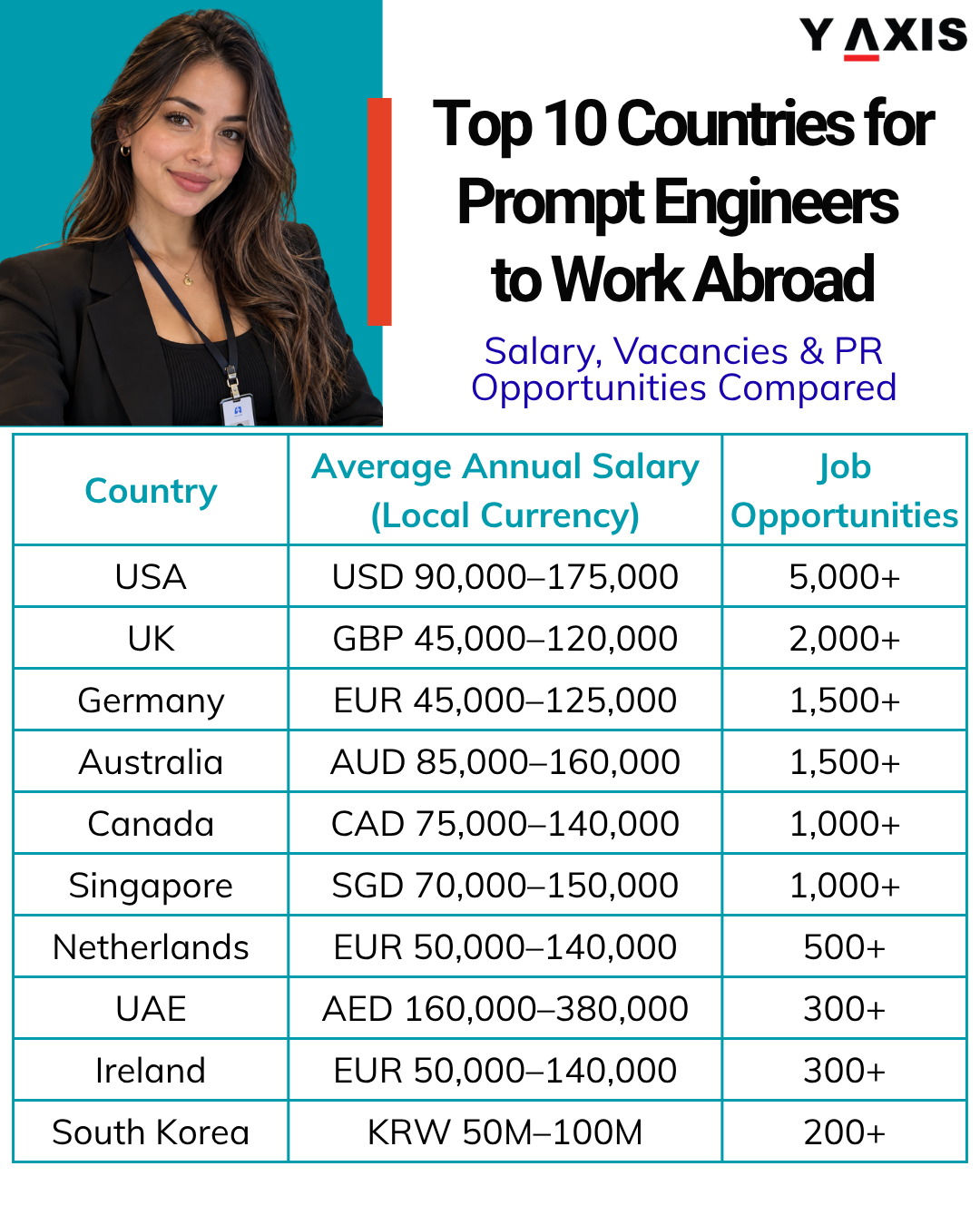
Top 10 Countries for Prompt Engineers to Work Abroad: Salary, Demand & PR Opportunities Compared