

Posted on August 20 2026
Top 10 Countries for Blockchain Experts to Work Abroad: Salary, Demand & PR Opportunities Compared

By , Editor & Director
Updated August 20 2026
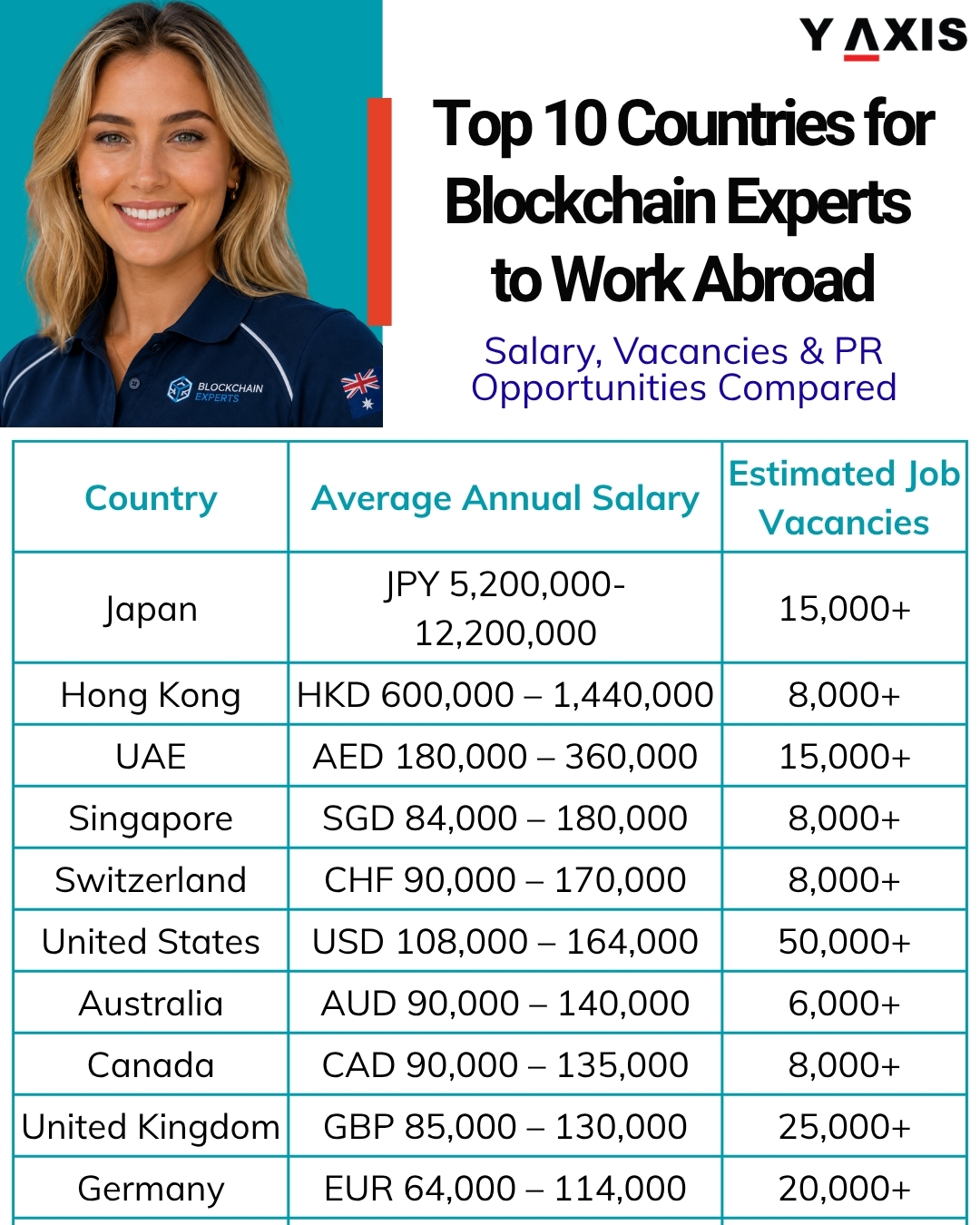
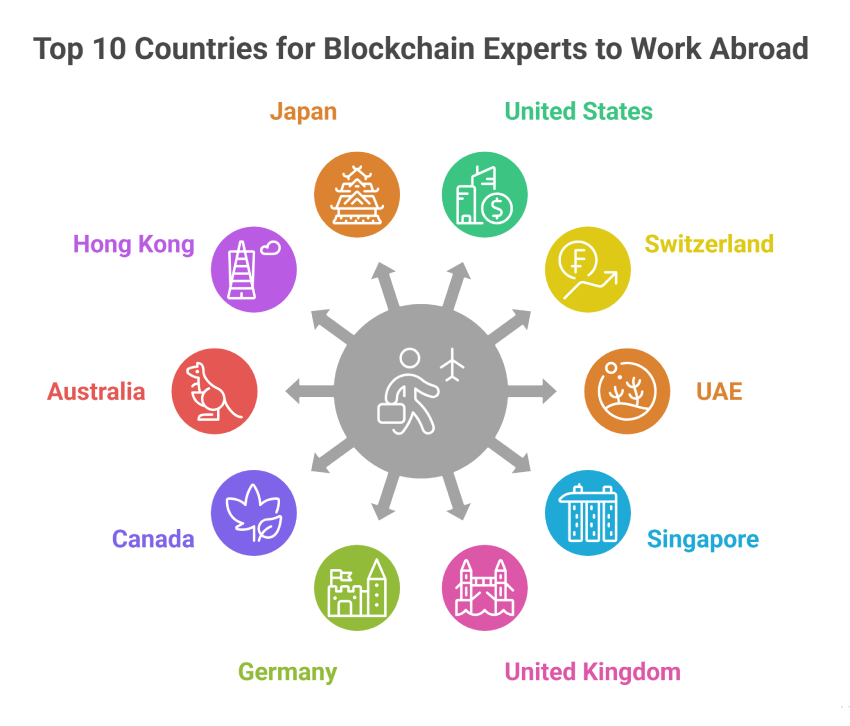
The top 10 countries for Blockchain Experts to work abroad are Canada, Australia, the United Kingdom, Germany, the United States, Singapore, Switzerland, the UAE, Hong Kong, and Japan. These destinations offer opportunities for Blockchain Developers, Blockchain Engineers, Smart Contract Developers, Web3 Developers, Blockchain Architects, Protocol Engineers, and Blockchain Security Engineers, with competitive salaries, growing demand, work visa options, and PR pathways.
The global Web3 market is projected to reach USD 51.54 billion by 2030, growing at a 42.2% CAGR. This growth is driving demand across digital assets, tokenisation, DeFi, blockchain payments, smart contracts, and enterprise applications, creating strong opportunities for Blockchain Experts to secure international roles and build long-term careers abroad.
*Want to work abroad? Sign up with Y-Axis Resume Marketing Services to find right job faster.
Why Is Demand for Blockchain Experts Increasing Globally?
Blockchain is expanding beyond cryptocurrency into digital assets, tokenisation, payments, DeFi, and enterprise technology. Citi projects tokenised assets could reach USD 5.5 trillion by 2030, supporting continued investment in blockchain-based financial infrastructure.
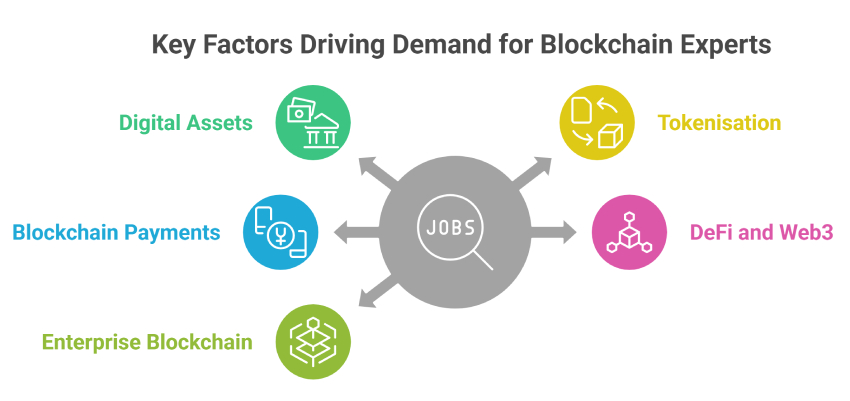
- Digital assets: Banks are developing digital-asset products and infrastructure.
- Tokenisation: Securities and other assets are moving onto blockchain networks.
- Blockchain payments: Stablecoins are expanding blockchain-based payment use.
- DeFi and Web3: Smart contracts and decentralised applications need specialised developers.
- Enterprise blockchain: Companies are using blockchain for finance, identity, data, and transactions.
How to Choose the Right Country for Blockchain Expert Jobs Abroad?
The right country depends on job demand, salary potential, visa options, blockchain industry growth, and long-term residence opportunities. A strong destination should offer relevant vacancies, competitive compensation, a practical route to work legally, and good prospects for career progression.
- Job demand: Check current vacancies and future hiring prospects.
- Salary: Compare average pay with taxes and living costs.
- Visa options: Check skilled-worker and employer-sponsored routes.
- PR pathway: Review requirements for permanent residence or long-term residence.
- Industry growth: Look for established fintech, digital-asset, DeFi, and Web3 markets.
- Career growth: Consider opportunities for senior roles, specialisations, and leadership positions.
Top 10 Countries for Blockchain Experts to Work Abroad
Canada, Australia, the United Kingdom, Germany, and the United States are strong markets for Blockchain Experts seeking jobs abroad. Blockchain Expert salaries can exceed AUD 180,000, with higher earnings in senior engineering, architecture, protocol, and blockchain security roles.
Demand is rising for specialists working on smart contracts, digital assets, tokenisation, DeFi, blockchain payments, and enterprise blockchain systems. Several leading destinations also offer skilled work visas, employer sponsorship, and PR pathways, making them strong options for professionals seeking higher salaries and international blockchain careers.
|
Country |
Average Annual Salary (Local Currency) |
Estimated Blockchain Expert Job Vacancies |
|
Canada |
CAD 90,000 – 135,000 |
8,000+ |
|
Australia |
AUD 90,000 – 140,000 |
6,000+ |
|
United Kingdom |
GBP 85,000 – 130,000 |
25,000+ |
|
Germany |
EUR 64,000 – 114,000 |
20,000+ |
|
Switzerland |
CHF 90,000 – 170,000 |
8,000+ |
|
United States |
USD 108,000 – 164,000 |
50,000+ |
|
Singapore |
SGD 84,000 – 180,000 |
8,000+ |
|
UAE |
AED 180,000 – 360,000 |
15,000+ |
|
Hong Kong |
HKD 600,000 – 1,440,000 |
8,000+ |
|
Japan |
JPY 5,200,000 – 12,200,000 |
15,000+ |
*Want to work abroad? Sign up with Y-Axis Resume Marketing Services to find right job faster.
Best Countries for Blockchain Experts to Work and Settle Abroad
Blockchain Experts can work and settle abroad in countries that combine strong blockchain job demand, high salaries, skilled work visas, and clear permanent residence pathways. Canada, Australia, Germany, the UK, and the US are particularly relevant for professionals seeking long-term opportunities. The most suitable destination depends on the blockchain role, salary level, visa eligibility, required work experience, and PR requirements in each country.
Blockchain Expert Jobs in Canada
Canada has a well-established blockchain market across banking, fintech, digital assets, tokenisation, payments, and distributed-ledger technology. Toronto, Vancouver, and Montreal are key technology centres, while Blockchain Protocol Engineer is separately recognised in Canada’s labour-market system. Job Bank rates prospects for this occupation as Good in Nova Scotia, with Moderate prospects in several other provinces. Financial institutions are also developing blockchain-based payment and tokenisation systems. Express Entry and Provincial Nominee Programs (PNPs) provide major routes to permanent residence, making Canada a strong destination for Blockchain Experts seeking specialised technology roles and long-term settlement.
|
Factor |
Details |
|
Blockchain Expert Job Market & Job Vacancies for the Next Decade |
Canada is projected to have around 8,000 Blockchain Expert openings over the next decade, particularly across fintech, banking, digital payments, tokenisation, and digital-asset infrastructure. |
|
Investment in Blockchain & Digital Asset Technology |
Canada’s blockchain technology market is valued at about USD 4.1 billion and projected to reach USD 29.7 billion, with investment focused on tokenisation, smart contracts, stablecoins, blockchain infrastructure, and digital payments. |
|
Top Companies Hiring Blockchain Experts |
IBM, Deloitte, Accenture, RBC, TD, CIBC, and Shopify have activities spanning blockchain development, financial technology, digital payments, digital assets, smart contracts, and blockchain security. |
|
Top Cities for Blockchain Expert Jobs |
Toronto leads Canada’s fintech sector, while Vancouver has a strong blockchain and Web3 ecosystem. Montreal, Ottawa, Calgary, and Waterloo also have established technology and financial-services markets. |
|
In-Demand Blockchain Roles & Skills |
Key roles include Blockchain Developers, Engineers, Smart Contract Developers, Architects, Protocol Developers, and Security Engineers. Core skills include Solidity, Rust, Python, Ethereum, smart contracts, distributed-ledger systems, cryptography, and cybersecurity. |
|
Work Visa Options |
An employer-specific work permit allows employment with the Canadian employer named on the permit. The Global Talent Stream covers NOC 21231 and NOC 21232 when the Blockchain Expert’s actual job duties match these occupations. |
|
Fast-Track Hiring Options |
The Global Talent Stream offers expedited processing for technology occupations covered by the program. The employer completes the required application and Labour Market Benefits Plan before the work permit application is submitted. |
|
PR / Long-Term Residence Opportunities |
Express Entry includes the Federal Skilled Worker Program and Canadian Experience Class. A Provincial Nominee Program (PNP) can also support a permanent residence application through a participating province or territory. |
|
Eligibility for Dependents |
Spouses or common-law partners and dependent children can be included in a Canadian immigration application when the selected program allows accompanying family members. |
|
Benefits for Family Members |
Spouses or common-law partners may qualify for an open work permit under Canada’s spousal work-permit rules, while dependent children can attend Canadian schools. Healthcare coverage depends on the province and immigration status. |
*Want to work in Canada? Get expert guidance from Y-Axis professionals.
Blockchain Expert Jobs in Australia
Australia’s blockchain sector is developing around digital assets, tokenisation, payments, fintech, and financial infrastructure. Sydney and Melbourne are key technology and financial-services centres, while the country is establishing a dedicated regulatory framework for digital assets. Australia’s Digital Assets Framework brings digital-asset platforms and tokenised custody platforms under the financial-services licensing regime. Work routes include the Skills in Demand visa (subclass 482) and skilled migration pathways such as subclasses 189, 190, and 491. Australia therefore combines blockchain opportunities with regulated digital-asset activity and established skilled migration pathways for permanent residence.
|
Factor |
Details |
|
Blockchain Expert Job Market & Job Vacancies for the Next Decade |
Australia’s blockchain employment outlook is linked to fintech, banking, digital assets, payments, tokenisation, and enterprise blockchain. Around 6,000 Blockchain Expert openings are projected over the next decade as businesses expand blockchain-based financial and technology applications. |
|
Investment in Blockchain & Digital Asset Technology |
Australia is expanding blockchain use across financial services and digital finance. Tokenisation, digital currencies, and distributed-ledger systems represent an estimated AUD 24 billion annual economic opportunity, with banks and fintech companies developing tokenised assets, digital payments, and blockchain-based settlement. |
|
Top Companies Hiring Blockchain Experts |
Major companies involved in Australia’s blockchain and digital-asset ecosystem include Commonwealth Bank, ANZ, NAB, Westpac, IBM, Accenture, Deloitte, and Ripple, with activities spanning payments, digital assets, financial technology, and blockchain infrastructure. |
|
Top Cities for Blockchain Expert Jobs |
Sydney and Melbourne have the strongest markets, supported by major banking, fintech, and technology employers. Brisbane, Canberra, and Perth also have established technology and financial-services sectors. |
|
In-Demand Blockchain Roles & Skills |
Key roles include Blockchain Developers, Blockchain Engineers, Smart Contract Developers, Blockchain Architects, Tokenisation Engineers, and Blockchain Security Engineers. Core skills include Solidity, Rust, Python, Ethereum, smart contracts, DLT, cryptography, cloud infrastructure, and cybersecurity. |
|
Work Visa Options |
The Skills in Demand visa (subclass 482) supports employer-sponsored employment in a nominated occupation, while the Employer Nomination Scheme (subclass 186) provides a permanent employer-sponsored pathway. The nominated occupation must match the position and applicable occupation list. |
|
Fast-Track Hiring Options |
The Skills in Demand visa (subclass 482) is the main employer-sponsored route for technology hiring. The National Innovation visa (subclass 858) provides a permanent pathway for internationally recognised individuals with exceptional achievements in fields including technology. |
|
PR / Long-Term Residence Opportunities |
Permanent and long-term pathways include subclasses 189, 190, 186, and 491. The regional subclass 491 can lead to permanent residence through subclass 191. The nominated occupation determines the available pathway. |
|
Eligibility for Dependents |
Spouses, de facto partners, and dependent children can be included when the selected Australian visa permits accompanying family members. |
|
Benefits for Family Members |
Spouses and de facto partners can have work rights under the visa conditions. Dependent children can attend Australian schools, while healthcare access depends on the visa and health-insurance requirements. |
*Planning to Work in Australia? Let Y-Axis guide you through every step of the process.
Blockchain Expert Jobs in the United Kingdom
London is a major centre for financial services, fintech, digital assets, tokenisation, and blockchain technology. Blockchain applications are moving into tokenised assets, digital-asset payments, custody, collateral, and wholesale financial markets, creating opportunities beyond cryptocurrency-focused businesses. The UK is also developing regulatory frameworks for tokenised financial products as part of the wider digital transformation of financial markets. The Skilled Worker visa provides a route to sponsored employment, while qualifying residence can lead to Indefinite Leave to Remain (ILR). The UK is particularly relevant for Blockchain Experts working across institutional finance, tokenisation, digital assets, and blockchain infrastructure.
|
Factor |
Details |
|
Blockchain Expert Job Market & Job Vacancies for the Next Decade |
The UK is projected to have around 25,000 Blockchain Expert openings over the next decade, driven by digital assets, tokenisation, fintech, banking, blockchain infrastructure, and financial-market technology. |
|
Investment in Blockchain & Digital Asset Technology |
The UK has recorded around USD 1.8 billion in blockchain venture funding, with investment flowing into tokenised assets, stablecoins, digital securities, and blockchain-based financial infrastructure. |
|
Top Companies Hiring Blockchain Experts |
Barclays, HSBC, Standard Chartered, JPMorgan, IBM, Accenture, Deloitte, Revolut, and Coinbase have blockchain, fintech, or digital-asset activities across payments, tokenisation, financial infrastructure, and digital assets. |
|
Top Cities for Blockchain Expert Jobs |
London leads the UK blockchain market, supported by banking, fintech, investment, and technology companies. Manchester, Edinburgh, Bristol, Cambridge, and Birmingham also have established technology and financial-services markets. |
|
In-Demand Blockchain Roles & Skills |
Key roles include Blockchain Developers, Engineers, Smart Contract Developers, Architects, Tokenisation Engineers, and Security Engineers. Core skills include Solidity, Ethereum, Rust, Python, smart contracts, DLT, cryptography, and cybersecurity. |
|
Work Visa Options |
The Skilled Worker visa allows an approved UK employer to sponsor a qualifying position. The Global Talent visa provides a separate route for digital-technology leaders with recognised achievements or strong evidence of potential. |
|
Fast-Track Hiring Options |
The Global Talent visa does not require a job offer or employer sponsorship. The Skilled Worker route also offers priority processing through applicable priority services. |
|
PR / Long-Term Residence Opportunities |
Skilled Worker visa holders can apply for ILR after 5 years of qualifying residence. Global Talent holders can generally apply for settlement after 3 or 5 years, depending on their application route. |
|
Eligibility for Dependents |
Skilled Worker and Global Talent visa holders can bring a spouse or partner and dependent children through the UK dependant visa route. |
|
Benefits for Family Members |
Dependant partners can generally work, while dependent children can attend school. Dependants can also apply for settlement after completing the required residence period. |
Blockchain Expert Jobs in Germany
Germany has a strong connection between blockchain and institutional financial infrastructure. Frankfurt is important for distributed-ledger technology, tokenisation, smart contracts, programmable settlement, and the digital euro. Deutsche Bundesbank has specifically recruited experts to work on blockchain, DLT, smart contracts, tokenisation, and digital-euro technology within its Wholesale CBDC team. Berlin adds opportunities across fintech, software companies, blockchain startups, and digital-asset businesses. The EU Blue Card provides an important route for technology specialists, while Germany’s residence system provides a pathway to permanent residence. Germany is particularly relevant for Blockchain Experts working on financial infrastructure, DLT, tokenisation, and digital-payment systems.
|
Factor |
Details |
|
Blockchain Expert Job Market & Job Vacancies for the Next Decade |
Germany’s blockchain hiring outlook extends beyond cryptocurrency into enterprise systems, banking, automotive technology, manufacturing, logistics, and digital-asset infrastructure. Around 20,000 Blockchain Expert openings are projected over the next decade as companies expand these applications. |
|
Investment in Blockchain & Digital Asset Technology |
Blockchain is gaining traction across German businesses, with around 27% of companies already using, planning to use, or discussing the technology. German blockchain startups have attracted approximately EUR 327 million in venture funding, representing 4% of VC funding and 5.5% of VC deals. |
|
Top Companies Hiring Blockchain Experts |
Germany’s blockchain activity spans technology, banking, automotive, telecommunications, and industrial sectors. Companies including SAP, Siemens, Bosch, Deutsche Bank, Deutsche Telekom, BMW, Volkswagen, and Deutsche Börse are developing or using blockchain and DLT for enterprise systems, financial services, digital assets, and industrial applications. |
|
Top Cities for Blockchain Expert Jobs |
Berlin has the strongest startup and blockchain technology ecosystem. Frankfurt is the key location for banking, capital markets, and digital assets, while Munich, Stuttgart, and Hamburg offer opportunities connected to automotive, manufacturing, logistics, and enterprise technology. |
|
In-Demand Blockchain Roles & Skills |
Germany’s market includes Blockchain Developers, Blockchain Engineers, DLT Engineers, Smart Contract Developers, Blockchain Architects, and Blockchain Security Engineers. Employers use Solidity, Ethereum, Hyperledger, Rust, Python, smart-contract development, distributed-ledger architecture, and cybersecurity. |
|
Work Visa Options |
The EU Blue Card is a key route for IT specialists with a German employment contract and the required salary. Blockchain specialists without a formal IT degree can also qualify through the IT route with 3 years of comparable IT experience and the required salary threshold. |
|
Fast-Track Hiring Options |
German employers can use the Accelerated Skilled Worker Procedure to request faster handling of employment and residence formalities through the local foreigners authority. This can shorten the administrative process before the employee applies for the required visa. |
|
PR / Long-Term Residence Opportunities |
EU Blue Card holders can obtain a German settlement permit after 27 months with A1 German or 21 months with B1 German, provided the remaining settlement conditions are fulfilled. |
|
Eligibility for Dependents |
An EU Blue Card holder can bring a spouse and minor children through Germany’s family-reunification route. Family members receive residence permits linked to the reunification application. |
|
Benefits for Family Members |
A spouse can work in Germany without a separate work permit, while children can attend German schools. Family members can also build their own residence status through Germany’s family-reunification system. |
*Want to Work in Germany? Let Y-Axis guide you through every step of the process.
Blockchain Expert Jobs in the United States
The United States has one of the broadest blockchain markets, covering stablecoins, digital assets, DeFi, payments, smart contracts, blockchain infrastructure, and institutional finance. Technology companies, banks, fintech firms, payment providers, and blockchain businesses all contribute to the market. Stablecoin infrastructure and institutional digital assets are particularly important areas, creating opportunities in protocol engineering, blockchain security, smart contracts, and financial applications. The H-1B visa provides a major route for specialised technology employment, while EB-2 and EB-3 employment-based categories can lead to permanent residence. The scale of the US technology and financial-services sectors makes it particularly relevant for Blockchain Experts working on large-scale blockchain infrastructure and institutional digital-asset systems.
|
Factor |
Details |
|
Blockchain Expert Job Market & Job Vacancies for the Next Decade |
The US is expected to generate more than 50,000 Blockchain Expert openings over the next decade. Financial technology, digital-asset platforms, payment systems, enterprise blockchain, smart contracts, and blockchain security are among the areas expanding the need for specialised blockchain talent. |
|
Investment in Blockchain & Digital Asset Technology |
US investment in blockchain technology is expanding rapidly, with the market forecast to increase from approximately USD 3.3 billion to USD 23 billion, representing a 62.4% CAGR. Major investment areas include institutional blockchain, tokenisation, stablecoins, digital payments, and blockchain infrastructure. |
|
Top Companies Hiring Blockchain Experts |
The US has blockchain activity across financial services, technology, payments, and Web3. Coinbase, Ripple, JPMorgan Chase, Consensys, IBM, Microsoft, Amazon, Google, Chainlink, and Circle are among the companies developing or operating digital-asset platforms, blockchain infrastructure, smart-contract systems, and distributed-ledger solutions. |
|
Top Cities for Blockchain Expert Jobs |
New York is particularly strong for blockchain applications in banking, capital markets, and digital assets. San Francisco has a deep Web3 and technology ecosystem, while Miami, Austin, Seattle, and Boston offer blockchain opportunities across fintech, software, payments, and digital-asset businesses. |
|
In-Demand Blockchain Roles & Skills |
The US market includes Blockchain Developers, Blockchain Engineers, Smart Contract Developers, Protocol Engineers, Blockchain Architects, and Blockchain Security Engineers. Employers commonly seek Solidity, Python, Rust, Go, Docker, AWS, Kubernetes, JavaScript, and TypeScript skills. |
|
Work Visa Options |
The H-1B route covers blockchain technology positions classified as specialty occupations when the role requires specialised knowledge and the applicant has the required degree or equivalent qualification. The O-1A route is designed for individuals with extraordinary ability in science, education, business, or athletics. |
|
Fast-Track Hiring Options |
For Blockchain Experts with a strong record of recognised achievement, the O-1A avoids the H-1B annual numerical cap. USCIS premium processing can also provide adjudicative action on eligible O-1 petitions within 15 business days. |
|
PR / Long-Term Residence Opportunities |
Employment-based green-card options include EB-2 and EB-3. EB-1A covers individuals with extraordinary ability, while EB-2 National Interest Waiver (NIW) can remove the job-offer and labour-certification requirements when USCIS approves the waiver. |
|
Eligibility for Dependents |
H-1B workers can bring a spouse and unmarried children under 21 through H-4 status. O-1A workers can bring the same family members through O-3 status. |
|
Benefits for Family Members |
H-4 spouses can obtain employment authorization in specified circumstances, and H-4 children can study in the US. O-3 spouses and children can study, but O-3 status does not authorize employment. |
Blockchain Expert Jobs in Singapore
Singapore stands out because several blockchain occupations are specifically recognised under its Shortage Occupation List, including Blockchain Architect, Blockchain Developer, Blockchain Engineer, Cryptography Architect, Cryptography Developer, and Cryptography Engineer. Singapore’s blockchain market is closely connected to banking, tokenisation, digital payments, financial infrastructure, and institutional digital assets. Roles covered by the shortage framework can also qualify for a 5-year Employment Pass duration, subject to the applicable conditions. This makes Singapore particularly relevant for Blockchain Experts with skills in blockchain engineering, architecture, cryptography, smart contracts, and financial technology.
|
Factor |
Details |
|
Blockchain Expert Job Market & Job Vacancies for the Next Decade |
Singapore is expected to see around 8,000 Blockchain Expert openings over the next decade. Financial institutions and technology companies are expanding blockchain use in asset tokenisation, digital payments, smart contracts, digital assets, financial infrastructure, and security. |
|
Investment in Blockchain & Digital Asset Technology |
Project Guardian has become a major Singapore initiative for testing blockchain applications in financial markets. More than 40 financial institutions, industry groups, and international policymakers have participated in projects involving tokenised funds, fixed-income products, foreign exchange, and digital financial infrastructure. |
|
Top Companies Hiring Blockchain Experts |
Singapore’s blockchain ecosystem includes DBS, Standard Chartered, Citi, JPMorgan, Ant Group, Grab, IBM, Microsoft, and Chainlink. Their technology work spans digital assets, fintech, payments, distributed-ledger applications, blockchain infrastructure, and financial services. |
|
Top Cities for Blockchain Expert Jobs |
Singapore is the country’s central market for blockchain employment because its financial district, fintech sector, technology companies, asset managers, and Web3 businesses operate within the same city-state. |
|
In-Demand Blockchain Roles & Skills |
Singapore’s employers hire Blockchain Developers, Blockchain Engineers, Smart Contract Developers, Tokenisation Engineers, Blockchain Infrastructure Engineers, and Blockchain Security Engineers. Technical requirements commonly include Solidity, Ethereum, Rust, Python, smart contracts, DLT architecture, cryptography, and cybersecurity. |
|
Work Visa Options |
The Employment Pass (EP) is the principal work pass for professional blockchain technology roles. The Personalised Employment Pass (PEP) is available to high-earning foreign workers and allows employment without being tied to one employer. |
|
Fast-Track Hiring Options |
Singapore employers can submit Employment Pass applications online through MOM’s EP eService. Technology companies recruiting foreign tech talent can also use Tech@SG, which supports eligible companies with work-pass applications for overseas technology employees. |
|
PR / Long-Term Residence Opportunities |
An Employment Pass holder can apply for Singapore Permanent Residence through the PTS Scheme. The application considers factors including salary, qualifications, employment history, length of residence, and contribution to Singapore. |
|
Eligibility for Dependents |
Employment Pass holders earning at least SGD 6,000 per month can apply for a Dependant’s Pass for a legally married spouse and unmarried children below 21. |
|
Benefits for Family Members |
A Dependant’s Pass allows family members to live in Singapore. Children can apply for school admission, while a spouse who wants to work must obtain the appropriate Singapore work pass. |
Blockchain Expert Jobs in Switzerland
Switzerland’s strongest blockchain identity comes from Zug’s Crypto Valley, where the ecosystem covers DeFi, Layer-1 protocols, tokenisation, digital assets, wallets, and blockchain infrastructure. Crypto Valley currently lists 110 open positions across 13 hiring companies, including opportunities in Web3, DeFi, institutional trading, development, and blockchain infrastructure. For Blockchain Experts from outside the EU/EFTA, employment generally requires an employer-sponsored work permit and focuses on highly qualified specialists. Switzerland is particularly relevant for protocol engineering, DeFi, blockchain architecture, tokenisation, and digital-asset infrastructure, giving it a distinct position among European blockchain markets.
|
Factor |
Details |
|
Blockchain Expert Job Market & Job Vacancies for the Next Decade |
Switzerland’s blockchain market is expected to generate around 8,000 Blockchain Expert openings over the next decade, with employment spanning digital assets, financial services, tokenisation, blockchain infrastructure, smart contracts, and cybersecurity. |
|
Investment in Blockchain & Digital Asset Technology |
Switzerland’s blockchain technology market could grow from about USD 1.03 billion to USD 7.98 billion, representing a 67.1% CAGR. Investment is expanding into tokenisation, digital assets, financial infrastructure, supply-chain systems, and enterprise blockchain. |
|
Top Companies Hiring Blockchain Experts |
Blockchain and digital-asset activity is spread across Switzerland’s banking and technology sectors. UBS, Swisscom, Sygnum, Taurus, PostFinance, Credit Suisse, SIX Group, and Crypto Finance are involved in areas such as digital assets, DLT, tokenisation, financial infrastructure, and blockchain technology. |
|
Top Cities for Blockchain Expert Jobs |
Zug is the heart of Switzerland’s Crypto Valley, with a strong concentration of blockchain and Web3 companies. Zurich brings opportunities in banking, fintech, and digital assets, while Geneva, Lausanne, and Lugano also have technology and blockchain activity. |
|
In-Demand Blockchain Roles & Skills |
Swiss employers recruit Blockchain Developers, Blockchain Engineers, Smart Contract Developers, Protocol Engineers, Blockchain Architects, and Blockchain Security Engineers. Important skills include Solidity, Ethereum, Rust, Python, smart contracts, cryptography, DLT architecture, and cybersecurity. |
|
Work Visa Options |
Blockchain Experts from outside the EU/EFTA generally require a Swiss L or B permit for employment. The Swiss employer must normally show that the position cannot be filled by a Swiss or EU/EFTA worker, with permits also subject to annual quotas. |
|
Fast-Track Hiring Options |
Switzerland has no dedicated fast-track visa for blockchain technology workers. EU/EFTA nationals have simpler employment procedures, while non-EU/EFTA applicants require an employer to complete the Swiss work-permit process before employment begins. |
|
PR / Long-Term Residence Opportunities |
A B permit holder can generally obtain a C settlement permit after 10 years of residence. Nationals of certain countries can qualify after 5 years when the applicable bilateral agreement and integration requirements are met. |
|
Eligibility for Dependents |
A Swiss residence-permit holder can bring a spouse and unmarried children under 18 through family reunification, with requirements covering housing, family relationship, and residence status. |
|
Benefits for Family Members |
A spouse admitted through family reunification can generally work in Switzerland, while dependent children can attend school. Family members receive residence rights through their family-reunification permits. |
Blockchain Expert Jobs in the UAE
The UAE has developed a specialised market around virtual assets, tokenisation, Web3, blockchain infrastructure, and digital-asset financial services, particularly in Dubai. Dubai’s VARA framework covers activities including exchange, custody, broker-dealer, lending, investment, transfer and settlement, advisory, and virtual-asset issuance. VARA’s public register currently shows 52 licensed or in-principle-approved virtual-asset service providers. Standard employment residence routes are available, while the Golden Visa provides longer-term residence for defined categories. The UAE is particularly relevant for Blockchain Experts working in regulated virtual assets, custody, tokenisation, exchanges, and blockchain-based financial services.
|
Factor |
Details |
|
Blockchain Expert Job Market & Job Vacancies for the Next Decade |
The UAE’s blockchain hiring outlook is closely connected to the rapid development of virtual assets, tokenisation, digital payments, fintech, blockchain infrastructure, and security. Around 15,000 Blockchain Expert openings are projected over the next decade as Dubai and Abu Dhabi expand digital-asset and blockchain services. |
|
Investment in Blockchain & Digital Asset Technology |
Dubai and Abu Dhabi are building blockchain applications for financial services, virtual assets, tokenised products, and digital payments. The UAE’s digital economy strategy aims to add AED 100 billion to annual GDP, highlighting the scale of the country’s wider digital-transformation programme. |
|
Top Companies Hiring Blockchain Experts |
Blockchain-related work in the UAE spans global digital-asset companies, technology providers, and local banks. Binance, Crypto.com, Chainlink, Ripple, IBM, Microsoft, Emirates NBD, and Mashreq operate across areas such as digital assets, blockchain infrastructure, payments, fintech, and financial technology. |
|
Top Cities for Blockchain Expert Jobs |
Dubai is the country’s main centre for virtual assets and blockchain companies, with VARA regulating a growing digital-asset ecosystem. Abu Dhabi provides another major market through ADGM, while Sharjah is developing its technology and innovation sector. |
|
In-Demand Blockchain Roles & Skills |
The UAE market includes Blockchain Developers, Blockchain Engineers, Smart Contract Developers, Tokenisation Engineers, Blockchain Architects, Blockchain Security Engineers, and Digital Asset Specialists. Employers seek Solidity, Ethereum, Rust, Python, smart contracts, cryptography, DLT architecture, and cybersecurity skills. |
|
Work Visa Options |
Most blockchain technology employees enter through an employer-sponsored UAE employment residence visa. The Green Residency provides a renewable 5-year residence option for skilled employees and freelancers, while the Golden Residency offers 5- or 10-year residence under designated categories. |
|
Fast-Track Hiring Options |
The Golden Residency provides long-term residence without requiring a conventional employer-sponsored residence visa. Digital-technology specialists can use the specialised talent category where their qualifications, achievements, and UAE nomination requirements match the category. |
|
PR / Long-Term Residence Opportunities |
The UAE does not offer a conventional permanent residence or PR status. Instead, long-term residence is available through renewable Green Residency for 5 years or Golden Residency for 5 or 10 years, depending on the category. |
|
Eligibility for Dependents |
Golden and Green Residency holders can sponsor their spouse and children for UAE residence through the family sponsorship system. |
|
Benefits for Family Members |
Sponsored family members can live and study in the UAE. A spouse can work after obtaining the required UAE employment authorisation, and family residence can continue while the sponsor maintains the relevant long-term residence status. |
*Want to Work in the UAE? Let Y-Axis guide you through every step of the process.
Blockchain Expert Jobs in Hong Kong
Hong Kong’s blockchain market is closely tied to banking, capital markets, tokenisation, stablecoins, fintech, and regulated digital assets. The Securities and Futures Commission reported 13 tokenised investment products, with assets under management in their tokenised classes reaching USD 10.7 billion. Hong Kong has also established requirements for tokenising SFC-authorised investment products, strengthening the connection between blockchain and traditional investment markets. Work routes include the General Employment Policy and technology-focused talent schemes, while seven years of continuous ordinary residence can lead to permanent resident status. Hong Kong is particularly relevant for Blockchain Experts working in tokenisation, digital-asset infrastructure, financial applications, and capital-market technology.
|
Factor |
Details |
|
Blockchain Expert Job Market & Job Vacancies for the Next Decade |
Hong Kong’s blockchain hiring outlook is closely tied to the expansion of virtual assets, stablecoins, tokenisation, digital payments, financial technology, and blockchain infrastructure. Around 8,000 Blockchain Expert openings are projected over the next decade as financial institutions and digital-asset companies expand these applications. |
|
Investment in Blockchain & Digital Asset Technology |
Hong Kong is directing investment toward digital-asset infrastructure and technology startups, including HKD 7 billion in funding for the Cyberport Macro Fund. Government initiatives are also supporting tokenisation, stablecoin infrastructure, and regulated digital-asset markets. |
|
Top Companies Hiring Blockchain Experts |
Hong Kong’s market includes HashKey Group, Crypto.com, Animoca Brands, HSBC, Standard Chartered, Bank of China (Hong Kong), Ant Digital Technologies, and ZA Bank. Their activities cover virtual assets, tokenisation, digital finance, blockchain infrastructure, and financial services. |
|
Top Cities for Blockchain Expert Jobs |
Hong Kong is the country’s central market for blockchain and virtual-asset employment. Jobs are concentrated around the financial district, fintech companies, licensed virtual-asset platforms, banks, and technology businesses. |
|
In-Demand Blockchain Roles & Skills |
Employers recruit Blockchain Developers, Blockchain Engineers, Smart Contract Developers, Tokenisation Engineers, Digital Asset Engineers, and Blockchain Security Engineers. Key technical skills include Solidity, Ethereum, Rust, Python, smart contracts, cryptography, DLT architecture, and cybersecurity. |
|
Work Visa Options |
The General Employment Policy (GEP) provides a work route for Blockchain Developers and Engineers with a confirmed Hong Kong job offer. TechTAS provides another route for overseas technology talent recruited by companies approved under the scheme. |
|
Fast-Track Hiring Options |
TechTAS gives approved Hong Kong companies an expedited route to recruit overseas technology talent. The Top Talent Pass Scheme (TTPS) also allows high-income individuals and graduates of specified leading universities to apply without first securing a Hong Kong job offer. |
|
PR / Long-Term Residence Opportunities |
Hong Kong offers a right-of-abode pathway after 7 years of continuous ordinary residence. Applicants must demonstrate that they have made Hong Kong their permanent place of residence under the applicable immigration rules. |
|
Eligibility for Dependents |
A person admitted under the General Employment Policy can sponsor a spouse or recognised partner and unmarried dependent children under 18 for dependant visas. |
|
Benefits for Family Members |
Dependants can live and study in Hong Kong, and a spouse or recognised partner can generally work without a separate employment visa. Their dependant status continues while the sponsor maintains the relevant Hong Kong residence status. |
Blockchain Expert Jobs in Japan
Japan’s blockchain market is developing around Web3, digital assets, stablecoins, blockchain gaming, tokenisation, and financial technology. Tokyo is the main technology and financial centre, while established Japanese companies and financial institutions are incorporating blockchain into digital products and platforms. Japan’s Web3 strategy also places emphasis on digital assets, content, gaming, and blockchain-based applications, creating opportunities beyond cryptocurrency trading. The country provides work visa routes for technology specialists, while long-term residence can lead to permanent residence. Japan is particularly relevant for Blockchain Experts working across Web3 development, blockchain gaming, digital assets, stablecoin infrastructure, and financial technology.
|
Factor |
Details |
|
Blockchain Expert Job Market & Job Vacancies for the Next Decade |
Japan’s blockchain hiring market is expanding through Web3, digital assets, stablecoins, blockchain gaming, tokenisation, payments, and financial technology. Around 15,000 Blockchain Expert openings are projected over the next decade, with Tokyo accounting for a large share of technology and financial-sector activity. |
|
Investment in Blockchain & Digital Asset Technology |
Japan’s digital-asset investment is expected to expand through stablecoins, tokenisation, digital payments, and financial infrastructure. The country’s stablecoin market is projected to reach approximately JPY 14.7 trillion by 2030, while the broader market including tokenised deposits could reach JPY 30 trillion. |
|
Top Companies Hiring Blockchain Experts |
Sony, Mitsubishi UFJ Financial Group (MUFG), Nomura, SBI Holdings, Rakuten, NTT Data, Fujitsu, Toyota, and GMO Internet have blockchain, Web3, digital-asset, or related technology initiatives covering financial services, gaming, payments, tokenisation, and enterprise technology. |
|
Top Cities for Blockchain Expert Jobs |
Tokyo is Japan’s primary blockchain and Web3 employment centre, combining financial institutions, technology companies, startups, and digital-asset businesses. Osaka, Kyoto, and Fukuoka also have technology ecosystems supporting Web3, software, gaming, and fintech activity. |
|
In-Demand Blockchain Roles & Skills |
Japanese employers recruit Blockchain Developers, Blockchain Engineers, Smart Contract Developers, Web3 Engineers, Protocol Engineers, and Blockchain Security Engineers. Important skills include Solidity, Ethereum, Rust, Python, smart contracts, cryptography, distributed-ledger architecture, and cybersecurity. |
|
Work Visa Options |
The Engineer/Specialist in Humanities/International Services visa is a main route for blockchain technology roles when the position and applicant’s education or professional background meet Japan’s immigration requirements. The Highly Skilled Professional visa provides another route through Japan’s points-based system. |
|
Fast-Track Hiring Options |
The Highly Skilled Professional system provides preferential immigration treatment for high-scoring technology specialists, including faster permanent-residence eligibility. Permanent residence can be available after 3 years with 70 points or 1 year with 80 points. |
|
PR / Long-Term Residence Opportunities |
Japan’s standard permanent-residence route generally requires 10 years of continuous residence. Highly skilled applicants can reduce this to 3 years with 70 points or 1 year with 80 points under the points-based system. |
|
Eligibility for Dependents |
A Blockchain Expert holding a qualifying work or Highly Skilled Professional visa can bring a spouse and dependent children to Japan through the applicable family-stay route. |
|
Benefits for Family Members |
A spouse can work after obtaining the required permission, while dependent children can attend Japanese schools. Highly Skilled Professional visa holders also receive additional family-related immigration benefits. |
Job Outlook for Blockchain Experts over the Next Decade
Blockchain Experts are expected to have strong career prospects in digital payments, tokenised assets, stablecoins, financial infrastructure, enterprise blockchain, and Web3. Banking and fintech offer major opportunities, particularly in digital-asset platforms, blockchain-based settlement, tokenisation, and payment systems. Technology companies and Web3 firms also need specialists to develop blockchain networks, smart contracts, decentralised applications, and security systems.
Roles such as Blockchain Developer, Blockchain Engineer, Protocol Engineer, Smart Contract Developer, Blockchain Architect, and Blockchain Security Engineer should continue to see demand. Strong skills in Solidity, Rust, Python, cryptography, distributed systems, and cybersecurity will be valuable for building and securing blockchain infrastructure across financial services, technology, payments, and enterprise applications.
*Want to work abroad? Sign up with Y-Axis Resume Marketing Services to find right job faster.
FAQs
Which countries are best for Blockchain Experts to work abroad?
The United States, Switzerland, United Kingdom, Canada, Germany, Singapore, Hong Kong, Australia, UAE, and Japan are among the strongest destinations for Blockchain Experts. These markets offer opportunities across blockchain engineering, smart contracts, tokenisation, digital assets, payments, fintech, enterprise blockchain, and blockchain security. The best destination depends on the role, salary level, work visa options, and permanent-residence pathway available in each country.
Where are Blockchain Expert jobs most in demand?
Demand is strongest in markets with large fintech, banking, digital-asset, Web3, and enterprise technology sectors. The United States has one of the largest blockchain employment markets, while the United Kingdom, Canada, Germany, Singapore, Switzerland, Australia, UAE, Hong Kong, and Japan also have established demand. Hiring is particularly strong for Blockchain Developers, Blockchain Engineers, Smart Contract Developers, Protocol Engineers, and Blockchain Security Engineers.
What is the average salary for Blockchain Experts abroad?
Blockchain Expert salaries vary significantly by country, technical specialisation, seniority, and employer. Senior Blockchain Engineers, Protocol Engineers, Blockchain Architects, and Security Engineers generally command higher salaries than entry-level development roles. The United States, Switzerland, United Kingdom, Australia, Singapore, UAE, and Hong Kong offer particularly competitive compensation, with some senior blockchain technology roles reaching six-figure annual salaries.
Which blockchain roles offer the highest salaries internationally?
The highest-paid blockchain roles generally include Blockchain Architects, Protocol Engineers, Blockchain Security Engineers, Senior Blockchain Engineers, Smart Contract Engineers, and Web3 Engineering Leads. Roles involving protocol design, cryptography, distributed systems, smart-contract security, and large-scale blockchain infrastructure typically command higher compensation because they require advanced technical expertise.
What does a Blockchain Expert do?
A Blockchain Expert designs, develops, integrates, or secures blockchain networks and applications. Responsibilities can include building smart contracts, developing blockchain protocols, creating tokenisation systems, integrating digital payments, designing distributed-ledger architecture, auditing smart contracts, and securing blockchain infrastructure. The exact work depends on whether the role focuses on engineering, architecture, security, financial applications, or Web3 development.
Which blockchain specialisations are most in demand internationally?
The strongest specialisations include Blockchain Engineering, Protocol Development, Smart Contract Development, Blockchain Security, Tokenisation, Digital-Asset Infrastructure, DeFi, and Enterprise Blockchain. Demand is also growing around stablecoins, blockchain-based payments, distributed systems, and institutional digital assets, particularly in banking, fintech, and financial infrastructure.
What skills are needed to become a Blockchain Expert?
Core technical skills include Solidity, Rust, Python, Go, Ethereum, smart-contract development, distributed systems, cryptography, blockchain architecture, APIs, cloud infrastructure, and cybersecurity. Experience with Docker, Kubernetes, AWS, JavaScript, and TypeScript can also be valuable for blockchain infrastructure and Web3 engineering roles.
Do Blockchain Experts need a computer science degree?
A computer science, software engineering, information technology, mathematics, or related degree can help with international blockchain roles, particularly positions requiring advanced software engineering or cryptography knowledge. However, some employers accept strong blockchain development experience, technical portfolios, open-source contributions, protocol work, or equivalent software-engineering experience instead of a formal computer science degree.
How much experience is needed to work as a Blockchain Expert abroad?
Many international Blockchain Expert roles ask for 2–5 years of blockchain or software-development experience, while senior engineering, architecture, protocol, and security positions often require 5 or more years. Experience with production blockchain systems, smart contracts, distributed systems, security, or large-scale software projects can strengthen applications for overseas positions.
Which industries hire Blockchain Experts internationally?
Blockchain Experts work across banking, fintech, payments, digital assets, cryptocurrency, insurance, gaming, supply-chain technology, cybersecurity, financial markets, telecommunications, and enterprise software. Banking and financial services are major employers because blockchain is increasingly used for tokenisation, settlement, digital payments, stablecoins, and financial infrastructure.
How can Blockchain Experts find jobs abroad?
Blockchain Experts can search international openings through company career pages, specialist technology job boards, professional networks, Web3 recruitment platforms, and blockchain industry communities. A strong application should highlight specific technologies such as Solidity, Rust, Ethereum, smart contracts, protocol development, blockchain security, or distributed systems, along with measurable project results and relevant international experience.
Can Blockchain Experts get employer-sponsored jobs abroad?
Yes. Several major destinations provide employer-sponsored work routes for blockchain technology roles. The United States has the H-1B, the UK has the Skilled Worker visa, Germany uses routes including the EU Blue Card, Australia offers the Skills in Demand visa (subclass 482), and Singapore uses the Employment Pass. Sponsorship depends on the job, employer, occupation classification, salary, and immigration rules of the destination.
Which countries offer work visas for Blockchain Experts?
Major destinations with work routes for blockchain technology specialists include the United States, Canada, Australia, United Kingdom, Germany, Singapore, Switzerland, UAE, Hong Kong, and Japan. Visa options range from employer-sponsored permits to skilled migration and specialised technology-talent routes. The appropriate route depends on the Blockchain Expert’s occupation, qualifications, experience, salary, employer, and destination.
Can blockchain experience lead to permanent residence abroad?
Yes. Blockchain experience can support permanent-residence applications in countries that have skilled migration, employment-based immigration, or employer-sponsored settlement pathways. Canada uses Express Entry and Provincial Nominee Programs, Australia has skilled and employer-sponsored PR routes, Germany offers settlement after qualifying residence, and the UK provides Indefinite Leave to Remain through qualifying work routes.
Which countries offer PR pathways for Blockchain Experts?
Canada, Australia, Germany, the United Kingdom, the United States, Switzerland, Hong Kong, and New Zealand have immigration routes that can lead to permanent residence or long-term settlement for technology workers. The UAE is different because it offers renewable Golden and Green Residency rather than conventional permanent residence. The available pathway depends on the occupation, employment, qualifications, salary, residence period, and visa category.
Can Blockchain Experts bring their spouse and children abroad?
Yes. Major destinations such as Canada, Australia, the UK, Germany, the US, Singapore, Switzerland, UAE, Hong Kong, and Japan provide family immigration options for workers holding qualifying visas. Depending on the country and visa, a spouse may receive work rights and children may access local schools. Family rights and application requirements differ between visa categories.
Which countries have strong blockchain and digital-asset ecosystems?
The United States has a large blockchain and digital-asset market, while Switzerland is known for its Crypto Valley ecosystem. The UK has strong institutional digital-asset and fintech activity, Singapore focuses heavily on tokenisation and financial infrastructure, and the UAE and Hong Kong have developed regulated virtual-asset markets. Japan, Germany, Canada, and Australia also have growing blockchain and digital-asset ecosystems.
Are Blockchain Experts in demand in banking and financial services?
Yes. Banking and financial services are among the strongest areas for blockchain employment. Banks and financial institutions are hiring for work involving tokenised securities, stablecoins, digital payments, smart contracts, blockchain settlement, custody, digital assets, and distributed-ledger infrastructure. Blockchain Developers, Engineers, Architects, Protocol Engineers, and Security Engineers are particularly relevant to these projects.
What is the job outlook for Blockchain Experts over the next decade?
The outlook is positive, with future demand expected across stablecoins, tokenisation, digital payments, enterprise blockchain, financial infrastructure, smart contracts, and blockchain security. Hiring is likely to move further toward practical applications such as tokenised financial assets, blockchain-based settlement, payment infrastructure, protocol development, and secure smart contracts. Strong skills in blockchain engineering, distributed systems, cryptography, and cybersecurity should remain valuable.
Is blockchain a good career for working abroad?
Yes. Blockchain offers international career opportunities because demand exists across financial services, fintech, payments, digital assets, enterprise technology, Web3, and cybersecurity. Blockchain Developers, Engineers, Protocol Engineers, Smart Contract Developers, Architects, and Security Engineers can target markets such as the US, UK, Canada, Australia, Germany, Singapore, Switzerland, UAE, Hong Kong, and Japan. The strongest career prospects are in specialised technical roles with proven project experience.
Tags:
Blockchain Jobs Abroad
Blockchain Developer Jobs Abroad
Blockchain Engineer Jobs Abroad
Blockchain Developer Salary
Blockchain Engineer Salary
Blockchain Jobs by Country
Blockchain Career Opportunities
Web3 Jobs Abroad
Blockchain Work Visa
Blockchain PR Opportunities
Share
Latest Article
Popular Post
Trending Article
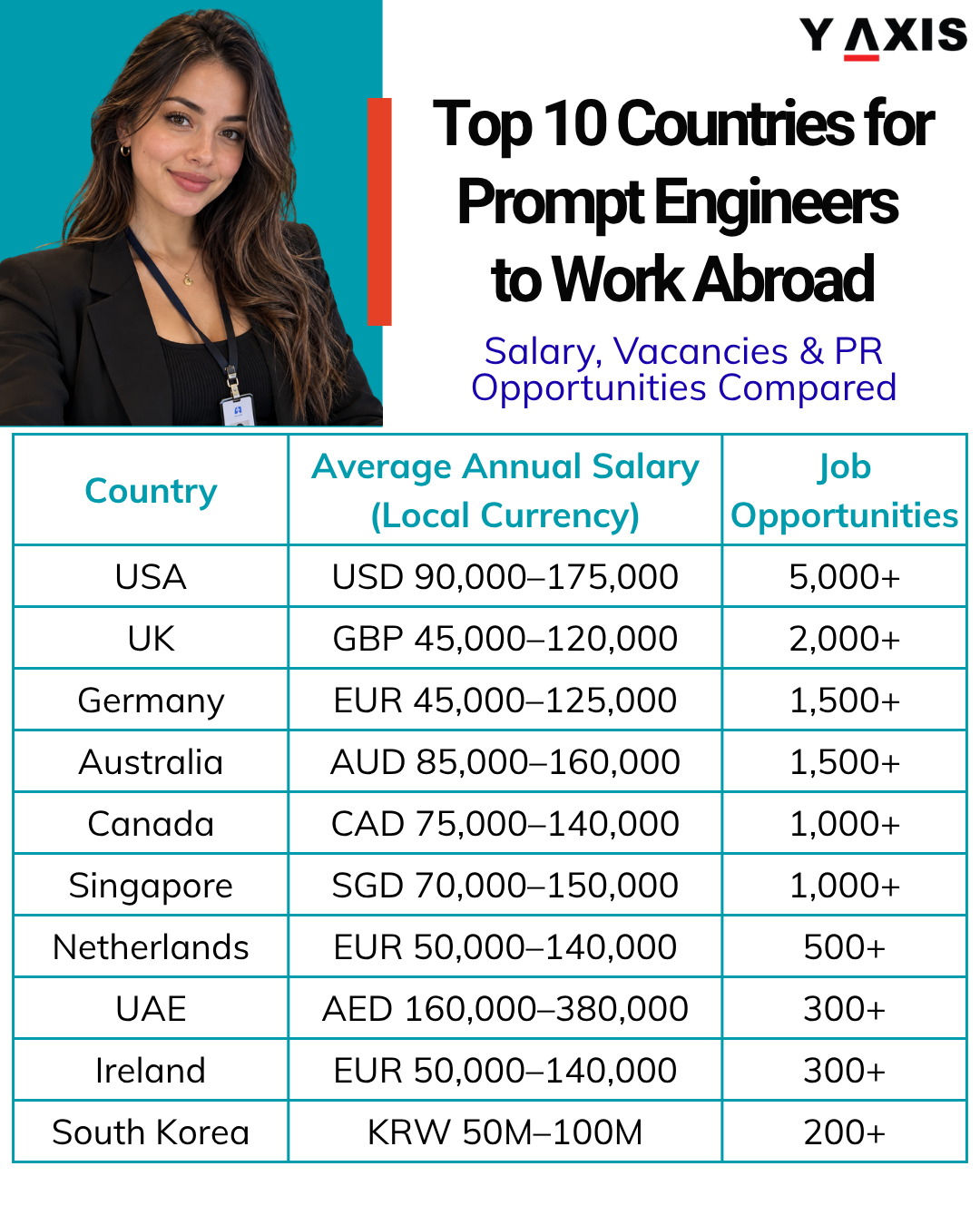
Posted On September 29 2026
Top 10 Countries for Prompt Engineers to Work Abroad: Salary, Demand & PR Opportunities Compared