

Posted on November 03 2026
What is the Average Salary in Italy?

By , Editor & Director
Updated November 06 2026
The average salary in Italy is €34,733 gross per year, or €2,894 gross per month, for full-time employees. Many employers pay over 13 instalments, making the typical gross monthly payment €2,672, and take-home pay averages around 72% of gross. Healthcare, IT, engineering, finance and management offer the highest earning potential, with pay varying by occupation and experience.
Italy has strong demand for workers in healthcare, tourism, agriculture, logistics and manufacturing, and the government has authorised 497,550 work entries for non-EU nationals between 2026 and 2028. Milan offers the highest average salaries, while Rome, Turin and Bologna are also major employment centres. With in-demand sectors, established business hubs and a relatively affordable cost of living compared with much of Western Europe, Italy offers skilled workers attractive career opportunities.
*Want to work in Italy? Book a free consultation with Y-Axis today.
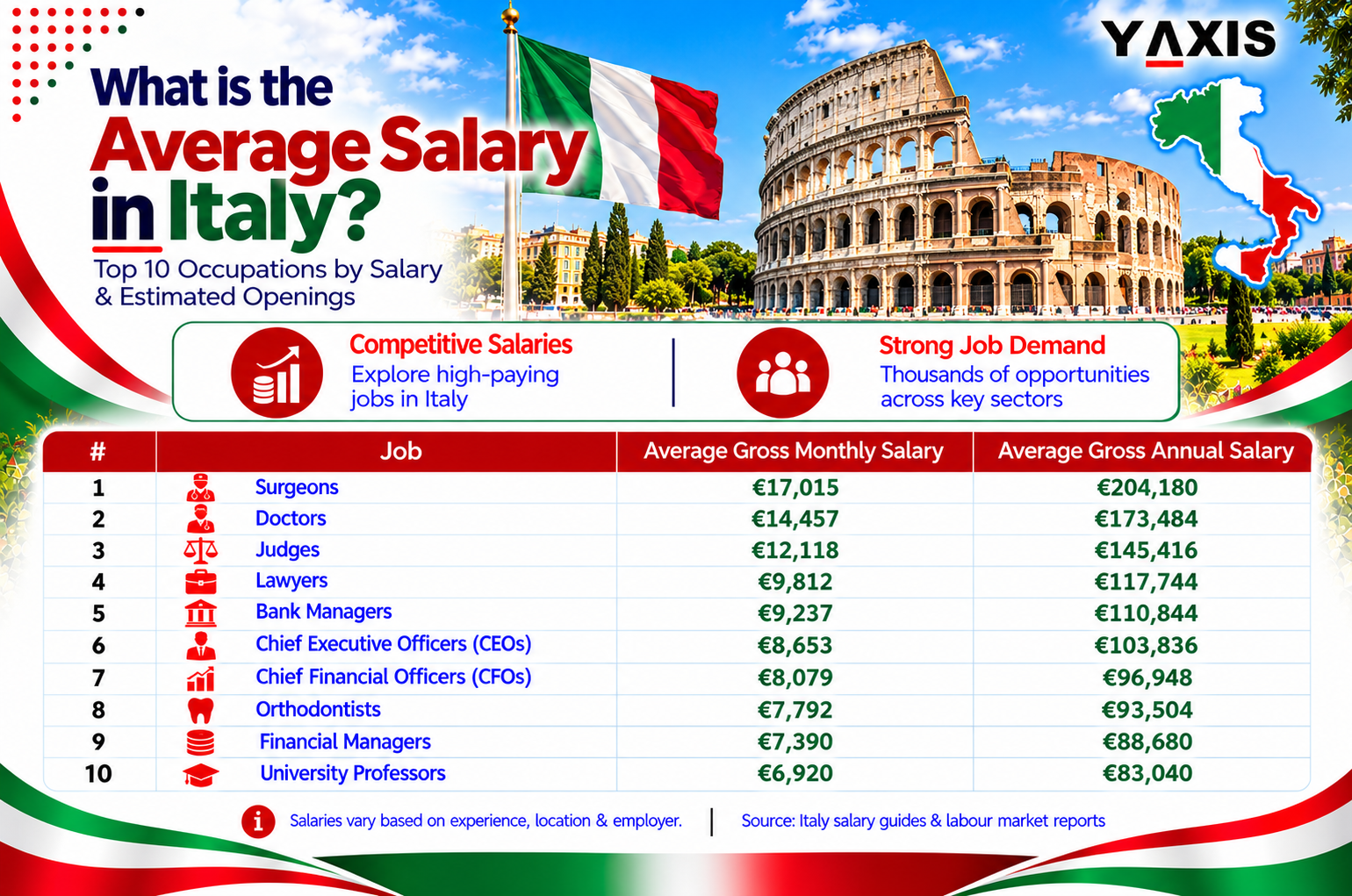
Top 10 Highest-Paying Jobs in Italy
Italy offers high-paying career opportunities in medicine, law, finance and corporate management. Doctors, judges, lawyers, bank managers, CEOs, CFOs, orthodontists, university professors, pilots and marketing directors earn average gross monthly salaries ranging from €4,890 to €13,600. Earnings depend on experience, qualifications and location, with Milan and Rome offering strong opportunities in finance and corporate management. Many Italian employment contracts also include a 13th-month salary, usually paid in December, increasing annual earnings.
| Job | Average Gross Monthly Salary | Average Gross Annual Salary |
|---|---|---|
| Surgeons | €17,015 | €204,180 |
| Doctors | €14,457 | €173,484 |
| Judges | €12,118 | €145,416 |
| Lawyers | €9,812 | €117,744 |
| Bank Managers | €9,237 | €110,844 |
| Chief Executive Officers (CEOs) | €8,653 | €103,836 |
| Chief Financial Officers (CFOs) | €8,079 | €96,948 |
| Orthodontists | €7,792 | €93,504 |
| Financial Managers | €7,390 | €88,680 |
| University Professors | €6,920 | €83,040 |
*Looking for jobs in Italy? Get a free eligibility assessment to work in Italy from Y-Axis today.
Average Salaries for In-Demand Jobs in Italy
Italy has demand for workers in healthcare, IT, engineering, renewable energy, logistics and tourism. Gross annual salaries across these sectors range from approximately €26,000 to €95,000, with doctors, finance professionals and experienced engineers among the higher earners. Nurses, software developers, solar installation technicians, skilled tradespeople and hospitality workers also have job opportunities, particularly in Northern Italy and major tourist destinations.
| Occupation | Average Annual Salary | Chances of Visa Sponsorship |
|---|---|---|
| Healthcare | €95,000 | High |
| Nursing | €31,000 | High |
| IT and Software | €45,000 | Very High |
| Engineering and Manufacturing | €48,000 | High |
| Skilled Trades and Construction | €26,000 | Moderate to High |
| Energy and Renewables | €32,000 | Moderate to High |
| Hospitality and Tourism | €30,000 | Moderate to High |
| Logistics and Supply Chain | €47,700 | Moderate to High |
| Accounting and Finance | €50,000 | Moderate |
| Pharma and Biotech | €41,900 | Moderate |
Best Cities in Italy with the Most Job Opportunities
Milan, Rome, Turin, Bologna and Naples are major employment centres in Italy, with opportunities across finance, technology, public services, engineering, manufacturing and tourism.
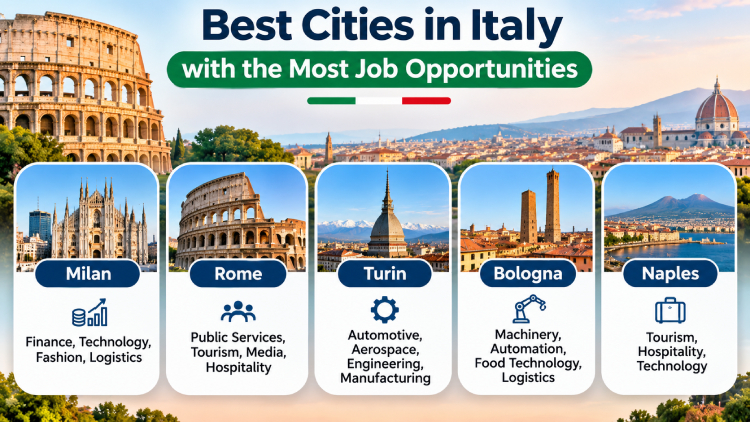
- Milan: Italy’s leading city for job opportunities and salaries, particularly in finance, technology, fashion and logistics.
- Rome: Offers roles in public administration, tourism, media and hospitality.
- Turin: Strong in automotive, aerospace, engineering and manufacturing.
- Bologna: Offers opportunities in machinery, automation, food technology and logistics.
- Naples: Has jobs in tourism, hospitality and technology, with a lower cost of living but generally lower salaries than Milan and Rome.
Italy vs Australia: Salary, Tax and Savings
The average annual salary in Italy is approximately €34,733, compared with about AUD 108,352 in Australia, based on ABS average weekly ordinary time earnings for full-time adults. Both countries offer jobs in technology, healthcare, engineering and finance, but average salaries are higher in Australia. Italy generally has lower living costs, and many employment contracts include a 13th-month salary payment. Actual savings depend on take-home pay, rent and other living expenses.
| Factor | Italy | Australia |
|---|---|---|
| Gross monthly salary | €2,894 | AUD 9,029 |
| Gross annual salary | €34,733 | AUD 108,352 |
| Estimated monthly income tax and contributions | €810 | AUD 2,099 |
| Estimated monthly take-home pay | €2,084 | AUD 6,930 |
| Estimated monthly living costs | €1,600 | AUD 3,900 |
| Estimated monthly savings | €484 | AUD 3,030 |
| Estimated annual savings | €5,808 | AUD 36,360 |
Cost of Living in Italy
A single person typically needs around €1,400–€2,800 per month to cover rent and everyday expenses in Italy. Costs are highest in Milan, with Rome and Florence also relatively expensive. Naples and other southern cities are generally more affordable, though actual expenses depend on housing, location and lifestyle.
| Factor | Estimated Monthly Cost |
|---|---|
| Rent | €700–€1,500 |
| Groceries and food | €250–€400 |
| Utilities | €100–€180 |
| Transportation | €35–€60 |
| Internet and mobile | €25–€45 |
| Personal and leisure expenses | €290–€615 |
| Total monthly cost | €1,400–€2,800 |
Job Outlook in Italy
Italy has a positive job outlook for skilled workers, with an estimated 3.3 million to 3.7 million employment opportunities expected by 2029. Demand and the need to replace retiring workers are creating openings across healthcare, IT, engineering, energy, construction, tourism and manufacturing. Software developers, AI specialists, cybersecurity analysts, engineers, registered nurses and skilled technicians are among the roles with strong prospects. Milan, Rome, Turin, Bologna and Naples are major employment hubs, offering opportunities across these sectors for international workers seeking career growth.
*Want to work in Italy? Get expert guidance from Y-Axis professionals.
FAQs
How does the average salary in Italy compare with the rest of Europe?
Italy’s average salary sits below the EU average. Eurostat data puts the average full-time salary at €33,523, against an EU average of €39,808. Lower living costs in many cities, a 13th-month payment and strong regional pay differences mean the gap can feel smaller in practice, especially outside Milan and Rome.
What is the average monthly salary in Italy?
The average gross monthly salary in Italy is about €2,894 when the annual figure is divided by 12. Many Italian contracts pay the annual salary over 13 instalments, so the typical gross monthly payment is about €2,672. The 13th-month payment is usually made in December, so the annual total stays the same.
What is the average salary in Italy after tax?
Take-home pay averages about 72% of gross. Italy taxes income at 23% up to €28,000, 33% up to €50,000 and 43% above that, plus employee social security of about 9% to 10%. On the average salary, that is roughly €2,084 a month. Exact take-home pay depends on your region and family circumstances.
What is a good salary in Italy?
A salary above €35,000 a year, including benefits, is considered good in Italy, and the cost of living is lower than the EU average. In expensive cities such as Milan, professionals usually need more to live comfortably. Location, household size and rent all affect how far a salary stretches, so compare pay against living costs city by city.
What is the minimum wage in Italy?
Italy has no national statutory minimum wage. Pay must be at least the collective agreement rate for your role. These agreements are set sector by sector, so the minimum depends on the industry and job. This is why entry-level pay can differ widely between retail, hospitality, manufacturing and other sectors.
What are the highest-paying jobs in Italy?
The highest-paying jobs in Italy are doctors, judges, lawyers, bank managers, chief executive officers and chief financial officers. Estimated average monthly salaries run from about €7,600 for chief financial officers to €13,600 for doctors. Orthodontists, university professors, pilots and marketing directors also appear on the top ten list, with pay varying by experience and employer.
Which city in Italy has the highest salaries?
Milan has the highest average salary in Italy. It leads in finance, technology, fashion and logistics. Rome, Turin and Bologna also offer above-average pay in public administration, engineering and manufacturing. Southern regions such as Sicily, Sardinia, Calabria and Campania report the lowest wages, although living costs there are also lower.
How does the average salary in Italy compare with Australia?
Australia’s average full-time salary is about AUD 108,352, almost double Italy’s €34,733 at current exchange rates. Take-home pay is also higher in Australia, at about AUD 6,930 a month against €2,084 in Italy. Italy offers lower living costs and a 13th-month payment, so the better choice depends on your priorities.
Is the cost of living in Italy lower than in Australia?
Yes. A single person’s estimated monthly living costs are about €1,600 in Italy, against about AUD 3,890 in Australia, including rent. Costs vary by city, with Milan and Rome far more expensive than the south. Australian earners still save more in absolute terms, estimated at AUD 3,030 a month.
Tags:
Average Salary in Italy
Average Monthly Salary in Italy
Highest-Paying Jobs in Italy
Good Salary in Italy
Italy Salary by Profession
Italy Salary After Tax
Italy Salary by City
Cost of Living in Italy
Italy vs Australia Salary
Italy vs Australia Living Costs
Share
Latest Article
Popular Post
Trending Article
Posted On November 06 2026
What is the Average Salary in Canada?