
Posted on December 15 2025
Which Intake Is the Best to Study in Germany?

By , Editor & Director
Updated December 16 2025
The Winter intake is the best intake to study in Germany because it offers wide range of programs, higher admission chances, and better access to part-time jobs and internships. With more than 400,000 international students in Germany, most start in the Winter semester since nearly 80% of programs open during this period. Universities also provide more seats, structured orientation support, scholarship options, and easier accommodation arrangements.
The Summer intake is offered by fewer universities, but it can be a good choice for students looking for specific programs, faster processing, and less competition. Winter aligns more closely with major recruitment cycles and student hiring periods. For overall flexibility, support, and career alignment, the Winter intake remains the preferred choice for international students.
*Want to study in Germany? Let Y-Axis guide you through the entire process.
What are the Study Intakes in Germany for International Students?
Germany has two main intakes for international students: the Winter intake and the Summer intake. Each intake follows different timelines, course availability, and admission opportunities.
1. Winter Intake (September/October)
- Primary and most preferred intake for international students.
- Nearly 80% of programs open during this semester.
- Offers more seats, more scholarships, and full orientation support.
- Aligns well with academic calendars, campus events, and student services.
2. Summer Intake (March/April)
- Secondary intake with fewer universities and limited programs.
- Best for students who prefer a mid-year start, less competition, or faster processing.
- Good opportunities in selected fields like engineering, IT, and applied sciences.
- Ideal for students who missed Winter deadlines or need more preparation time.
Why is the Winter Intake most preferred by International Students in Germany?
The Winter intake is most preferred by international students in Germany because it offers the widest range of programs, follows the main academic calendar starting in October, and provides more time to prepare applications, documents, and visas. Most undergraduate and postgraduate courses open in this intake, and universities offer more seats, more scholarships, and full orientation support.
The Winter intake also aligns better with job and internship cycles, giving students stronger career prospects after graduation. With more cultural activities, larger student groups, and better networking opportunities, the Winter semester offers a smoother and more supportive transition into student life in Germany.
How to Choose the Right Intake to Study in Germany?
Choosing the right intake depends on your course availability, academic readiness, and how much time you need for documents and visa processing. The Winter intake suits students who want the widest program options and full university support, while the Summer intake works well for those who prefer a mid-year start or need extra preparation time.
Important things to consider before choosing an Intake in Germany:
Before deciding on Winter or Summer, it’s important to compare program availability, admission chances, and scholarship options. This helps you choose the intake that best matches your goals and readiness.
|
Factor |
Winter Intake |
Summer Intake |
|
Program Availability |
High |
Limited |
|
Admission Chances |
High |
Higher for Eligible Courses |
|
Scholarship Opportunities |
High |
Medium |
Application Timelines for Germany Intakes:
Application timelines are crucial for planning your documents, language tests, and visa process. Each intake follows different deadlines, so starting early helps avoid delays and increases your chances of securing admission.
|
Intake |
Application Period |
Course Start |
|
Winter Intake (Sept/Oct) |
April – July |
September / October |
|
Summer Intake (Mar/Apr) |
September – January |
March / April |
Top Universities in Germany for the Winter Intake for International Students
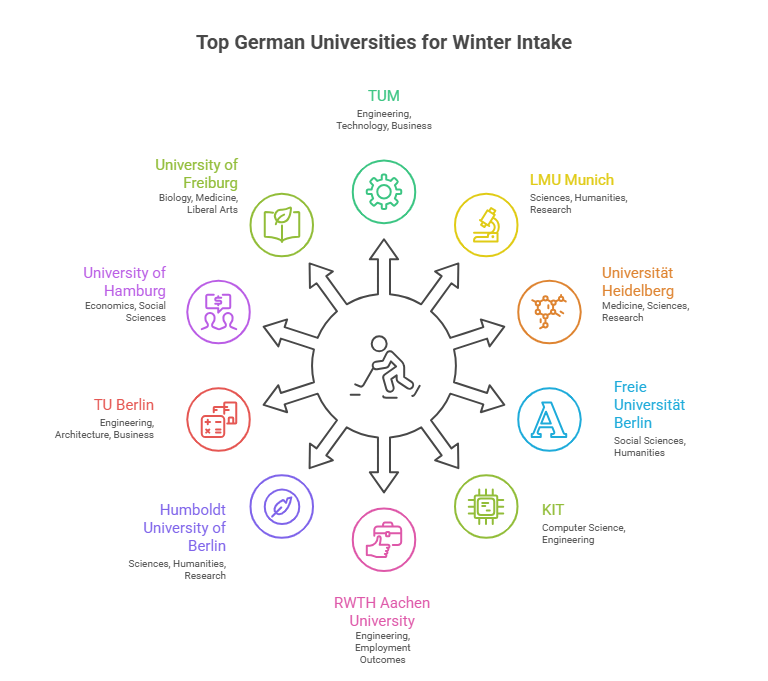
Germany’s Winter intake is the most popular option for international students because leading universities open most of their programs during this semester. It offers the strongest access to highly ranked institutions known for world-class research, experienced faculty, industry partnerships, and strong global employability outcomes.
Some of the top 10 German universities preferred by international students for the Winter intake, based on QS World University Rankings:
- Technical University of Munich (TUM): Known for engineering, technology, business, and strong global rankings.
- Ludwig-Maximilians-Universität München (LMU Munich): Leading university for sciences, humanities, and research programs.
- Universität Heidelberg: Germany’s oldest university, popular for medicine, sciences, and research-intensive programs.
- Freie Universität Berlin: Top choice for social sciences, humanities, and international relations.
- Karlsruhe Institute of Technology (KIT): Strong in computer science, engineering, and applied sciences.
- RWTH Aachen University: Germany’s engineering powerhouse with strong employment outcomes.
- Humboldt University of Berlin: Renowned for sciences, humanities, and international research networks.
- TU Berlin (Technische Universität Berlin): Popular for engineering, architecture, and business programs.
- University of Hamburg: Known for economics, social sciences, and strong research output.
- University of Freiburg: Popular for biology, medicine, environmental sciences, and liberal arts.
Popular Courses Available for Winter and Summer Intakes in Germany
International students often look for programs that are available in both the Winter and Summer intakes so they can plan their studies with more flexibility. While the Winter intake offers the largest selection, many in-demand courses are still open in both semesters.
Some of the top popular courses that international students commonly choose across both intakes:
- Computer Science & IT
- Mechanical Engineering
- Electrical & Electronics Engineering
- Automotive Engineering
- Data Science & Artificial Intelligence
- Business Administration (BBA/MBA)
- International Management
- Biotechnology & Life Sciences
- Civil Engineering
- Industrial Engineering & Management
Eligibility Requirements for International Students Applying to German Intakes
To apply for either the Winter or Summer intake in Germany, international students must meet certain academic, language, and financial requirements. These criteria ensure that students are prepared for their chosen program and able to manage the admission and visa process smoothly.
Key Eligibility Requirements include:
- Academic qualifications: You must have the required level of education—12 years of schooling for a bachelor’s program or a recognised bachelor’s degree for a master’s program.
- Language proficiency: Provide proof of English (IELTS/TOEFL) or German proficiency (TestDaF/DSH), depending on your program’s language of instruction.
- APS Certificate (if required): Students from certain countries such as India, China, Vietnam and Mongolia must submit an APS certificate for academic document verification.
- Valid passport: A valid passport is required for university applications and the student visa process.
- Supporting documents: Submit certified transcripts, degree certificates, a CV, a Statement of Purpose, and letters of recommendation (if needed).
- Proof of financial support: Show financial evidence such as a blocked account to cover your living expenses and tuition (if applicable) for the visa application.
Step-by-Step Application Process for Studying in Germany
Step 1: Research Your Course and Intake
Step 2: Check Eligibility Requirements
Step 3: Gather All Required Documents
Step 4: Apply Through Uni-Assist or University Portal
Step 5: Pay the Application Fee (If Required)
Step 6: Track Application Status and Await Decision
Step 7: Receive Your Offer Letter
Step 8: Open a Blocked Account & Arrange Financial Proof
Step 9: Apply for Your German Student Visa
*Planning to study in Germany? Sign up with Y-Axis to guide you through the process.
Which Intake Offers More Scholarships for International Students in Germany?
The Winter intake offers more scholarships for international students in Germany. Most major funding programs — including DAAD scholarships, university-specific awards, and departmental scholarships — release their primary funding rounds for the Winter semester because it is the main academic cycle with the highest number of programs and seats.
The Summer intake has fewer scholarship options since fewer courses are offered and fewer funding rounds are available. While some scholarships still exist for Summer applicants, the opportunities are more limited.
If you want to maximize your scholarship chances, the Winter intake is the better choice.
Read more….
Top 10 scholarships to study in Germany
FAQs
Which intake is best to study in Germany for international students?
The Winter intake is generally the best intake to study in Germany because it offers the most courses, more seats, and wider options for international students. Most universities open their full program list during this period, making it easier to find suitable degrees. Scholarship availability and support services are also higher in Winter. While the Summer intake works for select courses, Winter provides the strongest overall opportunities.
How many study intakes are there in Germany?
Germany has two study intakes: the Winter intake and the Summer intake. Winter begins in September/October and is the main academic intake with more programs and seats. Summer begins in March/April and offers fewer courses but can still suit certain applicants. Knowing how many intakes in Germany exist helps students plan applications, deadlines, and visa timelines effectively.
What is the difference between the Winter and Summer intakes in Germany?
The Winter intake in Germany offers more programs, more seats, and stronger scholarship opportunities, making it the primary intake. The Summer intake is smaller with fewer programs but less competition and faster processing. Winter is ideal for maximum course choice, while Summer suits students who want quicker admission cycles. Understanding this difference helps international students choose the right Germany study intake for their goals and timelines.
Why is the Winter intake considered the main intake in Germany?
The Winter intake is the main intake in Germany because it marks the start of the academic year and includes the full range of available programs. Universities open most Bachelor’s and Master’s courses during this period, offering more seats and better support services. It also aligns with major scholarship cycles. For international students comparing Germany study intakes, Winter provides the strongest academic and admission advantages.
Is the Summer intake good for international students?
The Summer intake can be good for international students who want fewer applicants, faster admission decisions, or who missed Winter deadlines. Although it offers fewer programs, it still includes strong options in engineering, IT, and applied sciences. Students benefit from shorter processing timelines and less competition. However, because course availability is limited compared to the Winter intake, students should confirm whether their program is offered in Summer.
Which intake offers more courses in Germany?
The Winter intake offers significantly more courses in Germany. Most universities release their full list of Bachelor’s and Master’s programs during Winter because it aligns with the academic year. Engineering, IT, business, sciences, and arts are widely available. The Summer intake has fewer options and is offered by select universities only. For students seeking maximum flexibility, Winter is the better Germany study intake.
When should I apply for the Winter intake in Germany?
International students should apply for the Winter intake between May and July, depending on the university. Some institutions open applications as early as April. Because Winter is the most popular intake with more competition, early submission improves admission chances. Students should prepare documents, language certificates, and visa requirements early. Planning ahead ensures a smoother process for the main Germany study intake.
When should I apply for the Summer intake in Germany?
Students should apply for the Summer intake between September and November of the previous year. Some universities may extend deadlines into December, but applying early ensures better chances due to limited programs. Applicants must check whether their course is offered in Summer and prepare documents and visa requirements in advance. For students seeking faster processing, the Summer intake is a practical Germany study intake option.
Which intake gives higher chances of admission in Germany?
The Winter intake generally gives higher chances of admission because it offers more programs and seats across universities. Although competition is higher, the wide range of courses increases overall opportunities. The Summer intake has fewer applicants but also fewer programs, so chances depend on the field of study. Applying early and meeting requirements improves success in both Germany study intakes.
Which intake is better for scholarships in Germany?
The Winter intake is better for scholarships in Germany because most funding programs, including DAAD and university grants, align with the start of the academic year. More programs qualify for scholarships during Winter, increasing chances for international students. The Summer intake offers fewer scholarships due to limited course availability. Students aiming for financial support should target Winter deadlines when planning Germany study intakes.
Tags:
Germany study intakes
Study in Germany
Germany winter intake
Germany summer intake
Germany admissions
Germany intake timelines
Germany universities
Germany study visa
Study abroad
Higher education Germany
Share
Latest Article
Popular Post
Trending Article
Posted On September 29 2026
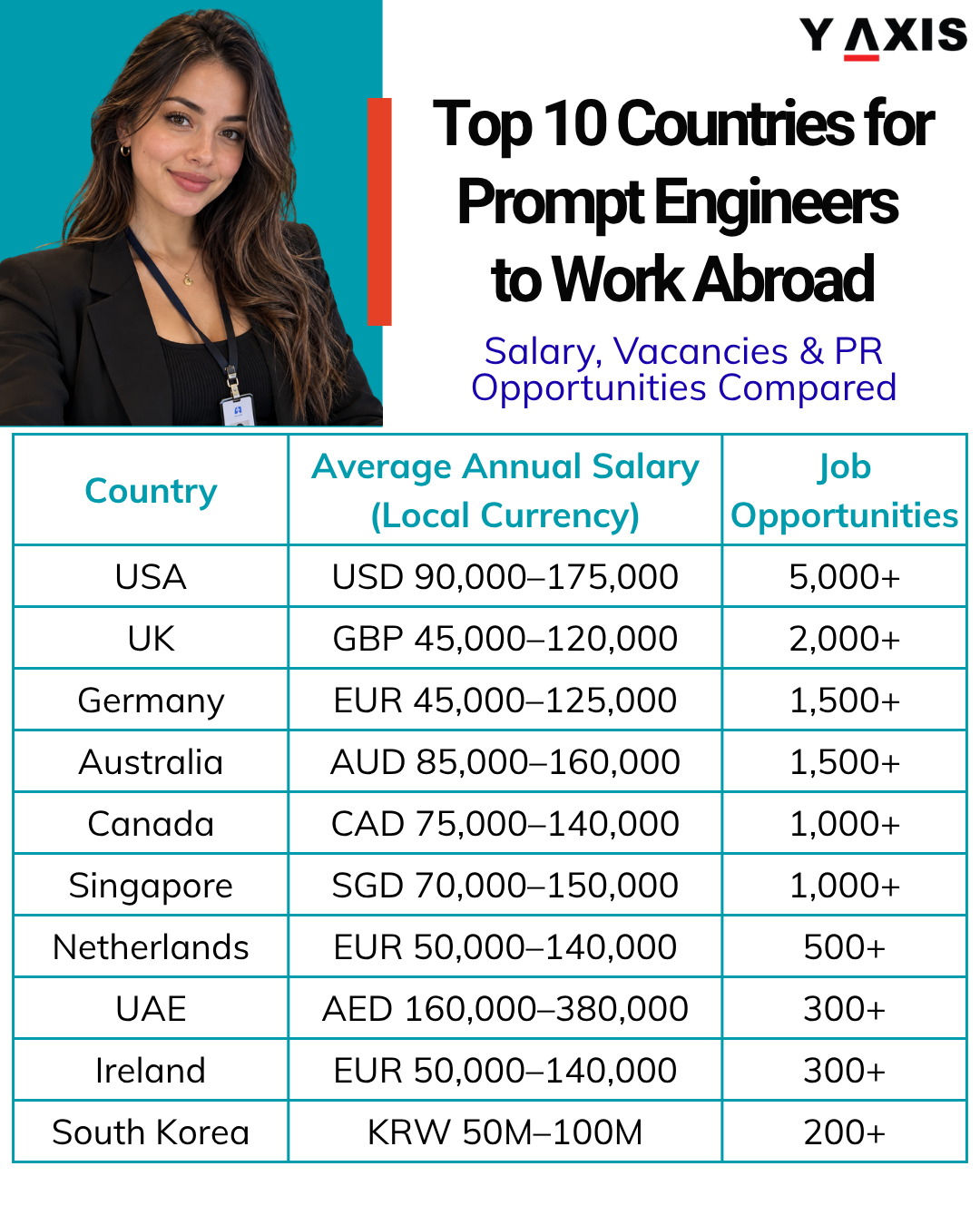
Top 10 Countries for Prompt Engineers to Work Abroad: Salary, Demand & PR Opportunities Compared