Posted on December 16 2025
Fast-Track Hiring Options in Germany for Skilled Professionals

By , Editor
Updated December 16 2025
Germany has four main fast-track hiring options to help fill more than 1.8 million job vacancies across high-demand sectors including IT, engineering, healthcare, logistics, manufacturing, and skilled trades. These shortages are expected to increase further, with vacancies projected to reach 7 million by 2035. The German government is also planning to introduce additional fast-track hiring pathways to address ongoing labour shortages.
With over €1 trillion being invested in infrastructure, energy transition, digitalisation, housing, and industrial modernisation, demand for skilled workers continues to rise steadily. To support this growth, Germany relies on streamlined hiring processes and work visa pathways to attract international talent and maintain long-term economic stability.
*Looking to fast-track hiring options to work in Germany? Get expert support from Y-Axis.
Fast-Track Hiring Pathways for Skilled Professionals in Germany
Germany offers 4 main fast-track immigration pathways designed to help skilled professionals secure employment and begin working sooner. These pathways simplify documentation, shorten visa processing times, and make it easier for employers to fill critical shortages. Fast-track routes are particularly relevant for individuals with recognised qualifications, professional experience, and job offers in high-demand sectors.
The main fast-track hiring pathways include:
- Accelerated Skilled Worker Procedure (ASVP): Allows employers to work directly with immigration authorities in Germany to speed up recognition and visa processes, reducing approval time to just a few weeks.
- EU Blue Card: A fast-track option for highly qualified professionals with a recognised degree and a job offer that meets the salary threshold, especially in shortage occupations.
- Skilled Worker Visa: Available for individuals with recognised vocational qualifications or professional experience in occupations facing shortages.
- Opportunity Card (Chancenkarte): A points-based system that allows qualified job seekers to enter Germany and search for employment for up to one year.
Benefits of Fast-Track Hiring for Skilled Professionals in Germany
Fast-track hiring offers several advantages for skilled professionals looking to start work in Germany sooner. These pathways are designed to shorten waiting times, reduce paperwork and make the relocation process more efficient for both employers and skilled workers.
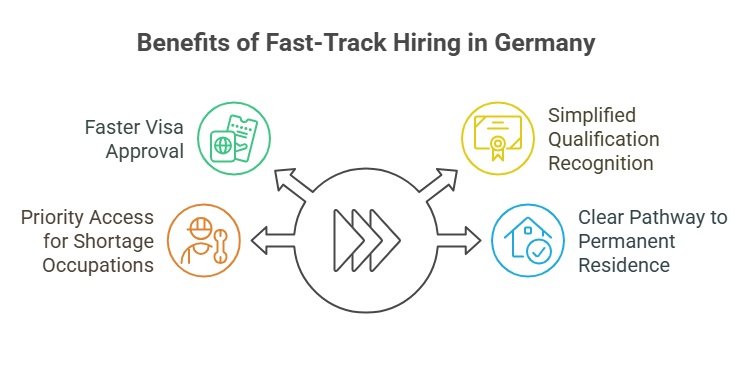
Key benefits for Skilled Professionals through fast track include:
- Faster visa approval
- Simplified qualification recognition
- Priority access for shortage occupations
- Clear pathway to permanent residence
Who is Eligible for fast-track hiring options to work in Germany?
To qualify, applicants must meet the requirements of the Skilled Immigration Act and work in a role that matches their professional background.
Applicants must meet the following eligibility criteria:
- Recognised Qualification: Your degree or vocational qualification must be recognised in Germany through bodies such as ZAB for academic qualifications or IHK FOSA for vocational qualifications.
- Valid Job Offer: A signed employment contract or job offer from a German employer in a skilled or shortage occupation.
- Relevant Professional Experience: Professional experience aligned with the job, especially in sectors like IT, engineering, healthcare, and skilled trades.
- Salary Requirements: Your job must meet the required minimum salary level (lower thresholds apply for shortage occupations under the EU Blue Card).
- Language Requirements: Some occupations, especially healthcare and regulated professions, require German language skills such as B1 or B2 depending on role.
- Required Documents: Valid passport, qualification recognition result, employment contract, CV, and supporting visa documents.
Document Checklist for Fast-Track Work Visa in Germany
Applicants must submit the required documents to support their visa and qualification recognition process. While requirements may vary by pathway and embassy, the following documents are typically required:
- Valid passport
- Signed job offer or employment contract from a German employer
- Proof of qualification recognition (ZAB or IHK FOSA result)
- Degree, diploma, or vocational training certificates
- Transcripts or academic mark sheets (if applicable)
- Updated CV with relevant work experience
- Work experience certificates or reference letters
- Salary details (required for EU Blue Card and some skilled visas)
- German language certificate (if required for regulated professions)
- Proof of health insurance
- Biometric passport-sized photos
- Completed visa application form and declaration
Step-by-Step Fast-Track Procedure for Skilled Work Visa in Germany
Step 1: Your qualifications must be recognised in Germany.
Step 2: Secure a Job Offer
Step 3: Employer Initiates the Fast-Track Process (ASVP)
Step 4: Wait for Federal Employment Agency Approval
Step 5: Once approved, Receive Pre-Approval Letter (if applicable)
Step 6: Apply for the Work Visa
Step 7: Travel to Germany and Receive Residence Permit
*Want to apply for fast track work in Germany? Get expert guidance from Y-Axis professionals.
Processing Time and Costs for Fast-Track Visas in Germany
Fast-track hiring pathways are designed to reduce waiting times and simplify paperwork, especially for shortage occupations and recognised professionals. While exact timelines vary by embassy and documentation, accelerated pathways are significantly faster than standard processing.
Estimated Fast-Track Visa Processing Times:
|
Pathway |
Average Processing Time |
|
Accelerated Skilled Worker Procedure (ASVP) |
4–10 weeks |
|
EU Blue Card |
6–12 weeks |
|
Skilled Worker Visa |
8–16 weeks |
|
Opportunity Card (Chancenkarte) |
8–18 weeks |
Cost Breakdown for Fast-Track Hiring in Germany:
|
Category |
Processing Cost |
|
Visa Application Fee |
€75–€100 |
|
ASVP Fee ( Paid by the Employer ) |
€411 |
|
Qualification Recognition |
€200–€600 |
|
Translations & Certification |
€50–€300 |
|
Health Insurance (Mandatory) |
Varies |
Top Sectors Hiring Skilled Workers in Germany
Germany continues to hire skilled workers across multiple industries, with demand highest in sectors experiencing long-term labour shortages. Due to digital transformation, ageing population needs and major infrastructure expansion, many roles cannot be filled locally and require overseas recruitment.
High-demand job sectors for fast track hiring include:
- Information Technology (IT)
- Engineering
- Healthcare and Nursing
- Skilled Trades
- Logistics and Transportation
- Manufacturing and Automotive
- Renewable Energy
Leading Companies Hiring Skilled Workers in Germany
Several leading companies in Germany actively hire international professionals, especially in shortage sectors such as IT, engineering, healthcare, logistics and advanced manufacturing. Many of these employers also support visa sponsorship and participate in fast-track hiring pathways like the EU Blue Card and ASVP process.
Top employers currently recruiting skilled workers include:
- Siemens: Engineering, automation, energy systems, and digital innovation
- Bosch: Automotive technology, robotics, electronics, and software development
- Volkswagen Group & BMW: Automotive engineering, electric vehicles, and advanced manufacturing
- SAP: Software development, cloud computing, cybersecurity, and IT consulting
- Deutsche Bahn (DB): Rail engineering, infrastructure, and logistics roles
- Charité & Helios Kliniken: Nursing positions, doctors, and healthcare specialists
- DHL & Deutsche Post: Logistics, transportation, and supply chain operations
- Infineon Technologies: Semiconductor engineering, microelectronics, and hardware innovation
Pathways to Permanent Residence after Fast-Track Hiring in Germany
Fast-track hiring options in Germany can also lead to long-term residency and settlement. Most skilled professionals can apply for permanent residence after maintaining full-time employment and meeting language and integration requirements.
Typical pathways to PR include:
- EU Blue Card Holders: Eligible for permanent residence after 21 months with B1 German or 33 months with basic A1–A2 German.
- Skilled Worker Visa Holders: Can apply for PR after 4 years of qualified employment in Germany.
- Research and Highly Skilled Professionals: May qualify sooner depending on role and salary level.
- Family Members: Spouses and dependents may also qualify for permanent residence after meeting residency duration and language requirements.
Tips to Improve your Chances for Fast-Track Hiring in Germany
To increase approval chances and avoid delays, skilled professionals should prepare documents early and follow official requirements carefully.
- Start qualification recognition early (ZAB or IHK FOSA can take weeks).
- Ensure the job role matches your qualification and experience.
- Check salary meets visa category thresholds (especially for the EU Blue Card).
- Prepare certified translations for non-German documents.
- Schedule embassy appointments early, as slots fill quickly.
- Maintain continuous communication with your employer throughout the process.
*Planning to work in Germany? Start your journey with expert guidance and support from Y-Axis.
FAQs
What are the fast-track hiring options available in Germany for skilled professionals?
Fast-track hiring options in Germany allow skilled professionals to secure employment sooner through pathways like the German Working Visa, Skilled Worker Visa Germany, and EU Blue Card. These programs help applicants in shortage occupations such as engineering, IT, healthcare, trades, and logistics. Fast processing, employer sponsorship, and simplified qualification recognition make these options appealing for professionals planning to work in Germany and move through the immigration pathway faster.
How does the German Working Visa support fast-track hiring?
The German Working Visa supports fast-track hiring by allowing employers to quickly fill shortage occupations with qualified international professionals. Applicants with recognised skills and a valid job offer may receive faster visa approval. This pathway helps sectors like engineering, IT, and healthcare hire skilled workers efficiently. It’s one of the key visa options in Germany for job-ready talent seeking employment and long-term immigration benefits.
What is the EU Blue Card and why is it important for skilled workers moving to Germany?
The EU Blue Card Germany offers highly skilled workers a faster and more flexible entry to secure employment. It provides higher salary potential, faster processing, and easier access to permanent residency. It’s ideal for professionals in engineering, IT, research, and healthcare seeking quicker hiring options. The EU Blue Card also supports mobility across EU countries, making it a highly preferred pathway for skilled migrants planning to build a career in Germany.
Who is eligible for the Skilled Worker Visa Germany under fast-track hiring?
Eligibility for the Skilled Worker Visa Germany depends on recognised qualifications, relevant experience, and a job offer from a German employer. Skilled professionals working in high-demand fields such as tech, healthcare, trades, logistics, and engineering are prioritised under fast-track hiring. Updated rules now make qualification recognition faster, allowing skilled workers to enter the German labour market more quickly and move toward long-term career opportunities or permanent residency.
How can Australians apply to work in Germany through fast-track hiring programs?
Australians can apply for fast-track hiring in Germany through pathways like the German Working Visa, Skilled Worker Visa Germany, or EU Blue Card. Applicants need a job offer, recognised qualifications, and supporting documents. Hiring is faster in shortage sectors such as healthcare, engineering, trades, and IT. Germany’s streamlined immigration pathway makes it easier for Australians to work, settle, and eventually apply for long-term residency.
Which sectors offer fast-track hiring opportunities in Germany?
Fast-track hiring is strongest in sectors with skills shortages, including engineering, IT, cybersecurity, healthcare, aged care, skilled trades, logistics, and renewable energy. Employers in these industries often sponsor visas such as the EU Blue Card or Skilled Worker Visa Germany. These sectors are ideal for skilled talent seeking fast employment and long-term work opportunities in Germany’s growing labour market.
Which employers in Germany hire skilled professionals through fast-track processes?
Top employers participating in fast-track hiring include Siemens, Bosch, BMW Group, Mercedes-Benz, SAP, Deutsche Bahn, and major hospitals and tech companies. These organisations hire through the German Working Visa, Skilled Worker Visa Germany, and EU Blue Card programs. Companies operating in engineering, IT, healthcare, manufacturing, and renewable energy are especially active in hiring skilled professionals quickly.
How long does fast-track hiring take for a German Working Visa or EU Blue Card?
Processing time varies, but fast-track hiring can reduce approval timelines significantly. Many skilled workers receive the EU Blue Card or German Working Visa within a few weeks to a few months when employer sponsorship and qualification recognition are completed early. Shortage occupations benefit most, making the process faster for skilled individuals ready to work in Germany.
Do I need German language skills to qualify for fast-track hiring in Germany?
No, German language skills are not always required for fast-track hiring, especially in IT, engineering, and multinational corporate roles. However, regulated professions like healthcare often require German language proficiency. While English may be enough for employment, knowing some German helps with visa processing, integration, and long-term residency opportunities.
Can fast-track hiring lead to permanent residency in Germany for skilled professionals?
Yes, fast-track hiring can lead to permanent residency in Germany. Skilled professionals working under the EU Blue Card or Skilled Worker Visa Germany can apply for permanent residency after meeting work duration and income requirements. The EU Blue Card offers one of the fastest pathways, making it a strong option for skilled migrants planning to settle long-term in Germany.
Tags:
German Working Visa
EU Blue Card
Skilled Worker Visa Germany
Work in Germany from Australia
Fast Track Hiring Germany
Germany Jobs for Skilled Workers
Germany Immigration Pathway
Germany Visa Sponsorship Jobs
Share
Latest Article
Popular Post
Trending Article
Posted On March 31 2026
Top 10 Countries for Software Engineers to Work Abroad: Salary, Demand & PR Opportunities Compared