
Posted on August 07 2026
Partner Visa Australia 2026: Complete Guide to 820, 801, 309, 100 & 300

By , Editor & Director
Updated August 10 2026
A partner visa lets the spouse or de facto partner of an Australian citizen, permanent resident or eligible New Zealand citizen live in Australia permanently. The application charge is AUD 11,710 for the primary applicant from 1 July 2026, and most applicants wait three to five years between lodging the temporary visa and being granted permanent residence. This guide covers every pathway, the evidence you need, current fees, processing times and what changed in the application process in 2026.
Want to check your partner visa eligibility? Y-Axis can review your evidence before you lodge, so you apply once and apply right.
Types of Partner Visa in Australia
Australia runs three related pathways for couples, and which one applies to you depends on where the applicant is living and whether you are already married.
|
Subclass |
Visa Type |
Who It Suits |
|
820 |
Temporary, onshore |
Applicant already in Australia, married or de facto |
|
801 |
Permanent, onshore |
Granted after the 820, generally around two years later |
|
309 |
Temporary, offshore |
Applicant outside Australia, married or de facto |
|
100 |
Permanent, offshore |
Granted after the 309, generally around two years later |
|
300 |
Prospective Marriage |
Couples planning to marry in Australia within 9 months |
The Subclass 820 and 801 are lodged together as a combined application. You are granted the temporary 820 first, and Home Affairs assesses you for the permanent 801 roughly two years later, provided the relationship is still genuine at that point. The Subclass 309 and 100 work the same way for couples applying from outside Australia. The Subclass 300 is different: it is only for engaged couples, it does not lead directly to permanent residence, and the applicant must marry within nine months and then lodge a separate 820/801 application from within Australia.
Subclass 820 and 801: Onshore Partner Visa
This is the most common pathway for couples where the applicant already holds a visa in Australia, such as a student, working holiday or visitor visa. You can generally apply for the 820 while your current visa is still valid, or on a bridging visa if it has expired. Once lodged, you are automatically granted a Bridging Visa A, which lets you stay in Australia with work rights while the application is assessed.
Subclass 309 and 100: Offshore Partner Visa
This pathway suits couples where the applicant is living outside Australia, most often because the couple met or has been living together overseas. The applicant does not receive a bridging visa and generally needs to stay outside Australia while the Subclass 309 is decided, although short visits on a separate visa may be possible depending on individual circumstances.
Subclass 300: Prospective Marriage Visa
The Subclass 300 suits couples who are engaged but not yet married, where the applicant is overseas and the wedding will take place in Australia. Once the visa is granted, the applicant has nine months to enter Australia and marry. After the wedding, the couple applies for the Subclass 820/801 from within Australia, and part of the fee already paid on the 300 is generally credited toward the new application.
Partner Visa Eligibility Requirements
Both the applicant and the sponsor need to meet separate requirements, and a problem on either side can affect the whole application.
Relationship Requirements
- Married couples can apply at any time, provided the marriage is legally valid in Australia.
- De facto couples generally need to show at least 12 months living together immediately before applying.
- Couples who have not reached 12 months may still qualify if they are registered as de facto partners under state or territory law, or if compelling circumstances apply, such as a shared child or family violence.
- The relationship must be genuine and continuing, not one entered into for the purpose of obtaining a visa.
Sponsor Eligibility
- The sponsor must be an Australian citizen, permanent resident, or eligible New Zealand citizen aged 18 or over.
- Sponsors with a history of family violence offences or a previous partner visa sponsorship may face restrictions or a bar on sponsoring again.
- A person can generally only sponsor two partner visa applicants in their lifetime, with a minimum 5 year gap between sponsorships if they have sponsored before.
- The sponsor must complete and sign the sponsorship form and undergo a character check.
Relationship Evidence
Home Affairs assesses relationship evidence across four categories, and a strong application shows consistent evidence in all four rather than concentrating on just one or two.
|
Category |
Example Evidence |
|
Financial |
Joint bank accounts, shared bills, joint loans or leases, shared ownership of assets |
|
Household |
Shared address history, joint tenancy or mortgage documents, utility bills in both names |
|
Social |
Photos together over time, joint invitations, statements from family and friends, evidence of shared social activities |
|
Commitment |
Statutory declarations about your relationship, wills naming each other, long term plans discussed together |
How to Apply for a Partner Visa in Australia
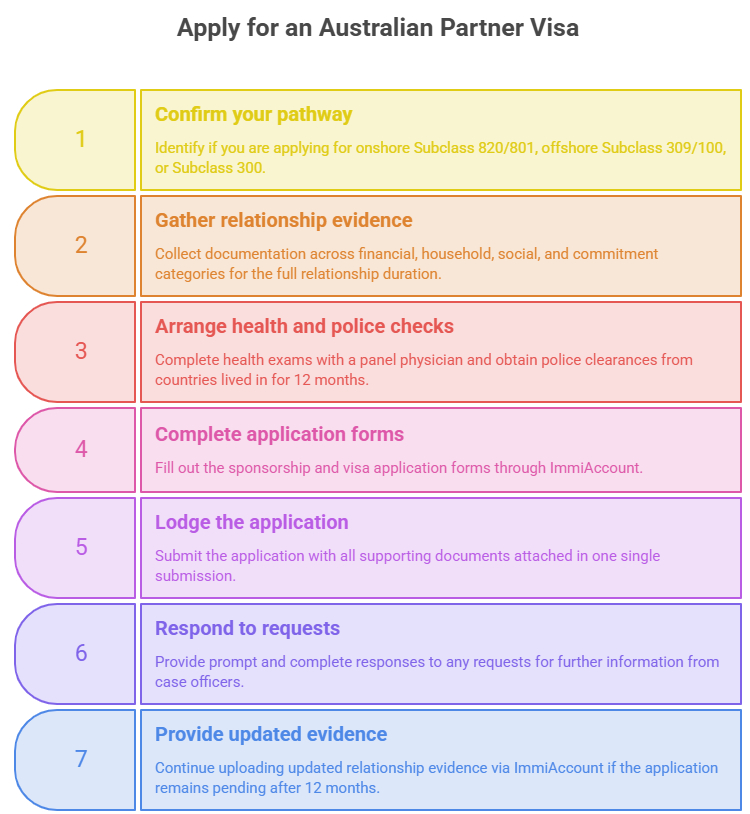
1. Confirm which pathway applies to you: onshore Subclass 820/801, offshore Subclass 309/100, or Subclass 300 if you plan to marry in Australia.
2. Gather relationship evidence across all four categories: financial, household, social and commitment, covering the full length of your relationship.
3. Arrange health examinations with a Department approved panel physician and request police clearances from every country you have lived in for 12 months or more since turning 16.
4. Complete the sponsorship form as the sponsor, and the visa application form as the applicant, through ImmiAccount.
5. Lodge the application with all supporting documents attached in one submission rather than staggered over time.
6. Respond promptly and completely to any request for further information, since case officers generally issue only one such request before deciding the case.
7. Continue providing updated relationship evidence, if your application is still pending after 12 months.
Partner Visa Fees in Australia (2026)
Visa application charges increased across all partner visa categories from 1 July 2026, a rise of 25 per cent on the previous fee.
|
Visa |
Fee Before 1 July 2026 |
Fee From 1 July 2026 |
|
Subclass 820/801 (onshore) |
AUD 9,365 |
AUD 11,710 |
|
Subclass 309/100 (offshore) |
AUD 9,365 |
AUD 11,710 |
|
Subclass 300 (Prospective Marriage) |
AUD 9,365 |
AUD 11,710 |
This is the base charge for the primary applicant only. Additional charges apply if you include a partner or dependent child in the same application. Applicants who previously held a Subclass 300 visa generally pay a reduced charge on the following 820/801 application, since part of the original fee is credited. Beyond the government charge, budget separately for health examinations, police clearances for each country you have lived in, and any document translation costs. Applications lodged before 1 July 2026 continue to be assessed under the earlier fee.
Partner Visa Processing Time in Australia
|
Visa |
Typical Processing Time |
|
Subclass 820 (temporary, onshore) |
12 to 24 months for most applicants |
|
Subclass 801 (permanent, onshore) |
Assessed roughly two years after the 820 is granted |
|
Subclass 309 (temporary, offshore) |
12 to 24 months for most applicants |
|
Subclass 100 (permanent, offshore) |
50% of applicants within 8 months of eligibility, 90% within 26 months |
In practice, most applicants reach permanent residency three to five years after their original lodgement date, since the permanent stage is only assessed well after the temporary visa has been granted. Processing time depends heavily on how complete your application is at lodgement, how quickly you respond to any request for information, and the individual case officer's workload. A complete, well organised application at the outset tends to move through the queue more predictably than one that requires multiple follow ups.
What Changed in the Partner Visa Process in 2026
Australian immigration authorities introduced a decision ready lodgement standard in April 2026. Under this standard, applications are expected to include identity documents, relationship evidence across all four categories, sponsor character information, and health and police clearances at the time of lodgement, rather than added later as a case officer asks for them. Case officers now generally issue only one request for further information before deciding a case on the material available, which means an incomplete file carries a real risk of delay or refusal rather than simply a follow up email.
Applicants with long running files are also expected to keep their relationship evidence current, updating it through ImmiAccount every 6 to 12 months rather than waiting for the final assessment. Combined with the fee increase from 1 July 2026, the practical effect for anyone applying now is straightforward: prepare more thoroughly before you lodge, since there is less room to fix gaps afterwards.
Documents Required for a Partner Visa
- Valid passport and identity documents for both the applicant and the sponsor.
- Birth certificate and, if married, an original or certified copy of the marriage certificate.
- Financial evidence: joint bank accounts, shared bills, shared assets or loans, tax records where relevant.
- Household evidence: lease agreements, mortgage documents, utility bills, mail addressed to both partners at the same address.
- Social evidence: photographs together across different periods of the relationship, travel itineraries, joint invitations, statements from family or friends who know the relationship.
- Commitment evidence: statutory declarations from both partners, wills, superannuation nominations, evidence of future plans as a couple.
- Police clearance certificates from every country lived in for 12 months or more since turning 16.
- Health examination results from a Department approved panel physician.
- Completed sponsorship form from the Australian citizen, permanent resident or eligible New Zealand citizen partner.
Common Reasons Partner Visa Applications Are Delayed or Refused
Most delays and refusals trace back to a small number of recurring issues, and being aware of them before you lodge can save months of back and forth.
- Evidence concentrated in only one or two categories, for example financial records without matching social or household evidence.
- Inconsistent details between the applicant's and sponsor's statutory declarations.
- Missing or expired police clearances at the time of lodgement.
- Sponsor eligibility issues, including undisclosed prior sponsorships or character concerns.
- Slow or incomplete responses to a request for further information.
- Relationship evidence that stops well before the application date, leaving a recent gap with no supporting documents.
Meeting the eligibility criteria improves your chances, but the final decision on any partner visa application rests with Australian immigration authorities. Book your consultation NOW!
FAQs
How much does a partner visa cost in Australia?
The standard base application charge for the Subclass 820/801, 309/100 and 300 is AUD 11,710 for the primary applicant, effective 1 July 2026, up from AUD 9,365. Additional charges apply for a partner or dependent child included in the same application.
How long does a partner visa take to process?
The temporary stage, Subclass 820 or 309, generally takes 12 to 24 months. The permanent stage, Subclass 801 or 100, is usually assessed around two years after the temporary visa is granted, so the full journey often takes three to five years from first lodgement.
What is the difference between the 820 and 309 visa?
The Subclass 820 is for applicants already living in Australia. The Subclass 309 is the equivalent visa for applicants applying from outside Australia. Both lead to a permanent partner visa, the 801 or the 100, after roughly two years.
Can de facto couples apply for a partner visa?
Yes. De facto couples can apply if they have been living together for at least 12 months immediately before applying, unless they are registered as de facto partners under state law or can show compelling circumstances, such as a shared child.
What is a decision ready partner visa application?
A decision ready application includes all required evidence, identity documents, and health and police clearances at the time of lodgement, rather than added later. Since the April 2026 changes, applicants generally get only one request to provide anything missing before a decision is made.
Do I get a bridging visa while my partner visa is processed?
Onshore applicants for the Subclass 820 automatically receive a Bridging Visa A, which allows them to remain in Australia with work rights while the application is decided. Offshore applicants for the Subclass 309 do not receive a bridging visa.
Can I apply for a partner visa if I am engaged but not married?
Yes. The Subclass 300 Prospective Marriage visa allows your partner to enter Australia to marry within nine months of the visa being granted. After the wedding, you apply for the Subclass 820/801 from within Australia.
What evidence do I need for a partner visa?
You need evidence across four categories: financial, household, social and commitment. This can include joint bank accounts, shared bills, lease agreements, photographs together, travel history, and statements from family or friends.
How many times can Home Affairs ask for more information?
Under the current standard, applicants generally receive one request for information if something is missing or unclear. If the response is incomplete or late, the Department can proceed to a decision based on the file already on record.
Can my children be included in a partner visa application?
Yes. Dependent children can generally be included in a partner visa application, subject to meeting the relevant dependent child criteria and any applicable additional application charges.
What happens if my partner visa is refused?
If a partner visa is refused, you may have review rights through the Administrative Review Tribunal, depending on the reason for refusal and where the application was lodged. Time limits apply, so it is important to act quickly and seek advice.
Will the partner visa fee increase again after July 2026?
Visa charges are reviewed as part of each financial year's budget process, and partner visa fees have increased in recent years in line with this pattern. No confirmed figure has been published for 1 July 2027 at the time of writing.
Can I work in Australia while my partner visa is being processed?
If you hold a Bridging Visa A after lodging an onshore Subclass 820 application, you generally have full work rights while the application is decided, provided your substantive visa did not already restrict this.
Tags:
Partner Visa Australia
Partner Visa Subclass 820
Partner Visa Subclass 801
Partner Visa Subclass 309
Partner Visa Subclass 100
Prospective Marriage Visa
Partner Visa Fees
Partner Visa Processing Time
Australia Spouse Visa
De Facto Visa Australia
Share
Latest Article
Popular Post
Trending Article
Posted On September 21 2026
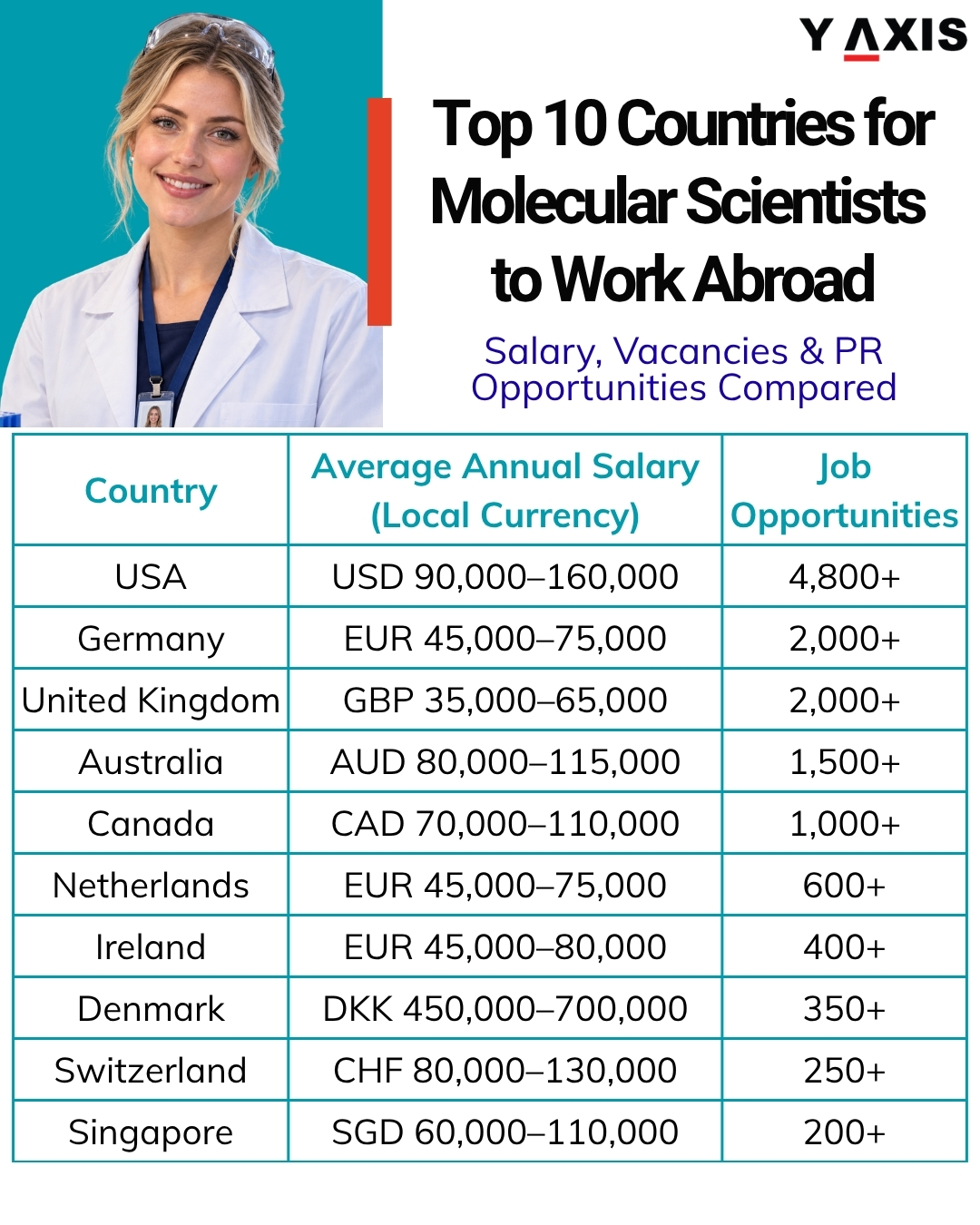
Top 10 Countries for Molecular Scientists to Work Abroad: Salary, Demand & PR Opportunities Compared