Posted on November 28 2025
What are the most in-demand jobs in Germany for the next 10 years?

By , Editor
Updated January 23 2026
The most in-demand jobs in Germany over the next decade will be in Information Technology (IT), Engineering, Healthcare, and Skilled Trades. Fast-growing sectors such as Finance, Marketing, Education, and Renewable Energy will also see a surge in job opportunities, driven by Germany’s digital transformation, green energy initiatives, and ageing population.
Professionals such as Software Developers, Mechanical Engineers, Nurses, Teachers, and Accountants are highly sought after.
According to Germany’s Federal Employment Agency, the country will need nearly 7 million skilled professionals by 2035 to maintain economic growth and replace its retiring workforce.
To fill this gap, Germany is attracting foreign and English-speaking professionals through pathways like the Skilled Worker Visa, EU Blue Card, and the Opportunity Card. With high salaries and excellent work conditions, Germany is one of Europe’s best destinations for skilled professionals.
*Want to work in Germany? Let Y-Axis guide you through the entire process.
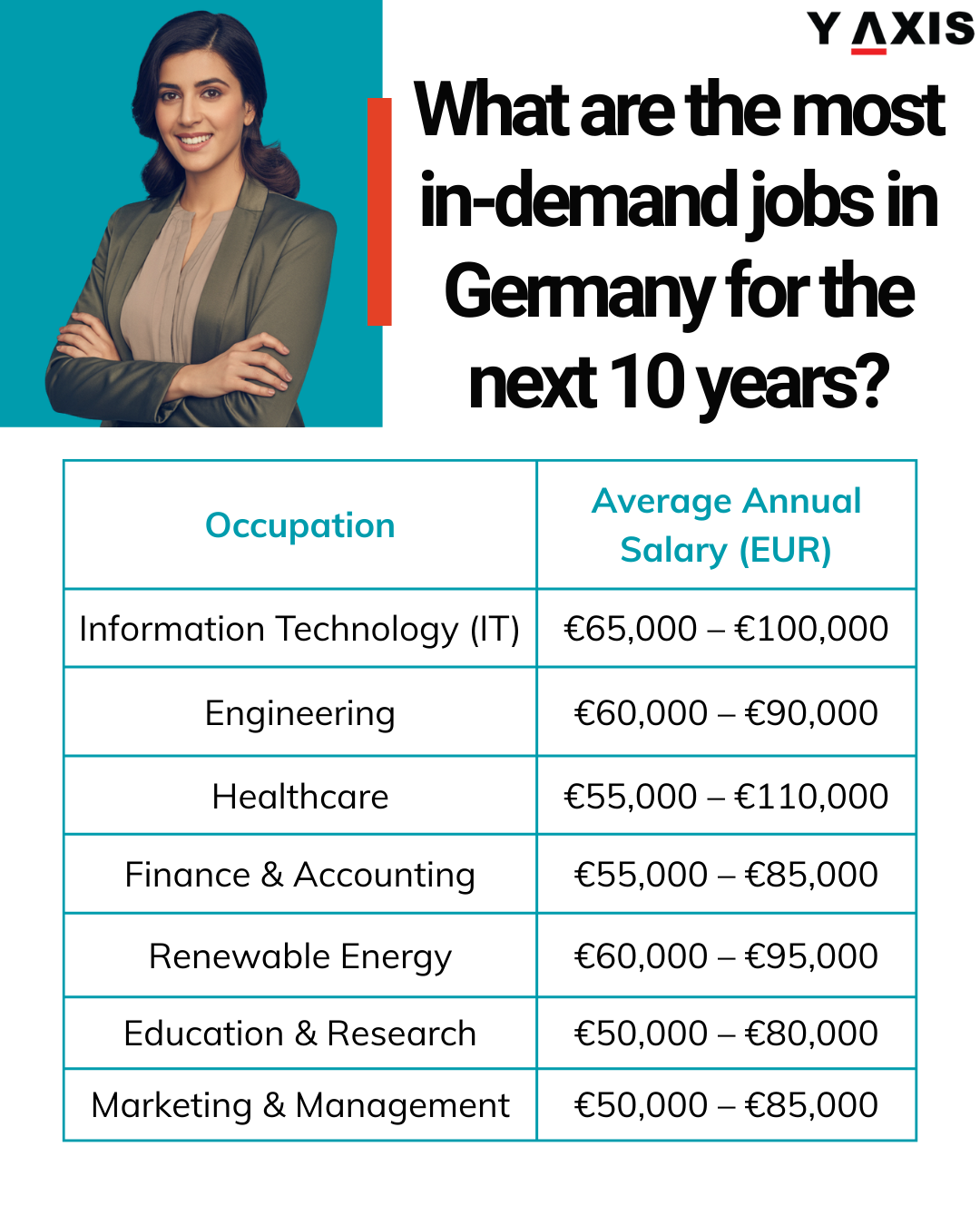
High-Paying Occupations in Germany
Germany offers competitive salaries across multiple sectors, especially for skilled professionals in high-demand fields. Occupations in IT, Engineering, Healthcare, and Renewable Energy are among the best-paying, reflecting the nation’s focus on innovation, sustainability, and advanced technology.
|
Occupation |
Average Annual Salary (EUR) |
|
Information Technology (IT) |
€65,000 – €100,000 |
|
Engineering |
€60,000 – €90,000 |
|
Healthcare |
€55,000 – €110,000 |
|
Finance & Accounting |
€55,000 – €85,000 |
|
Renewable Energy |
€60,000 – €95,000 |
|
Education & Research |
€50,000 – €80,000 |
|
Marketing & Management |
€50,000 – €85,000 |
In-demand Jobs in Germany for the next 10 years
Germany’s economy is evolving rapidly, creating a strong need for skilled professionals across multiple industries. With advancements in technology, a growing focus on sustainability, and an ageing population, several key sectors are expected to experience continuous job growth.
|
Sector |
In-Demand Job Roles |
|
Information Technology (IT) |
Software Developers, Data Analysts, Cybersecurity Experts, AI Engineers, Cloud Architects |
|
Engineering |
Mechanical Engineers, Electrical Engineers, Civil Engineers, Automotive Engineers, Industrial Designers |
|
Healthcare |
Doctors, Nurses, Medical Technicians, Pharmacists, Caregivers |
|
Renewable Energy |
Solar Technicians, Wind Energy Engineers, Energy Consultants, Sustainability Experts |
|
Finance & Accounting |
Accountants, Auditors, Financial Analysts, Investment Advisors |
|
Education & Training |
Teachers, Trainers, Language Instructors, Academic Coordinators |
Best Cities to Work in Germany
Germany’s leading cities are global hubs for innovation, finance, technology, and education offering outstanding career opportunities for both local and international professionals. Each city has its own strengths, from Berlin’s booming startup scene to Munich’s engineering and automotive powerhouses.
These cities provide excellent opportunities for professionals seeking rewarding careers and a high quality of life in Germany.
|
City |
Key Industries |
Why Consider this City? |
|
Berlin |
IT, Startups, Marketing, Education |
Germany’s tech and startup hub with a thriving digital economy and international workforce. |
|
Munich |
Engineering, Finance, IT, Automotive |
Home to global firms like BMW, Siemens, and Allianz; known for high salaries and innovation. |
|
Frankfurt |
Banking, Finance, Law, Consulting |
Germany’s financial capital and a top choice for finance professionals and English-speaking expats. |
|
Hamburg |
Logistics, Maritime, Media, Renewable Energy |
Major port city offering diverse career opportunities in trade and green industries. |
|
Stuttgart |
Automotive, Manufacturing, Engineering |
Headquarters of Mercedes-Benz and Porsche; ideal for engineers and skilled tradespeople. |
Top in-demand Skills to Work in Germany
Germany’s job market increasingly values professionals with both technical expertise and soft skills. Employers are looking for professionals who can adapt to digital transformation, sustainability goals, and automation trends.
|
Sector |
In-Demand Skills |
|
Information Technology (IT) |
Software development (Java, Python, JavaScript), Cloud computing (AWS, Azure), Data analytics, Machine learning, Cybersecurity, DevOps |
|
Engineering & Manufacturing |
CAD/CAM design, Automation, PLC programming, Systems engineering, EV & battery technology, Predictive maintenance |
|
Healthcare |
Nursing care, Geriatrics, Medical diagnostics, Telemedicine, Patient management systems |
|
Renewable Energy & Sustainability |
Solar & wind energy systems, Energy modelling, Battery & storage technology, Environmental compliance |
|
Finance & Accounting |
Financial modelling, IFRS standards, Taxation, Risk analysis, Business Intelligence tools (Power BI, Tableau) |
|
Education & Research |
Curriculum design, Research methodologies, Digital teaching tools, Laboratory skills |
|
Cross-Functional Skills |
Problem-solving, Project management (Agile/Scrum), Communication, Teamwork, Digital literacy, Adaptability |
How to Get a Job in Germany from Australia?
Getting a job in Germany from Australia has become more accessible with simplified visa processes and growing demand for international talent.
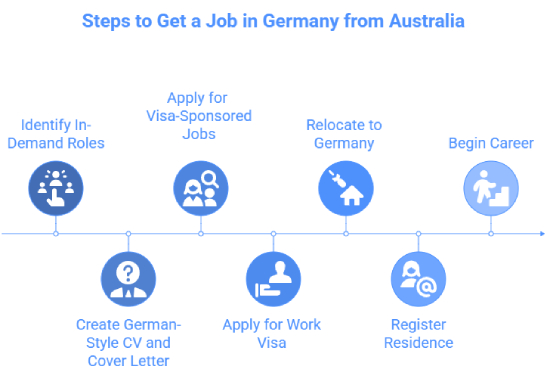
Step-by-Step Process to Job in Germany:
Step 1: Focus on in-demand roles in IT, Engineering, Healthcare, and Finance using platforms like LinkedIn Germany, Indeed DE, and Make It in Germany.
Step 2: Create a German-style CV and cover letter, highlighting your skills and relocation readiness.
Step 3: Apply for visa-sponsored jobs through the Skilled Worker Visa, EU Blue Card, or Opportunity Card (Chancenkarte).
Step 4: Once hired, apply for your work visa via the German Embassy in Australia.
Step 5: After approval, relocate, register your residence, and begin your career in Germany.
FAQs
1. What are the most in-demand jobs in Germany for the next 10 years?
Germany’s most in-demand jobs for the next decade include roles in IT, engineering, healthcare, renewable energy, and manufacturing. With a growing digital economy and ageing population, demand for software developers, data analysts, nurses, mechanical engineers, and electricians continues to rise.
The German government actively recruits skilled international workers to address labour shortages. For Australians seeking job opportunities in Germany, these fields offer excellent prospects and visa sponsorship options. Skilled professionals with relevant experience and German language skills have a significant advantage when applying for in-demand jobs in Germany.
2. Which industries in Germany will have the highest job growth by 2035?
By 2035, Germany’s IT, healthcare, green energy, and engineering sectors are projected to experience the highest job growth. The country’s digital transformation is creating strong demand for cybersecurity experts, AI specialists, and cloud engineers, while its push for carbon neutrality is driving opportunities in renewable energy and sustainability.
Additionally, healthcare professionals such as nurses and elderly care workers remain essential due to Germany’s ageing population. For Australians looking to work in Germany, targeting these future-focused industries increases employability and offers stable, high-paying career opportunities with long-term growth.
3. What are the top high-paying jobs in Germany for skilled professionals?
The highest-paying jobs in Germany are typically found in engineering, IT, finance, and healthcare. Software architects, AI engineers, IT project managers, and data scientists earn lucrative salaries due to high demand and low supply. Similarly, mechanical engineers, doctors, and financial analysts command competitive pay.
Germany’s robust economy and innovation-driven industries create an ideal environment for Australian professionals seeking career advancement abroad. Working in these high-demand roles not only offers financial rewards but also opportunities for permanent residency and long-term career stability under Germany’s Skilled Worker Visa program.
4. Are IT and engineering jobs still in demand in Germany?
Yes, IT and engineering jobs in Germany remain among the most in-demand and high-paying roles. As Germany embraces Industry 4.0, there’s a strong need for software developers, systems analysts, mechanical engineers, and electrical engineers. The growing automation and digitalisation of industries have created thousands of openings for international professionals, especially those with STEM qualifications.
For Australians exploring jobs in Germany, these sectors offer excellent visa sponsorship options and career progression opportunities. Strong technical expertise and English proficiency are highly valued, though learning basic German language skills enhances employability further.
5. What healthcare jobs are in high demand in Germany?
Germany faces a major shortage of healthcare professionals, making it a prime destination for nurses, doctors, physiotherapists, and elderly care specialists. The demand is expected to increase sharply over the next decade as the population ages.
Hospitals and care homes actively hire international healthcare workers, offering competitive salaries and relocation support. For Australians in healthcare, Germany’s Skilled Worker Visa provides a streamlined path to employment. Proficiency in the German language is often required for licensing and patient care. With job stability and attractive benefits, healthcare remains one of the most secure professions in Germany.
6. Is Germany facing a skill shortage in any sectors?
Yes, Germany is currently experiencing a significant skill shortage across multiple industries, including IT, engineering, healthcare, construction, and renewable energy. The Federal Employment Agency regularly updates the Skilled Occupation List, highlighting these high-demand sectors. Employers are now open to hiring foreign workers, especially from countries like Australia.
Professionals with experience in STEM fields, nursing, and trades are particularly sought after. This shortage presents great opportunities for skilled Australians to migrate under the Germany Skilled Worker Visa, which simplifies the process for qualified candidates to live and work in Germany long-term.
7. How can Australians apply for in-demand jobs in Germany?
Australians can apply for in-demand jobs in Germany by identifying roles listed on the Skilled Occupation List, preparing a German-style CV, and applying through platforms like EURES, LinkedIn Germany, and StepStone. Securing a Skilled Worker Visa or EU Blue Card is key to employment.
Employers often provide visa sponsorship for critical skill areas such as IT, healthcare, and engineering. Networking with German recruiters and improving German language proficiency can increase job success rates. With strong demand across multiple industries, Australians can build successful international careers in Germany’s growing job market.
8. What qualifications are required for high-demand jobs in Germany?
To qualify for high-demand jobs in Germany, applicants must possess recognized academic degrees, professional certifications, or vocational training relevant to their field. For IT and engineering roles, STEM qualifications are essential, while healthcare workers must have verified medical licenses. Recognition of foreign qualifications through Anerkennung (Recognition process) is often necessary for visa approval. Australian qualifications are highly respected, simplifying the process for professionals. In addition to credentials, German language skills can significantly improve employability, especially in healthcare and education. Germany’s emphasis on skilled labour ensures qualified workers enjoy high job security and pay.
9. Are there visa sponsorship opportunities for international workers in Germany?
Yes, Germany offers extensive visa sponsorship opportunities through the Skilled Worker Visa and EU Blue Card programs. Employers in high-demand sectors such as IT, healthcare, engineering, and construction actively recruit international talent to address skill shortages. Many companies assist with visa processing, relocation, and integration.
Australians seeking jobs in Germany can apply directly to firms listed on the Federal Employment Agency’s job portal. Holding a degree, professional qualification, and relevant experience increases eligibility. Sponsored employees often enjoy the benefit of long-term residence and the option to transition to permanent settlement in Germany.
10. What are the best cities in Germany for job opportunities?
The best cities in Germany for job opportunities include Berlin, Munich, Frankfurt, Hamburg, and Stuttgart. Berlin is a tech and startup hub, while Munich excels in engineering and IT. Frankfurt is Germany’s financial capital, offering strong prospects for finance and business professionals. Hamburg leads in logistics and trade, and Stuttgart is known for its automotive industry.
For Australians seeking jobs in Germany, these cities provide high employment rates, strong infrastructure, and diverse expat communities. With growing demand across industries, they offer ideal conditions for career growth and international experience.
Tags:
Jobs in Germany
Work in Germany
In-demand jobs Germany
High-paying jobs Germany
Germany Skilled Worker Visa
Opportunity Card Germany
Germany work visa for Australians
Share
Latest Article
Popular Post
Trending Article
Posted On March 17 2026
Top 10 Countries for Caregivers to Work Abroad: Salary, Demand & PR Opportunities Compared