

Posted on November 28 2025
What are the most in-demand jobs in Europe for the next 10 years?

By , Editor
Updated December 05 2025
The most in-demand jobs in Europe for the next 10 years will be in Information Technology (IT), Healthcare, Engineering, Green Energy, and Sustainability. Europe’s skill shortages, ageing population, and growing demand for skilled professionals are creating strong career opportunities across these sectors.
Professionals such as cybersecurity experts, AI professionals, data scientists, registered nurses, and sustainability specialists are highly sought after. As European nations continue to invest in digital infrastructure and renewable technologies, employment in these areas is expected to grow even further.
These industries offer steady career growth, competitive pay, and the chance to work in Europe’s most innovative and future-focused economies. Skilled professionals with the right experience can look forward to rewarding opportunities and long-term stability across Europe’s fast-growing job market.
*Want to work in Europe? Let Y-Axis help you through the process.
List of In-Demand Jobs in Europe for the Next 10 Years
Europe’s job market is evolving rapidly, driven by digital innovation, sustainability goals, and changing demographics. As industries transition to smarter and greener operations, the demand for skilled professionals continues to rise across multiple sectors.
Countries like Germany, the Netherlands, Sweden, Belgium, and Ireland are actively hiring international talent to address labour shortages and support long-term economic growth.
Europe’s demand for skilled professionals in IT, health and social care, engineering, and renewable energy continues to grow each year. These sectors provide excellent job prospects, high earning potential and diverse opportunities for individuals planning to work in Europe.
|
Sector |
In-demand Job Roles |
|
IT & Tech |
AI and Machine Learning Specialists, Data Scientists, Cybersecurity Analysts, Cloud Architects, Software Developers |
|
Health and Social Care |
Registered Nurses, Doctors, Health Informatics Specialists, Biomedical Engineers, Elderly Care Workers, Physiotherapists |
|
Engineering |
Civil Engineers, Mechanical Engineers, Electrical Engineers, Development Engineers, Automation Engineers |
|
Green Energy & Sustainability |
Renewable Energy Engineers, Sustainability Managers, Environmental Consultants, Solar and Wind Energy Technicians |
|
Finance & E-Commerce |
FinTech Developers, Financial Analysts, Accountants, Business Analysts, Supply Chain Managers |
|
Other Key Sectors |
Project Managers, Skilled Tradespeople, Hospitality and Tourism Professionals, Logistics Coordinators |
Top 5 European Countries with the Most Job Opportunities
Europe continues to attract global talent with its strong economies, progressive work culture, and high standard of living. Over the next decade, several European nations are expected to see sustained job growth across key sectors such as IT, engineering, healthcare, and renewable energy.
The top 5 countries offering the best career prospects and job opportunities for skilled professionals are Germany, the Netherlands, Sweden, Belgium, and Ireland. Each of these countries has a strong labour market, growing demand for foreign workers, and clear visa pathways for skilled professionals.
List of top 5 European countries currently offering the most job opportunities and the key sectors in demand:
|
Country |
Number of Job Vacancies |
Key Sectors in Demand |
|
Germany |
1.5 million |
Engineering, Healthcare, IT, Manufacturing |
|
Netherlands |
4,00,000 |
Renewable Energy, ICT, Logistics, FinTech |
|
Sweden |
1,13,000 |
Green Technology, ICT, Education, Healthcare |
|
Belgium |
1,70,000 |
IT, Construction, Life Sciences, Business Services |
|
Ireland |
13,000 |
Pharmaceuticals, Engineering, Finance, IT Services |
Factors Driving High Demand for Skilled Professionals in Europe
Europe’s growing need for skilled professionals is driven by several key factors that shape its labour market. The demand for skilled workers continues to rise across technology, healthcare, and green energy sectors.
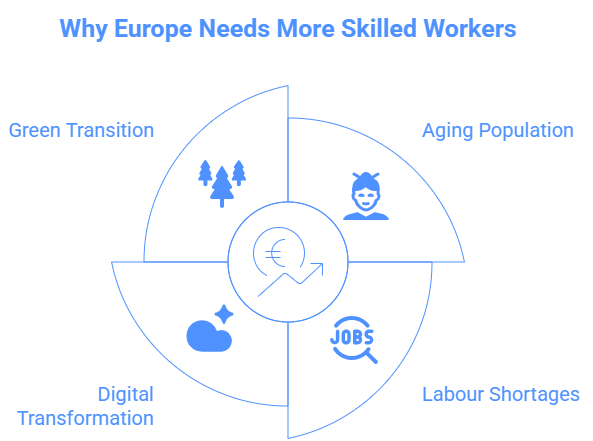
- Aging Population: Many European countries are experiencing an aging population and declining birth rates, creating a greater need for healthcare workers and younger skilled professionals.
- Labour Shortages: Skill gaps in vital industries such as healthcare, engineering, and IT are driving demand for foreign talent to fill open roles.
- Digital Transformation: The rapid shift toward automation, AI, and digital infrastructure is increasing the demand for IT specialists and data professionals.
- Green Transition: Europe’s commitment to sustainability and renewable energy is generating new roles in environmental management, energy engineering, and green innovation.
How to Apply for Jobs in Europe from Australia?
Australians looking to work in Europe can find excellent career opportunities across various high-demand sectors. With growing skill shortages, many European employers are open to hiring international talent.
Steps to apply for jobs in Europe:
Step 1: Focus on high-demand occupations in healthcare, engineering, IT, and green energy sectors across Europe.
Step 2: Prepare a European-style CV and cover letter, highlighting your qualifications, skills, and international experience.
Step 3: Search for job opportunities through trusted portals such as EURES, LinkedIn Europe, and official government websites.
Step 4: Apply to employers that offer visa sponsorship or are eligible for the EU Blue Card program.
Step 5: Once you receive a job offer, apply for a work visa or EU Blue Card through the respective country’s embassy.
* Want to work in Europe? Avail Y-Axis Job Search Services to find the right job faster.
FAQs
1. What are the most in-demand jobs in Europe for the next decade?
Over the next 10 years, the most in-demand jobs in Europe will be in technology, healthcare, green energy, and finance. Roles like software engineers, data analysts, nurses, renewable energy specialists, and financial advisors are expected to see strong growth.
With Europe’s focus on digitalisation and sustainability, demand for AI professionals, cybersecurity experts, and clean-energy engineers will also rise. Australians planning to work in Europe can target these future-proof careers to secure high-paying and stable positions aligned with evolving Europe employment trends and international skill requirements.
2. Which IT and tech jobs are most in-demand in Europe?
Europe is rapidly becoming a technology hub, driving demand for software developers, cybersecurity analysts, AI specialists, and cloud engineers. These roles are essential to support Europe’s digital transformation and innovation initiatives.
Companies in Germany, the Netherlands, and Ireland are actively recruiting skilled IT professionals from abroad, including Australians. With the rise of AI integration and data-driven industries, tech experts who possess future skills in programming, machine learning, and data analytics can find excellent job opportunities and competitive salaries across Europe’s major technology sectors.
3. Are healthcare jobs in Europe growing in demand?
Yes, healthcare jobs in Europe are in very high demand due to aging populations and healthcare reforms. Roles like nurses, general practitioners, medical technicians, and elderly care specialists are especially needed.
Countries such as Germany, France, and Sweden are actively hiring international healthcare professionals. Australians with recognized medical qualifications can explore rewarding career opportunities through the EU’s skilled migration programs. As Europe’s healthcare employment trends continue to grow, professionals with advanced care and digital health skills will find stable, well-paid positions across the region.
4. What are the top engineering careers in demand in Europe?
The demand for engineers in Europe is set to rise sharply, particularly in civil, mechanical, electrical, and renewable energy engineering. Projects in sustainable infrastructure, transport, and energy sectors are creating thousands of openings across countries like Germany, the Netherlands, and Norway.
Engineers with skills in automation, robotics, and green technologies will be highly sought after. Australians looking to work in Europe can leverage their technical expertise to secure top engineering roles that align with Europe’s sustainability and smart-city development trends over the next decade.
5. Which green and renewable energy jobs are growing in Europe?
Europe’s strong commitment to sustainability and climate goals has accelerated demand for renewable energy jobs. Careers in solar energy, wind power, hydrogen technology, and environmental engineering are booming.
Professionals such as energy analysts, sustainability consultants, and environmental scientists are key players in this transformation. Australia’s clean energy experts can find exciting career opportunities in Europe’s green sector, particularly in nations leading the energy transition like Denmark and Germany. As Europe’s green economy expands, these roles will remain future-proof and globally competitive.
6. Are finance and banking jobs in Europe still in high demand?
Yes, the finance sector in Europe remains strong, with increasing demand for financial analysts, accountants, risk managers, and fintech specialists. Digital banking and cryptocurrency trends have reshaped finance careers across Europe. Cities like London, Frankfurt, and Zurich serve as major financial hubs, offering attractive salaries and growth opportunities.
Australians with experience in financial technology, auditing, or investment management can explore lucrative job options. As Europe’s employment trends evolve, finance professionals skilled in digital finance and compliance will enjoy long-term career stability.
7. What are the top digital marketing jobs in demand in Europe?
Digital marketing is one of the fastest-growing career fields in Europe. Roles such as SEO specialists, social media managers, content strategists, and performance marketers are in high demand across industries. With businesses increasingly going online, digital advertising and analytics skills are becoming essential.
Australians with expertise in digital branding, e-commerce, and marketing automation can find great opportunities in major cities like Amsterdam, Berlin, and Dublin. As Europe’s digital economy expands, digital marketers with strong data and storytelling skills will be highly valued.
8. What are the top countries in Europe offering the most job opportunities?
The best countries in Europe for job opportunities include Germany, the Netherlands, Ireland, Sweden, and France. These nations lead in technology, healthcare, and renewable energy employment. Germany offers high demand for engineers, Ireland for tech and finance roles, while Sweden excels in sustainability careers.
Australians aiming to work in Europe can benefit from friendly visa policies and English-speaking work environments in these nations. With Europe’s employment growth projected to continue, targeting these markets ensures access to stable, high-paying, and future-oriented roles.
9. What skills will be most in-demand in Europe by 2035?
By 2035, Europe will prioritise digital, green, and analytical skills. Professionals with expertise in AI, cybersecurity, renewable energy, data science, and healthcare will be highly valued. Soft skills like communication, adaptability, and cross-cultural collaboration will also be crucial for international professionals.
Australians preparing to work in Europe should focus on upskilling through digital transformation and sustainability programs. As future skills in Europe evolve, combining technical proficiency with global awareness will help candidates stay ahead in Europe’s competitive job market.
10. How can Australians apply for in-demand jobs in Europe?
Australians can apply for in-demand jobs in Europe by exploring opportunities on trusted platforms such as EURES, LinkedIn, and official EU job boards.
Skilled professionals from Australia, especially in IT, healthcare, and engineering, is highly sought after. Staying updated on Europe’s employment trends and networking with global employers can significantly enhance your chances of securing a high-paying job abroad.
Steps to apply for in-demand jobs in Europe:
Step 1: Identify job openings that match your qualifications and experience.
Step 2: Prepare a professional Europe-style CV and cover letter tailored to each role.
Step 3: Apply to employers offering visa sponsorship through the EU Blue Card or individual country work visa programs.
Tags:
Europe jobs
European work visa
jobs in Europe for Australians
career opportunities in Europe
work abroad
skilled migration
EU Blue Card
Share
Latest Article
Popular Post
Trending Article
Posted On January 21 2026
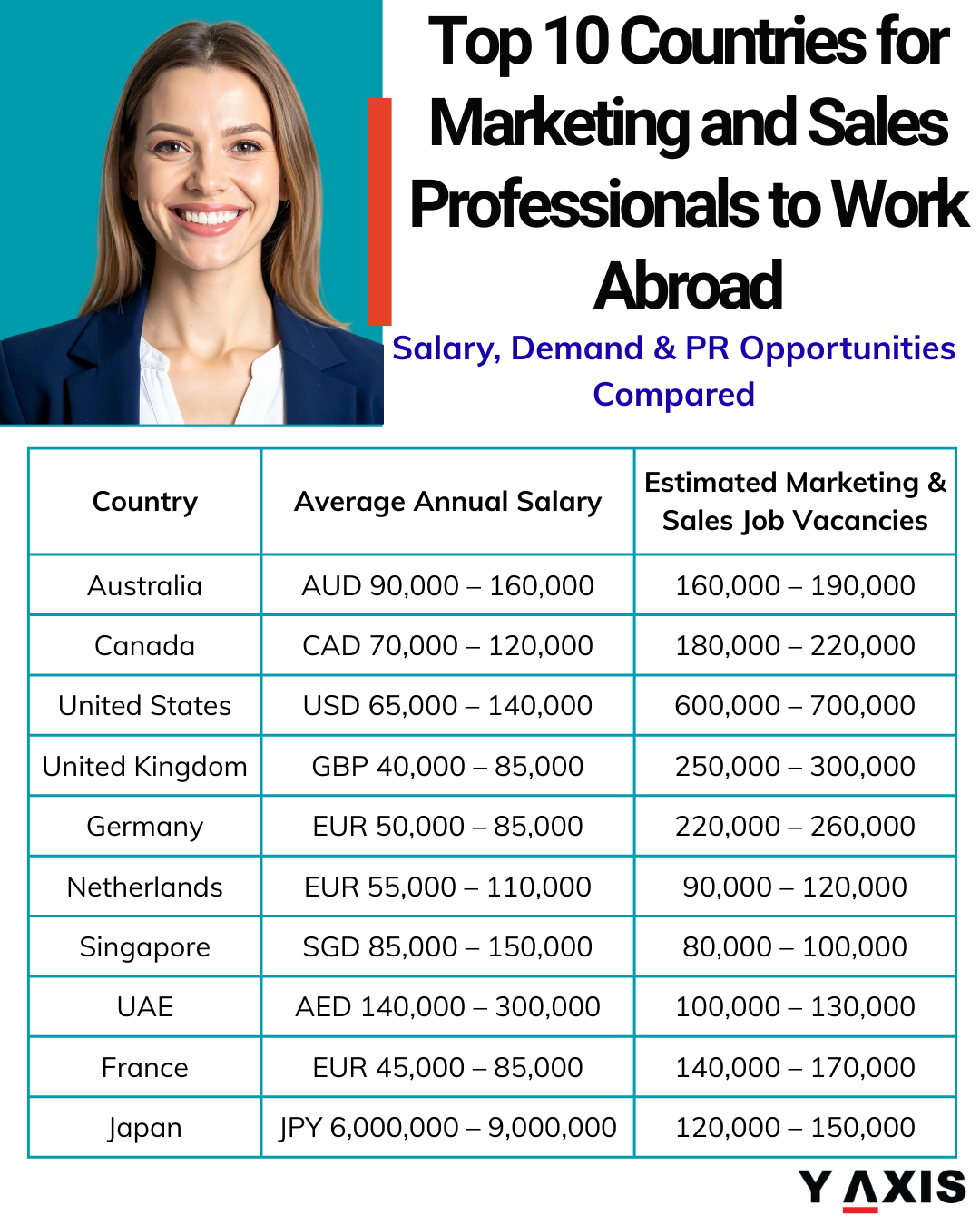
Top 10 Countries for Marketing and Sales Professionals to Work Abroad: Salary, Demand & PR Opportunities Compared