

Posted on November 28 2025
What are the Most In-Demand Jobs in Australia for the Next 10 Years?

By , Editor
Updated January 23 2026
The most in-demand jobs in Australia will be in Healthcare, Information Technology (IT), Engineering, Education, and Renewable Energy. The job market is evolving rapidly, driven by technology, population growth, and sustainability goals.
Emerging sectors such as Artificial Intelligence (AI), Cybersecurity, and Data Science are creating thousands of new high-skilled roles nationwide. Professionals such as Registered Nurses, Software Developers, Civil Engineers, Electricians, and Teachers will have strong demand.
The Australian Government’s employment projections indicate that total employment is expected to exceed 16 million by 2034, adding nearly 2 million new jobs to the economy.
With its stable economy, high living standards, and strong demand for skilled talent, Australia remains one of the top destinations for professionals seeking long-term career growth.
*Planning to work in Australia? Let Y-Axis guide you through every step of the process.
List of In-Demand Jobs in Australia for the Next 10 Years
Australia’s job market is projected to experience steady growth across multiple industries over the next decade. As the nation focuses on digital transformation, renewable energy, healthcare innovation, and education, demand for skilled professionals continues to rise.
According to the Australian Bureau of Statistics (ABS), there were nearly 330,000 job vacancies in 2025, highlighting the strong need for qualified talent across the country.
|
Sector |
In-Demand Job Roles |
|
Healthcare & Social Assistance |
Registered Nurses, Doctors, Physiotherapists, Aged Care Specialists |
|
Information Technology (IT) |
Software Developers, Cybersecurity Experts, Cloud Engineers, Data Analysts |
|
Engineering & Infrastructure |
Civil Engineers, Project Managers, Quantity Surveyors, Architects |
|
Education & Training |
Teachers, Early Childhood Educators, Vocational Trainers |
|
Renewable Energy & Sustainability |
Solar Technicians, Environmental Scientists, Sustainability Managers |
|
Business & Finance |
Accountants, Financial Analysts, HR Managers, Business Consultants |
|
Hospitality & Tourism |
Chefs, Hotel Managers, Event Coordinators |
|
Skilled Trades |
Electricians, Plumbers, Welders, Construction Workers |
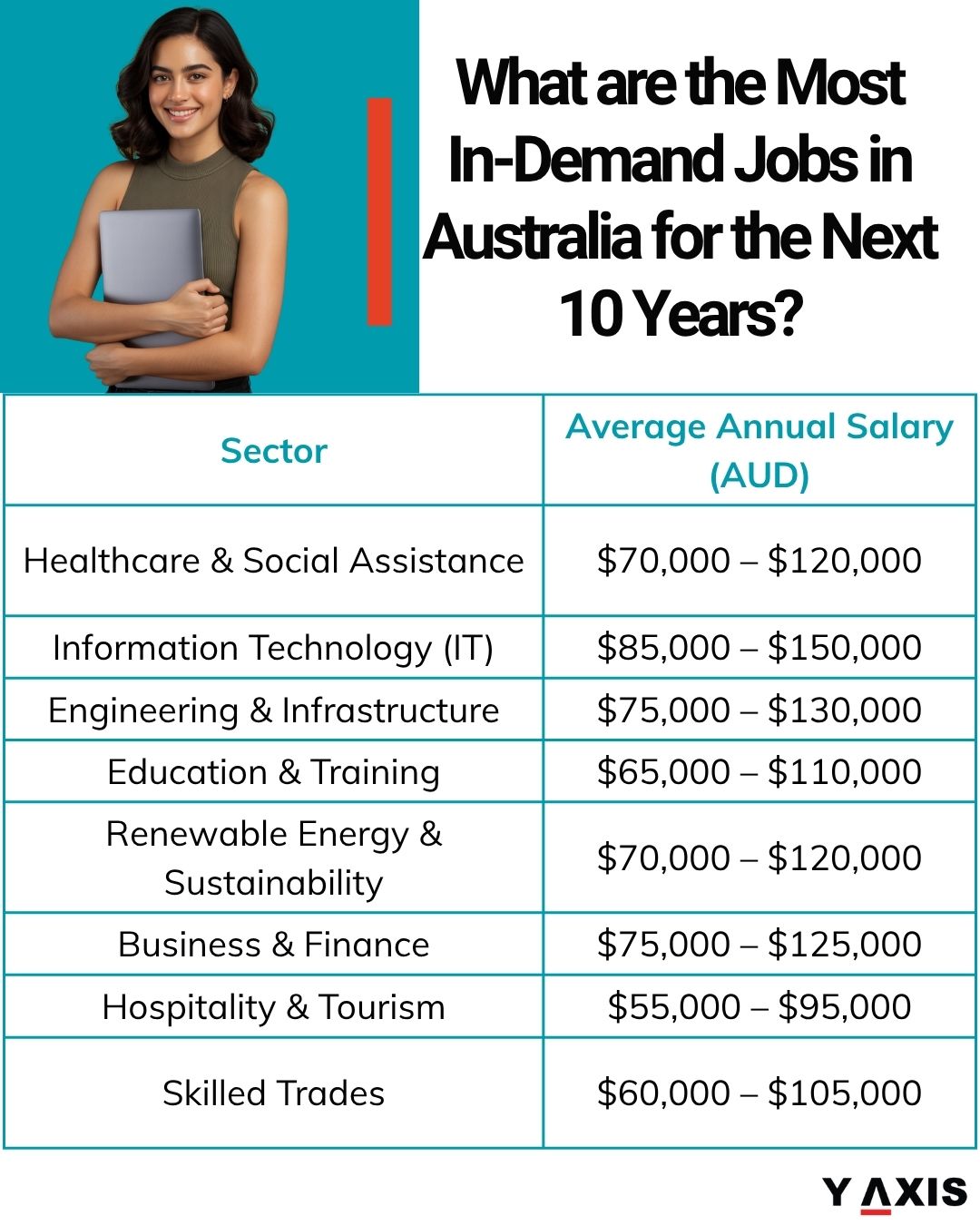
High Demand Sectors and their Average Salaries in Australia
Australia offers some of the highest salaries in the Asia-Pacific region, particularly for professionals in technology, engineering, healthcare, and finance. With rising skill shortages, employers are offering competitive pay packages to attract and retain skilled workers.
On average, professionals in high-demand industries earn between AUD 70,000 and AUD 150,000 per year, depending on experience, qualifications, and location. Major cities such as Sydney, Melbourne, and Brisbane consistently offer higher pay rates due to strong economic activity and demand for skilled labour.
|
Sector |
Average Annual Salary (AUD) |
|
Healthcare & Social Assistance |
$70,000 – $120,000 |
|
Information Technology (IT) |
$85,000 – $150,000 |
|
Engineering & Infrastructure |
$75,000 – $130,000 |
|
Education & Training |
$65,000 – $110,000 |
|
Renewable Energy & Sustainability |
$70,000 – $120,000 |
|
Business & Finance |
$75,000 – $125,000 |
|
Hospitality & Tourism |
$55,000 – $95,000 |
|
Skilled Trades |
$60,000 – $105,000 |
Top In-Demand Skills Required in Australia
As Australia’s economy transitions towards digitalisation, sustainability, and innovation, employers are increasingly seeking professionals with a blend of technical expertise and soft skills. The demand for workers skilled in technology, healthcare, green energy, and project management continues to grow across all sectors.
With rapid advancements in AI, automation, and renewable technologies, continuous learning and professional development are key to staying employable and competitive in Australia’s future workforce.
Professionals who stay adaptable, upskill regularly, and embrace digital tools will have a strong competitive advantage in the job market over the next decade.
|
Category |
Top Skills in Demand |
|
IT & Technology |
Artificial Intelligence (AI), Data Analytics, Cybersecurity, Cloud Computing, Software Development |
|
Healthcare & Social Services |
Nursing, Aged Care, Mental Health Support, Allied Health, Medical Technology |
|
Engineering & Green Energy |
Renewable Energy Systems, Civil & Electrical Engineering, Project Design, Environmental Management |
|
Business & Leadership |
Strategic Planning, Financial Analysis, Project Management, Business Development, HR Management |
|
Skilled Trades & Vocational |
Construction, Plumbing, Electrical Work, Automotive Repair, Welding |
|
Soft & Transferable Skills |
Communication, Adaptability, Problem-Solving, Teamwork, Time Management |
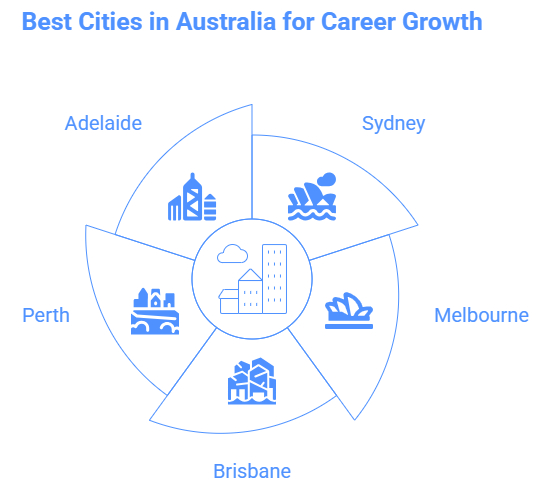
Best Cities in Australia for Career Growth
Australia’s major cities are among the most dynamic employment hubs in the world, offering strong career prospects, competitive salaries, and exceptional living standards. Each city has unique strengths that cater to specific industries from finance and technology to healthcare and renewable energy.
|
City |
Key Industries |
Why Consider This City? |
|
Sydney |
Finance, IT, Healthcare, Education |
Australia’s largest economic hub offering global career opportunities and high salaries. |
|
Melbourne |
Technology, Professional Services, Education |
Known for innovation, start-ups, and a vibrant job market across tech and business sectors. |
|
Brisbane |
Engineering, Construction, Healthcare |
Offers rapid job growth, affordable living, and strong demand in infrastructure projects. |
|
Perth |
Mining, Energy, Engineering |
Home to high-paying jobs in natural resources and energy industries. |
|
Adelaide |
Defence, Manufacturing, Clean Energy |
Emerging hub for defence technology, advanced manufacturing, and renewable energy. |
Emerging Sectors Creating Jobs in Australia
Australia’s future job market is being reshaped by digital transformation, sustainability goals, and innovation-driven industries. As the nation invests in new technologies and infrastructure, several emerging sectors are set to create thousands of high-skilled jobs in the coming decade.
Government initiatives such as the National Reconstruction Fund and the Net Zero 2050 target are fuelling growth in renewable energy, advanced manufacturing, and defence. Likewise, the boom in AI, data science, and cybersecurity is transforming Australia into a hub for digital talent.
|
Sector |
Growth Outlook |
|
Renewable Energy & Sustainability |
Expected to generate over 100,000 new jobs by the 2030s as Australia transitions to clean energy. |
|
Artificial Intelligence (AI) & Data Science |
Could add up to AUD 300+ billion to the economy by 2030, driving strong demand for AI specialists and data analysts. |
|
Healthcare & Aged Care |
Projected to create over 250,000 new roles by 2034 due to Australia’s ageing population and healthcare expansion. |
|
Cybersecurity & Cloud Computing |
One of the fastest-growing tech fields, with thousands of new roles as digitalisation accelerates. |
|
Advanced Manufacturing & Defence |
Backed by the AUD 15 billion National Reconstruction Fund, supporting local production and innovation. |
|
Green Construction & Smart Infrastructure |
Major infrastructure and eco-friendly building projects creating steady demand for engineers and skilled trades. |
Can I Get a Job in Australia?
Yes. Skilled professionals are in high demand across Australia, with employers actively hiring in healthcare, technology, engineering, and renewable energy sectors.
Steps to Get a Job in Australia:
Step 1: Check if your job is in the Australian Skilled Occupation List (SOL) to see if your role qualifies for migration or sponsorship.
Step 2: Prepare an Australian-style resume and cover letter that highlight your key achievements, experience, and measurable results.
Step 3: Search and apply for jobs on trusted platforms like Seek, Indeed, LinkedIn, JobActive, and CareerOne.
Step 4: Apply for the right work visa such as the Skilled Independent Visa (Subclass 189), Skilled Nominated Visa (Subclass 190), or Temporary Skill Shortage Visa (Subclass 482).
Step 5: Prepare for interviews and plan your move after receiving visa approval.
FAQs
1. What are the most in-demand jobs in Australia for the next 10 years?
Australia’s job market is evolving rapidly, with strong demand across Healthcare, Technology, Construction, Education, and Renewable Energy sectors. Roles like Registered Nurses, Software Developers, Electricians, Teachers, and Solar Technicians will dominate over the next decade.
Australia’s growing population, ageing workforce, and green transition are driving these changes. Skilled professionals with digital, healthcare, and trade qualifications will find steady employment nationwide. Government migration policies also support skilled workers in critical industries. For job seekers and international professionals, these in-demand careers offer long-term security, high salaries, and opportunities across Australia’s major cities and regional areas.
2. Why is healthcare expected to be Australia’s fastest-growing job sector?
Healthcare will remain the largest and fastest-growing sector in Australia due to an ageing population and rising demand for medical services. The most in-demand healthcare jobs include Registered Nurses, Aged Care Workers, Physiotherapists, and General Practitioners. The Australian Government projects over 250,000 new healthcare roles by 2035.
Professionals in mental health, disability support, and rural healthcare are especially needed. Employers offer flexible work conditions, high job security, and career advancement opportunities. For Australians and skilled migrants, healthcare careers promise stable, rewarding work and excellent long-term growth prospects across hospitals, aged care facilities, and community health centres.
3. What tech jobs are most in demand in Australia?
Australia’s tech industry is expanding rapidly, creating strong demand for Software Engineers, Cybersecurity Experts, Data Scientists, Cloud Architects, and AI Specialists. As businesses embrace digital transformation, professionals with advanced digital and analytical skills are highly sought after. Australia’s government also supports the tech sector through innovation grants and startup funding.
Major employers in Sydney, Melbourne, and Brisbane seek IT experts to enhance automation, cybersecurity, and data management systems. For local and international professionals, tech jobs offer high salaries, flexible working options, and excellent career advancement in one of the world’s most digitally advanced economies.
4. Which engineering jobs will be in demand in Australia by 2035?
Engineering remains a core part of Australia’s infrastructure and renewable energy growth. Civil, Mechanical, Electrical, and Environmental Engineers are in high demand for large-scale projects across transport, housing, and clean energy. Mining and construction industries also require skilled engineers. With billions invested in infrastructure upgrades and renewable energy projects, job opportunities will remain strong across all states.
Engineers with digital, automation, or sustainability expertise will be particularly valued. The combination of high salaries, job diversity, and migration opportunities makes engineering one of the most future-proof career choices in the Australian job market.
5. What renewable energy jobs are growing fast in Australia?
As Australia transitions toward a net-zero economy, renewable energy jobs are booming. Solar Installers, Wind Turbine Technicians, Energy Analysts, and Environmental Engineers are among the most in-demand roles. Government investment in large-scale renewable projects across Queensland, Victoria, and South Australia has created thousands of new positions.
Australians with trade or engineering skills can benefit from this rapid growth. Careers in clean energy offer high pay, sustainability impact, and long-term job security. As Australia moves away from fossil fuels, renewable energy is becoming one of the top future-focused industries for both local and international job seekers.
6. Are trade and construction jobs still in demand in Australia?
Yes, trade and construction jobs remain among the most in-demand careers in Australia. Electricians, Plumbers, Carpenters, and Construction Managers are essential to meet the country’s growing housing and infrastructure needs. Skilled trades are on Australia’s Priority Migration Skilled Occupation List, ensuring high job security and visa sponsorship for qualified workers.
As cities expand and major projects roll out nationwide, tradespeople enjoy excellent pay and consistent work. Apprenticeships and certifications open doors to long-term careers. The strong demand across residential and commercial sectors makes trade and construction one of Australia’s most stable employment paths through 2035.
7. What education jobs are expected to grow in Australia?
Education remains one of Australia’s most reliable and respected sectors. Teachers, Early Childhood Educators, and Special Education Specialists are in high demand, especially in regional areas. As population growth increases student enrolments, demand for qualified educators continues to rise. STEM and English teachers are particularly sought after.
International schools and universities also provide opportunities for higher education lecturers. Education professionals enjoy stable careers, good salaries, and excellent work-life balance. With government funding and immigration incentives supporting the sector, teaching and training jobs in Australia will continue to grow strongly over the next decade.
8. What finance and business jobs are in demand in Australia?
Australia’s financial and business sectors are expanding, increasing demand for Accountants, Financial Analysts, Business Consultants, and Project Managers. The rise of fintech, data analytics, and e-commerce has created new roles for professionals with digital and strategic expertise. Employers in Sydney and Melbourne particularly seek finance specialists skilled in risk management, sustainability reporting, and compliance.
With globalisation and business automation, analytical and leadership skills are more valuable than ever. For Australians and skilled migrants, careers in finance offer strong earning potential, international exposure and long-term growth across corporate and public sectors.
9. Which emerging industries will create new jobs in Australia?
Emerging industries such as Artificial Intelligence, Green Technology, Space Science, Advanced Manufacturing, and Biotechnology are projected to create thousands of new jobs in Australia. The government’s focus on innovation and sustainability fuels demand for skilled professionals in research, engineering, and digital design. Regional innovation hubs are also growing, supporting startups and high-tech projects.
Australians with STEM skills or advanced degrees will benefit most from this transformation. These future-focused industries offer well-paid, meaningful work that contributes to global sustainability and technological progress, securing Australia’s position as a leading hub for innovation and green jobs.
10. How can job seekers prepare for Australia’s future job market?
To succeed in Australia’s future job market, focus on upskilling in high-demand sectors such as healthcare, technology, renewable energy, and skilled trades.
Step 1: Obtain relevant qualifications or vocational certifications.
Step 2: Develop essential digital skills like coding, data analytics, or cybersecurity.
Step 3: Stay updated on labour market trends and emerging job opportunities.
Step 4: Build professional networks through LinkedIn and industry events.
Step 5: Explore migration or regional work programs if planning to relocate.
Australian employers increasingly value adaptability, teamwork, and problem-solving. By focusing on future-ready skills, both Australians and skilled migrants can secure stable, high-paying jobs and enjoy long-term career growth across the country.
Tags:
jobs in Australia
jobs in Australia for foreigners
skilled jobs in Australia
Australian work visa
Australia employment opportunities
Australian careers
high-demand jobs in Australia
work in Australia
Australia job market
Share
Latest Article
Popular Post
Trending Article
Posted On February 20 2026
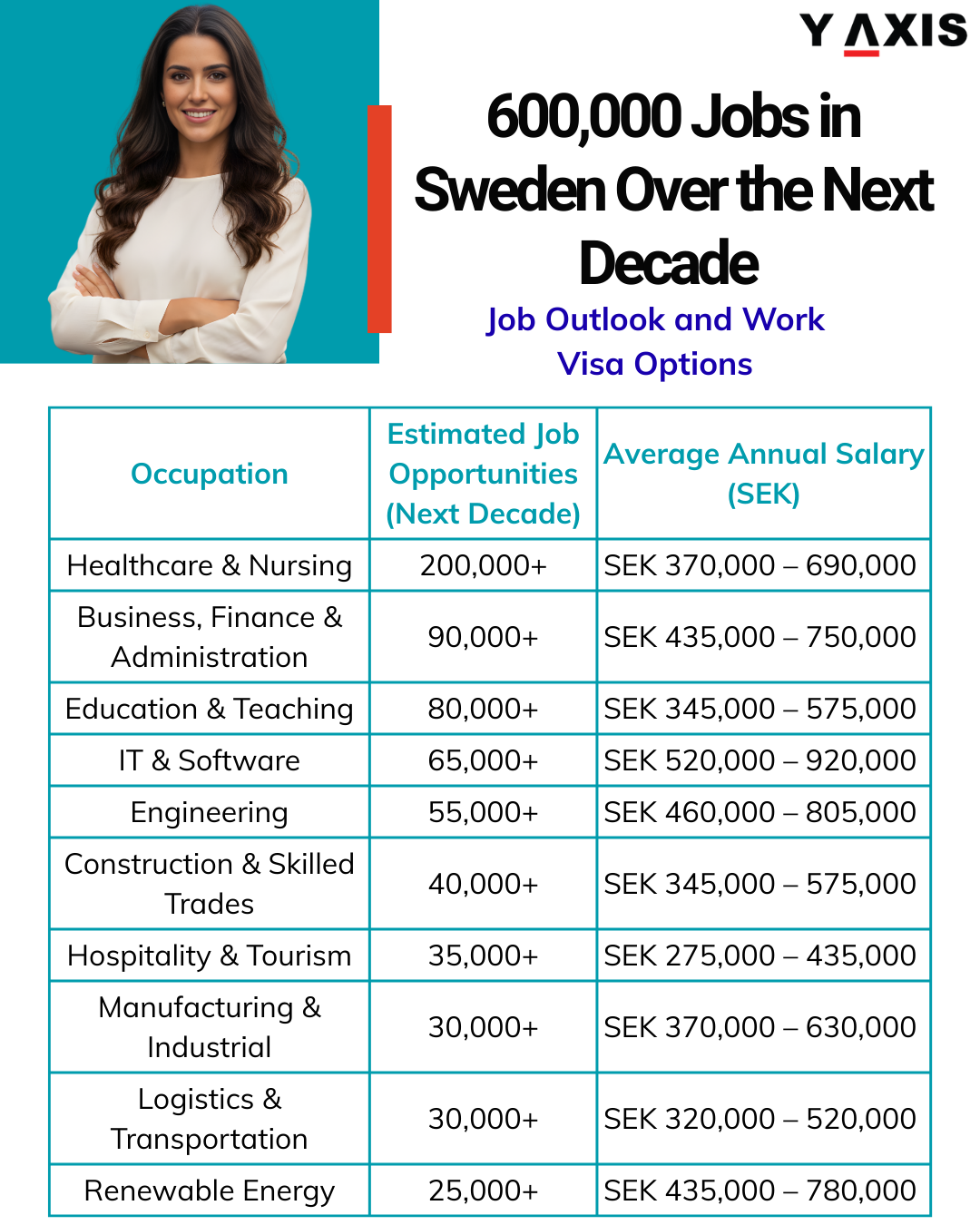
600,000 Jobs in Sweden Over the Next Decade : Job Outlook and Work Visa Options