

Posted on June 26 2026
What are the eligibility requirements for an Ireland Work Visa?

By , Editor & Director
Updated June 26 2026
To work in Ireland, you must have a confirmed job offer from an Irish employer and an approved employment permit. The two main pathways are the Critical Skills Employment Permit for shortage occupations with a minimum annual salary of €40,904 and the General Employment Permit for a wider range of skilled roles with a minimum salary of €36,605. Australian citizens do not require a visa to enter Ireland, although they generally need an employment permit before starting work. Australians aged 18 to 35 may also be eligible for the Working Holiday Authorisation, which allows them to live and work in Ireland for up to 12 months.
|
Requirement |
Details |
|
Job Offer |
Confirmed offer from an Irish employer for a minimum of two years |
|
Permit Type |
Critical Skills Employment Permit or General Employment Permit depending on role and salary |
|
CSEP Salary |
€40,904 per year with a relevant degree; €68,911 without a relevant degree |
|
GEP Salary |
€36,605 per year for most roles; €32,691 for healthcare assistants and agri-food workers |
|
Qualifications |
Relevant degree and experience for CSEP; role-specific qualifications for GEP |
|
Language |
No official language test required; employer determines language requirements |
|
Processing Time |
8 to 16 weeks total including employment permit and any visa processing |
*Want to apply for an Ireland Work Visa? Let Y-Axis guide you through every step of the process.
Eligibility Requirements for an Ireland Work Visa
To qualify for an Ireland Work Visa, you must meet the requirements of the relevant employment permit category. The two main pathways are the Critical Skills Employment Permit for shortage occupations and the General Employment Permit for eligible skilled roles. Your occupation, salary, qualifications, and job offer determine which permit route you can apply for.
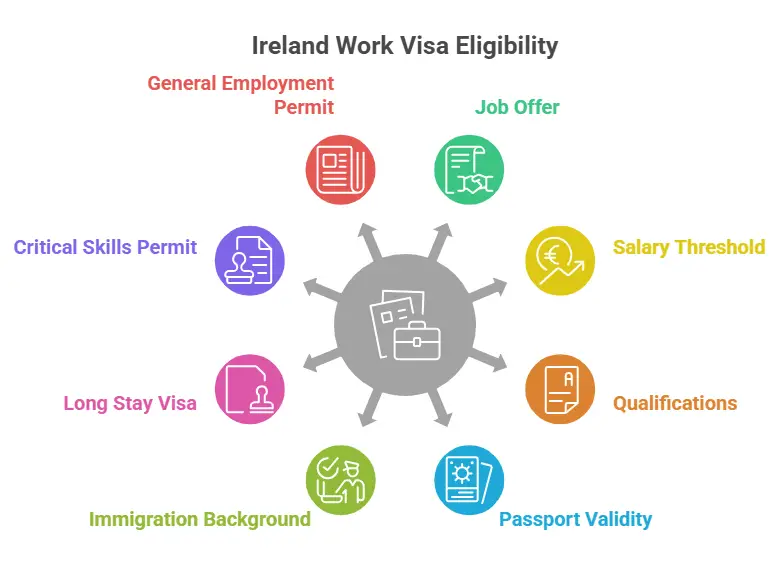
To be eligible for an Ireland Work Visa, you need:
- A confirmed job offer from an Irish employer for a minimum duration of two years
- A salary meeting the minimum threshold for your permit type — €40,904 for CSEP or €36,605 for GEP
- Relevant qualifications and professional experience suited to the role
- A valid passport with sufficient validity for the duration of your permit
- A clean immigration history and compliance with Irish entry and employment regulations
- Australian citizens do not require a visa to enter Ireland — no D Visa is needed
- For CSEP: a role on the Critical Skills Occupation List or a salary of €68,911 for roles not on the list
- For GEP: employer Labour Market Needs Test confirming the role was advertised locally before being offered internationally
*Want to check your eligibility? Get a free eligibility assessment from Y-Axis today.
Documents Required for an Ireland Work Visa
An Ireland Work Visa application requires documents that verify your employment offer, qualifications, identity, and eligibility to work in Ireland. Preparing complete and accurate documentation can help avoid delays in the employment permit application process.
- Valid Australian passport with sufficient validity for your intended stay in Ireland
- Signed employment contract confirming job title, salary, and duration of employment
- Educational certificates, degrees, and professional qualification documents
- Evidence of relevant work experience such as reference letters or payslips
- Bank statements showing proof of sufficient funds to support yourself on arrival
- Passport-size photographs meeting Irish visa specifications
- Employment permit approval letter issued by the relevant Irish authority
- Any additional documents requested during the immigration registration process upon arrival
How to Apply for an Ireland Work Visa from Australia?
The Ireland Work Visa application process from Australia begins with securing a job offer from an Irish employer and obtaining an approved employment permit. Australian citizens do not require a visa to enter Ireland, but they must hold the appropriate employment permit before starting work. Once the permit is approved, you can travel to Ireland and complete any required immigration registration after arrival.
Step 1: Secure a confirmed job offer from an Irish employer for a role that meets the salary and eligibility requirements for the Critical Skills Employment Permit or General Employment Permit.
Step 2: Your employer submits the employment permit application on your behalf, including all required supporting documents confirming the role and salary.
Step 3: The employment permit application is processed by the relevant Irish authority, typically taking 4 to 8 weeks.
Step 4: Once your employment permit is approved, gather all travel and identity documents including your passport, permit approval letter, and employment contract.
Step 5: Travel to Ireland - Australian citizens do not require a visa to enter Ireland.
Step 6: Register your immigration permission with the relevant Irish immigration authority upon arrival and collect your Irish Residence Permit.
*Want to apply for an Ireland Work Visa? Get expert guidance from Y-Axis professionals.
FAQs
What is the difference between the Critical Skills and General Employment Permit?
The Critical Skills Employment Permit is for highly skilled professionals in shortage occupations and generally requires a minimum salary of €40,904 per year. It does not require a Labour Market Needs Test and allows eligibility for Stamp 4 after 21 months. The General Employment Permit covers a wider range of occupations, requires a Labour Market Needs Test, and typically leads to Stamp 4 eligibility after five years.
What salary do I need for an Ireland Work Visa from Australia?
The salary requirement depends on the permit type. The Critical Skills Employment Permit generally requires a minimum salary of €40,904 per year, while the General Employment Permit requires €36,605 per year for most occupations. Lower salary thresholds may apply to certain healthcare and agri-food roles that qualify under specific employment permit rules.
Do Australians need a visa to work in Ireland?
Australian citizens do not need a visa to enter Ireland for short stays. However, most Australians planning to work in Ireland long term require an approved employment permit before starting work. Australians aged 18 to 35 may also be eligible for the Ireland Working Holiday Authorisation, which permits temporary work and travel for up to 12 months.
Is a language test required for an Ireland Work Visa?
No official English language test is required for an Irish employment permit. Employers assess language skills based on the requirements of the role. As native English speakers, many Australian applicants already meet workplace communication standards, which can be an advantage when applying for professional positions in Ireland.
What jobs are in demand in Ireland for Australian professionals?
Ireland has strong demand for skilled workers in IT, software development, engineering, healthcare, pharmaceuticals, financial services, and construction. Many of these occupations appear on Ireland’s Critical Skills Occupations List. Australian professionals with recognised qualifications and relevant experience are often well positioned to secure employment in these high-demand sectors.
How long does Ireland Work Visa processing take from Australia?
Employment permit applications are typically processed within 4 to 8 weeks, although timelines can vary depending on application volumes and case complexity. Australian citizens do not require a D Visa to enter Ireland, allowing them to travel once their employment permit is approved and complete immigration registration after arrival.
What is Stamp 4 and when can I get it?
Stamp 4 is an Irish immigration permission that allows you to work for any employer without needing a separate employment permit. Critical Skills Employment Permit holders can generally apply for Stamp 4 after 21 months of qualifying employment. It provides greater flexibility in the labour market and supports long-term settlement in Ireland.
Can the Ireland Work Visa lead to permanent residency?
Yes. Individuals who have completed five years of continuous legal residence in Ireland on a qualifying employment permit may become eligible for long-term residence or permanent residency. Those who meet Irish citizenship requirements, including the required residence period, may also be eligible to apply for Irish citizenship.
Can I bring my family to Ireland on a Work Visa?
Yes. Critical Skills Employment Permit holders can generally bring eligible family members to Ireland immediately, and spouses or partners may work without a separate employment permit. General Employment Permit holders may apply for family reunification after meeting residence requirements, with spouses typically needing their own work authorisation.
How does Ireland compare to the UK as a work destination for Australians?
Ireland and the UK are both attractive destinations for Australian professionals. Ireland offers access to the EU labour market and a Critical Skills Employment Permit that does not require a Labour Market Needs Test. Eligible permit holders can also obtain Stamp 4 after 21 months, providing greater flexibility and a pathway to long-term residence.
Tags:
Ireland Work Visa
Ireland Work Permit
Ireland Work Visa Requirements
Ireland Immigration
Work in Ireland
Ireland Critical Skills Permit
Ireland General Employment Permit
Ireland Work Visa Australia
Ireland PR
Ireland Stamp 4
Share
Latest Article
Popular Post
Trending Article
Posted On September 29 2026
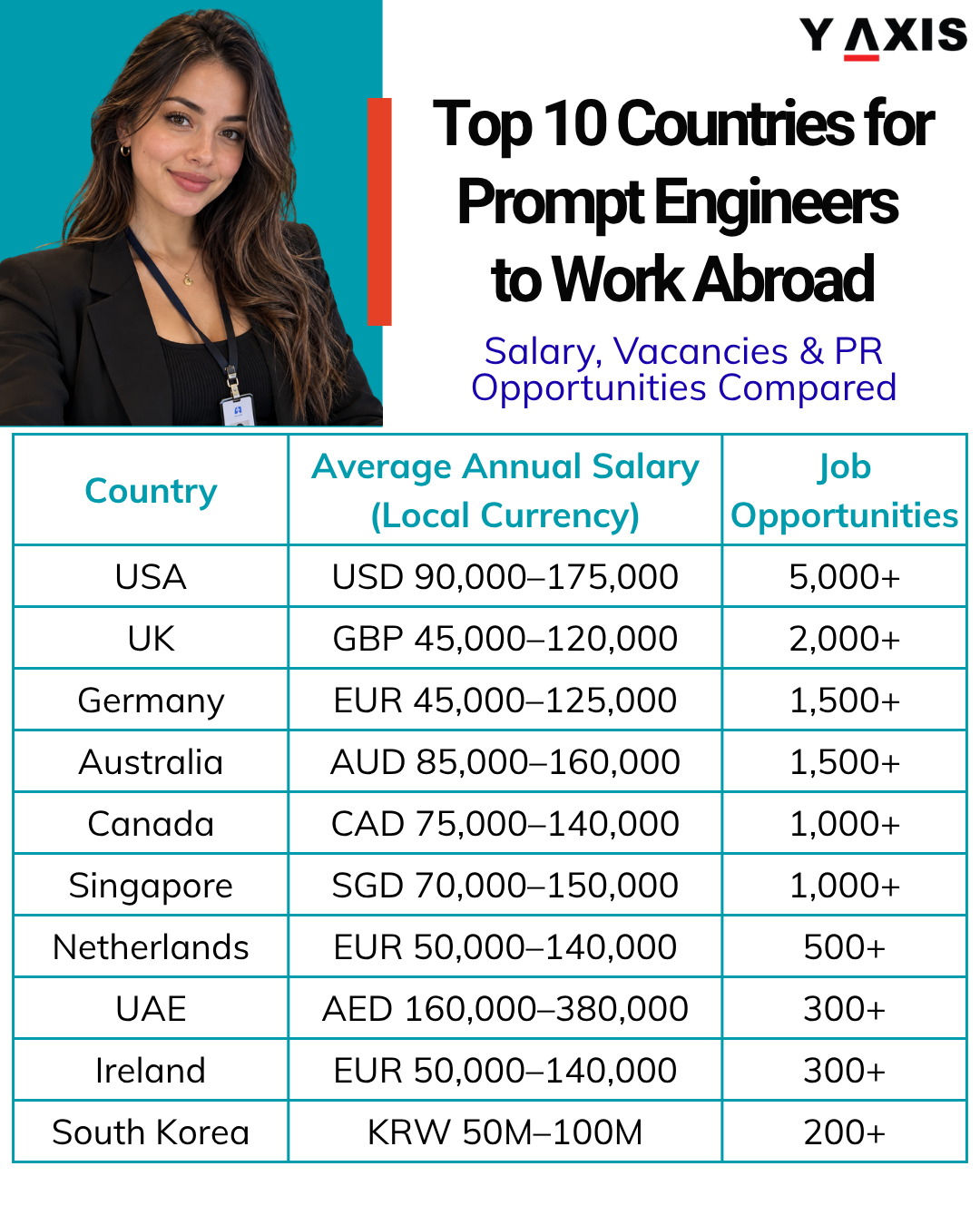
Top 10 Countries for Prompt Engineers to Work Abroad: Salary, Demand & PR Opportunities Compared