

Posted on October 09 2026
What is the Average Salary in Germany?

By , Editor & Director
Updated October 09 2026
The average salary in Germany is approximately €5,370 gross per month, or €64,441 per year, for full-time employees, including special payments, according to the Federal Statistical Office (Destatis). The median gross annual salary is €54,066, and salaries in industries like finance and insurance, information and communication, and professional, scientific and technical services are above the national average. Take-home pay depends on tax and social security, while salaries vary by occupation, industry, experience and location.
Germany has strong demand for skilled workers in IT, healthcare, engineering, construction, skilled trades and education due to labour shortages. The country could face a shortage of up to 7 million workers by 2035. Cities like Berlin, Munich, Frankfurt, Hamburg and Stuttgart offer diverse job opportunities, making Germany attractive for career growth, stable employment and long-term settlement.
*Want to work in Germany? Let Y-Axis help you through the application process.
Average Salary for In-Demand Jobs in Germany
Germany has high demand for skilled workers in IT, healthcare, engineering, construction, skilled trades and education, with roles such as software developers, nurses, physicians, engineers, teachers and skilled trades workers among the most sought after. According to the Federal Employment Agency (BA), the median gross salary for full-time employees is €4,217 per month, while employees with academic qualifications have a median salary of €6,146 per month.
| Occupation | Average Annual Salary | Chances of Visa Sponsorship |
|---|---|---|
| IT & Software | €66,750 | High |
| Engineering | €75,000 | Very High |
| Healthcare | €53,000 | High |
| Nursing | €58,000 | Very High |
| Accounting & Finance | €59,250 | Moderate to High |
| Marketing & Sales | €57,250 | Moderate |
| Human Resources | €54,500 | Moderate |
| Logistics & Supply Chain | €49,750 | Moderate to High |
| Teaching | €60,250 | High |
| Construction & Skilled Trades | €54,000 | High |
Read More…
Most in-demand jobs in Germany for the next 10 years
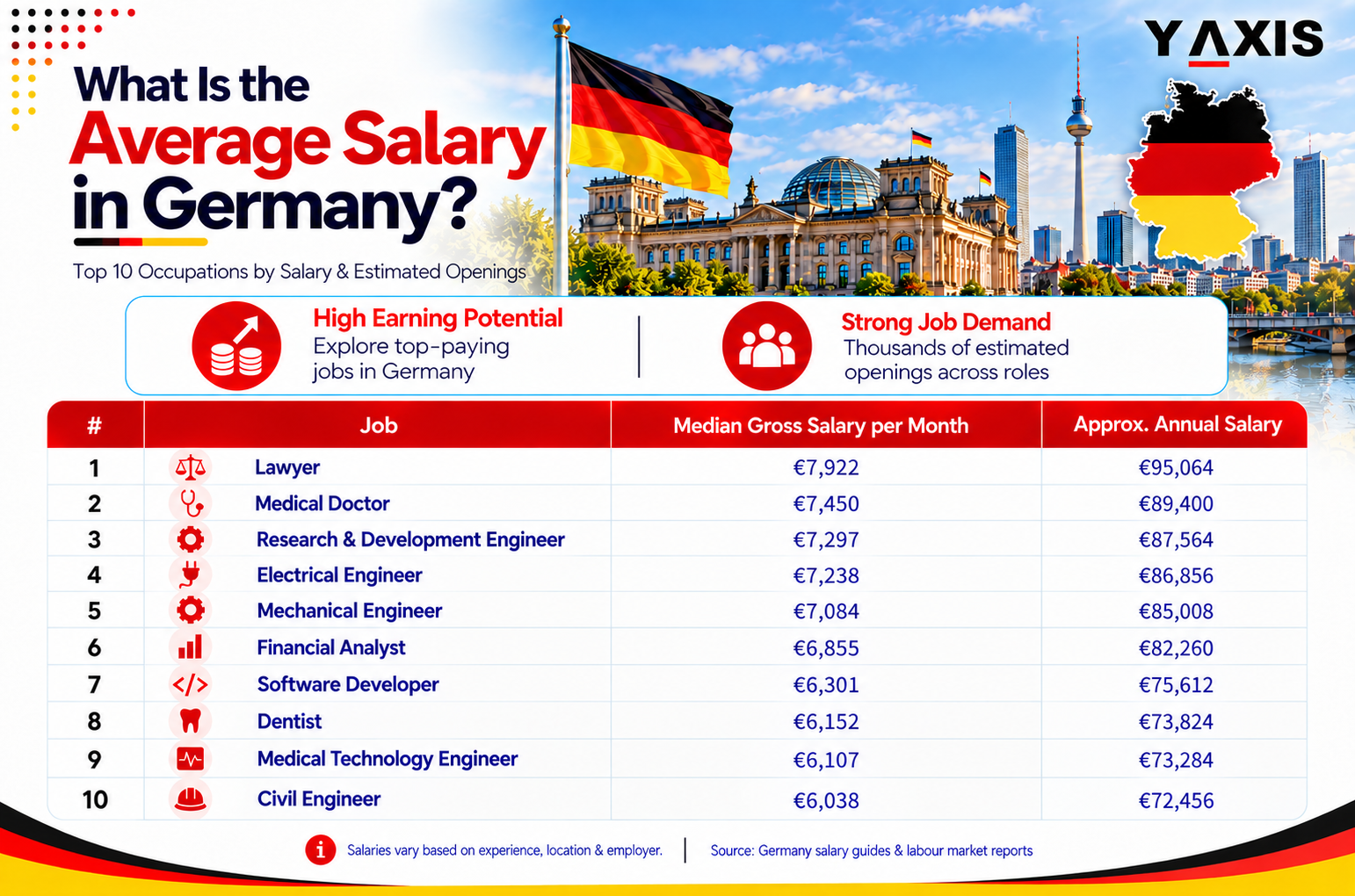
Top 10 Highest-Paying Jobs in Germany
The highest-paying jobs in Germany include medical doctors, lawyers, engineers, financial analysts, software developers and senior management roles. Many of these occupations pay more than €50,000 annually, while senior roles and workers with specialised qualifications can earn significantly more. Medical, legal, engineering, IT and finance roles are among the strongest options for higher salaries in Germany.
| Job | Median Gross Salary per Month | Approx. Annual Salary |
|---|---|---|
| Lawyer | €7,922 | €95,064 |
| Medical Doctor | €7,450 | €89,400 |
| Research & Development Engineer | €7,297 | €87,564 |
| Electrical Engineer | €7,238 | €86,856 |
| Mechanical Engineer | €7,084 | €85,008 |
| Financial Analyst | €6,855 | €82,260 |
| Software Developer | €6,301 | €75,612 |
| Dentist | €6,152 | €73,824 |
| Medical Technology Engineer | €6,107 | €73,284 |
| Civil Engineer | €6,038 | €72,456 |
*Looking for jobs in Germany? Let Y-Axis guide you through application process.
Best Cities in Germany with Most Job Opportunities
Berlin, Munich, Frankfurt, Hamburg and Stuttgart are among the best cities in Germany for job opportunities, with major employment markets in technology, finance, engineering, automotive, healthcare, logistics and manufacturing.
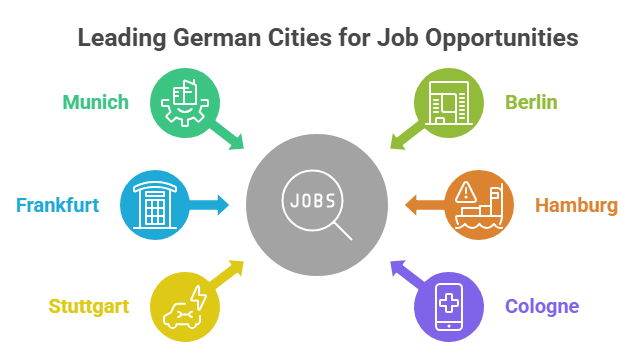
- Berlin: Technology, IT, fintech, media and healthcare
- Munich: Automotive, engineering, IT, finance and insurance
- Frankfurt: Banking, finance, insurance, fintech and IT
- Hamburg: Logistics, shipping, aviation, media and IT
- Stuttgart: Automotive, engineering, manufacturing and technology
- Cologne: Media, telecommunications, insurance, healthcare and logistics
Also Read…
3 Million Jobs in Germany over the Next Decade
Germany vs Australia: Salary, Tax and Savings
The average gross salary in Germany is €58,212 annually, excluding special payments, while Australia’s average full-time earnings are approximately AUD 108,000 annually. Germany and Australia both have well-paid jobs in IT, engineering, healthcare, finance and skilled trades, but income tax, social security contributions, housing and daily expenses affect take-home pay and savings.
| Factor | Germany | Australia |
|---|---|---|
| Gross Monthly Salary | €4,800 | AUD 9,000 |
| Gross Annual Salary | €57,600 | AUD 108,000 |
| Estimated Monthly Tax & Contributions | €1,750 (36%) | AUD 2,100 (23%) |
| Estimated Monthly Take-Home Pay | €3,050 (64%) | AUD 6,900 (77%) |
| Estimated Monthly Living Costs | €1,800 | AUD 4,500 |
| Estimated Monthly Savings | €1,250 | AUD 2,400 |
| Estimated Annual Savings | €15,000 | AUD 28,800 |
Note: Figures are estimates and may vary by income, location, and individual circumstances.
Cost of Living in Germany
The cost of living in Germany is around €1,300–€2,400 per month for a single person, including rent, utilities, groceries and transport. Munich, Frankfurt, Berlin and Hamburg generally have higher housing costs, while Leipzig, Dresden and Essen are more affordable.
| Expense | Estimated Monthly Cost |
|---|---|
| 1-Bedroom Apartment | €800–€1,500 |
| Utilities & Internet | €200–€350 |
| Groceries | €250–€400 |
| Public Transport | €58–€100 |
| Mobile Phone | €15–€30 |
| Total Basic Living Costs | €1,323–€2,380 |
Job Outlook in Germany
Germany has a stable job market with strong demand for workers in healthcare, construction, skilled trades, transport and education. The Federal Employment Agency identifies 157 shortage occupations, including nursing, construction and skilled trades, while other in-demand roles include professional drivers, cooks, childcare workers, surveyors and social workers. Around 402,000 skilled-worker vacancies are registered in Germany, with about half of advertised vacancies in shortage occupations. Demand is expected to remain strong as more workers retire and fewer younger workers enter the labour market, creating more opportunities for skilled workers to find jobs and build long-term careers in Germany.
*Want to migrate to Germany? Get expert guidance from Y-Axis professionals.
FAQs
What is the average salary in Germany per month?
The average gross salary for a full-time employee in Germany is €4,851 per month, excluding special payments. Including special payments, the average gross annual salary is €64,441. The median annual salary is €54,066.
What is the average salary in Germany after tax?
The average salary in Germany after tax is around €2,800–€3,100 per month, or approximately €34,000–€37,000 per year, for a single employee in Tax Class 1. The exact take-home salary depends on gross pay, tax class, health insurance and other deductions.
What is considered a good salary in Germany?
A gross salary of €50,000 or more per year is a useful benchmark for a good salary in Germany. Salaries of €70,000–€100,000 or more are common in experienced roles in IT, engineering, finance, medicine and management.
Which jobs have the highest salaries in Germany?
Some of the highest-paying jobs in Germany include medical doctors, lawyers, engineers, financial analysts, software developers and senior managers. Finance, information and communication, and professional, scientific and technical services have some of the highest average industry earnings.
Which jobs are in demand in Germany?
Germany has strong demand for nurses, healthcare workers, construction workers, electricians, professional drivers, childcare workers and teachers. Healthcare, construction, skilled trades, transport and education are among the sectors with significant recruitment needs.
How much does it cost to live in Germany per month?
A single person typically needs around €1,300–€2,400 per month for rent, utilities, groceries and transport. Housing costs are generally higher in Munich, Frankfurt, Berlin and Hamburg, while cities such as Leipzig, Dresden and Essen offer more affordable options.
How much can I save each month in Germany?
A worker earning around €4,800 gross per month could potentially save about €1,250 per month after estimated tax, contributions and basic living costs. Actual savings depend mainly on salary, rent, city and personal spending.
Can Australians work in Germany?
Yes. Australians can work in Germany with a residence title that permits employment. Unlike many non-EU nationals, Australians can apply for the required residence title after arriving in Germany, although they cannot start employment until they have the authorisation to work.
Can Australians apply for the Germany Opportunity Card?
Yes. Eligible Australians can apply for the Germany Opportunity Card to enter Germany and look for qualified employment without having a job offer first. The card is initially issued for up to one year and allows jobseekers to work part-time for up to 20 hours per week while searching for employment.
What visa do Australians need to work in Germany?
The visa or residence route depends on the job, qualifications and purpose of the stay. Australians can use routes including an employment residence permit, EU Blue Card or Opportunity Card. Eligible young Australians can also use Germany's Working Holiday programme, which allows a stay of up to 12 months.
Tags:
Germany Salary
Average Salary in Germany
Germany Jobs
High-Paying Jobs in Germany
In-Demand Jobs in Germany
Best Cities for Jobs in Germany
Cost of Living in Germany
Germany vs Australia Salary
Working in Germany as an Australian
Germany Work Visa for Australians
Germany Job Outlook
Share
Latest Article
Popular Post
Trending Article
Posted On October 09 2026
What is the Average Salary in Germany?