


Posted on December 24 2025
Fast-Track Hiring Options in Canada for Skilled Professionals

By , Editor
Updated December 24 2025
Canada has four main fast-track hiring options for skilled professionals to help address around 492,500 current job vacancies across in-demand sectors such as technology, engineering, healthcare, logistics, construction, finance, and skilled trades. According to official labour market projections, these vacancies are expected to increase rise 8.1 million by 2033 and the government plans to introduce more fast-track hiring options due to ongoing labour shortages.
The Canadian government is planning to invest over $1 trillion across infrastructure, clean energy, digital transformation, healthcare, housing, and advanced manufacturing. In addition, $1.7 billion has been committed to attracting global talent through initiatives such as the Canada Global Impact+ Research Talent Initiative, aimed at strengthening research, innovation, and high-skilled workforce development. With these large-scale investments, Canada is increasingly relying on fast-track hiring pathways and streamlined work visa processes to attract skilled professionals and support long-term economic growth.
*Looking for fast-track hiring to work in Canada? Let Y-Axis guide you through the application process.
Fast-Track Hiring Options Available in Canada for Skilled Workers
Canada offers fast-track hiring options designed to help employers recruit skilled professionals quickly for roles facing persistent labour shortages. These options prioritise in-demand occupations, reduce standard processing times, and provide faster access to work permits or permanent residency, depending on the pathway. Skilled professionals can use these routes to enter the workforce sooner while building long-term career opportunities.
The main fast-track hiring options available in Canada include:
Global Skills Strategy (GSS)
The Global Skills Strategy is one of Canada’s fastest hiring pathways, offering work permit processing in as little as two weeks for eligible skilled roles. It is commonly used for occupations in technology, engineering, and STEM fields where employers require specialised talent urgently. The Global Talent Stream, a key component of GSS, allows innovative companies to hire highly skilled professionals quickly for critical positions.
Express Entry
Express Entry is Canada’s primary system for fast-tracking skilled professionals into permanent residency. It manages major skilled worker programs and ranks candidates based on experience, education, language ability, and labour market demand. While a job offer is not always required, candidates working in in-demand sectors benefit from faster selection and priority processing.
Provincial Nominee Programs (PNPs)
Provincial Nominee Programs allow provinces to nominate skilled professionals who meet local labour market needs. Many PNP streams are employer-driven or occupation-specific, helping skilled workers secure employment faster in targeted regions. A provincial nomination significantly improves selection chances and often leads to quicker permanent residency outcomes.
Employer-Sponsored Work Permit
Employer-sponsored work permits allow Canadian employers to hire skilled professionals directly for in-demand roles. This option is widely used across sectors such as healthcare, technology, engineering, logistics, construction, and skilled trades. A valid job offer supports faster work permit processing and can also help skilled professionals transition to permanent residency through provincial or federal pathways.
Benefits of Fast-Track Hiring Options in Canada for Skilled Professionals
Fast-track hiring pathways offer skilled professionals a smoother and quicker route to working and settling in Canada. These programs are designed to reduce processing delays, prioritise in-demand occupations, and support employers facing immediate skill shortages.
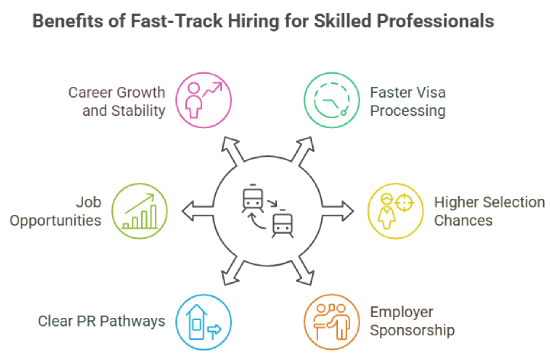
Some of the key benefits for skilled professionals to work in Canada:
- Faster visa processing
- Higher selection chances for in-demand occupations
- Access to employer sponsorship
- Clear pathways to permanent residency
- Opportunities in high-demand sectors
- Stronger career growth and stable job market
Eligibility Criteria for Fast-Track Hiring for Skilled Professionals in Canada
Fast-track hiring pathways in Canada are open to skilled professionals who meet program-specific and role-based criteria. These requirements are designed to ensure applicants are suitable for priority occupations and can meet work permit or immigration conditions without delays.
Skilled professionals must meet the following requirements:
- Work experience in occupations facing labour shortages
- Relevant education or credentials relevant to the position, particularly for regulated or specialised roles
- Proficiency in English or French to meet employment and visa standards
- A confirmed job offer for employer-led work permits or provincial nomination streams, where applicable
- Full compliance with immigration rules, including timely submission of documents, medical checks, biometrics, and security screening
Documents Required for Fast-Track Hiring for Skilled Professionals in Canada
Skilled professionals applying through fast-track hiring options must submit accurate and up-to-date documents to support their application. Having these documents ready in advance helps avoid delays and supports quicker work permit or visa processing.
Key required documents for skilled professionals include:
- A valid passport
- Updated resume or curriculum vitae (CV)
- Job offer letter or employment contract (if applicable)
- Proof of work experience, such as reference letters or employment records
- Educational certificates and academic transcripts
- Language test results (IELTS, CELPIP, or TEF, if required)
- Medical examination report from an approved panel physician
- Police clearance certificate
Step by Step Application Process for Fast-Track Hiring in Canada
Step 1: Check your Eligibility
Step 2: Gather Required Documents
Step 3: Complete a Language Test
Step 4: Create an Express Entry Profile (If Needed)
Step 5: Secure a Job Offer or Provincial Nomination
Step 6: Submit Your Visa Application
Step 7: Wait for Processing and Plan for Relocation
*Want to apply for fast-track work visa in Canada? Get expert guidance from Y-Axis.
Processing Time for Fast-Track Work Permits in Canada
Fast-track hiring processing times in Canada depend on the visa or work permit pathway. Some options, such as the Global Skills Strategy, offer decisions within weeks, while others take little longer depending on the program and application volume.
Estimated Processing Time for fast-track work permit:
|
Fast-track Pathway |
Average Processing Time |
|
Global Skills Strategy (GSS) |
2 weeks |
|
Employer-Sponsored Work Permit |
2–4 months |
|
Employer-Driven PNP Work Permit |
Vary by Province |
|
LMIA-Based Work Permit |
4–8 months |
Processing Costs for Fast-Track Work Visas in Canada
Processing costs for fast-track hiring in Canada vary depending on the work permit or visa pathway, as well as individual application requirements. Skilled professionals and employers should be prepared to cover government fees, along with mandatory third-party costs such as medical exams, language tests, or credential assessments.
Estimated Processing Costs for fast-track work permit:
|
Category |
Processing Cost (CAD) |
|
Work Permit Application Fee |
$155 |
|
Open Work Permit Holder Fee |
$100 |
|
Biometrics Fee |
$85 per person |
|
LMIA Fee (Employer Cost, if required) |
$1,000 per position |
|
Medical Examination |
$150–$350 |
|
Police Clearance Certificate |
Varies by country |
|
Language Test (if required) |
$250–$350 |
|
Credential Assessment (if required) |
$200–$300 |
Most In-Demand Sectors for Skilled Professionals in Canada
Skilled professionals targeting fast-track hiring in Canada should focus on sectors with persistent labour shortages and strong employer demand. These industries are prioritised under work permit, employer-sponsored, and provincial hiring pathways, offering faster recruitment timelines and better employment opportunities.
Key sectors for skilled professionals include:
- Information Technology (IT)
- Healthcare and Social Services
- Engineering
- Skilled Trades and Construction
- Renewable energy and Sustainability
- Finance and Professional Services
- Education
- Hospitality and Tourism
Top companies hiring Skilled Professionals in Canada
Many employers in Canada actively use fast-track hiring pathways to fill skilled roles quickly. These companies often support work permit applications or employer-driven provincial programs to address urgent workforce needs.
Top companies hiring skilled professionals include:
- Google Canada: Hiring software engineers, cloud specialists, data analysts, and AI professionals across multiple tech functions.
- Amazon: Recruiting for logistics, operations, cloud computing, software development, and warehouse leadership roles.
- Deloitte: Strong demand for consultants, cybersecurity professionals, analysts, and digital transformation experts.
- RBC (Royal Bank of Canada): Hiring in finance, IT, cybersecurity, data science, and business operations.
- Provincial Healthcare Networks: Regular recruitment of nurses, medical technologists, therapists, and healthcare support staff due to ongoing shortages.
- Construction & Skilled Trades Employers: Growing demand for electricians, plumbers, heavy equipment operators, and project managers across major projects.
Tips to improve your Chances for Fast-Track hiring for Skilled Professionals
Improving eligibility and aligning with in-demand roles increases the chances of fast-track hiring approval.
- Focus on in-demand occupations and priority sectors
- Improve English or French language test scores
- Secure a valid job offer from a Canadian employer
- Target employer-sponsored or LMIA-exempt work permit options
- Apply through employer-driven Provincial Nominee Programs
- Ensure your resume meets Canadian standards
*Want to migrate to Canada? Get end-to-end guidance from Y-Axis.
FAQs
What are fast-track hiring options in Canada for skilled professionals?
Fast-track hiring options in Canada are priority pathways that help employers hire skilled professionals faster for in-demand roles. These options reduce standard processing times and focus on occupations facing labour shortages. Some of the main fast-track routes include the Global Skills Strategy, Express Entry, Provincial Nominee Programs, and employer-sponsored work permits. Skilled professionals benefit from quicker visa approvals, faster job placement, and clearer pathways to long-term employment or permanent residency.
Who is eligible for fast-track hiring in Canada?
Eligibility for fast-track hiring in Canada depends on the pathway, but skilled professionals usually need relevant work experience, recognised qualifications, and English or French language ability. Some programs require a valid job offer, while others, such as Express Entry, do not. Applicants must also meet immigration requirements, including medical exams, biometrics, and background checks. Meeting eligibility criteria improves selection chances and supports faster processing.
Can I apply for fast-track hiring in Canada without a job offer?
Yes, some fast-track hiring options in Canada allow applications without a job offer. Express Entry selects skilled professionals based on experience, education, and language skills. Certain Provincial Nominee Programs also run occupation-based draws without employer sponsorship. However, most employer-sponsored work permits and Global Skills Strategy applications require a valid job offer and generally provide faster hiring and work permit processing.
What are the main fast-track hiring pathways in Canada?
The main fast-track hiring pathways in Canada include the Global Skills Strategy, Express Entry, Provincial Nominee Programs, and employer-sponsored work permits. The Global Skills Strategy offers two-week work permit processing for eligible roles. Express Entry fast-tracks permanent residency. Provincial programs nominate workers for local shortages, while employer sponsorship allows direct hiring for urgent roles across key sectors.
How long does fast-track hiring take in Canada?
Processing times vary by pathway. The Global Skills Strategy offers work permit processing in about two weeks for eligible roles. Express Entry permanent residence applications are typically processed within six months. Employer-sponsored work permits usually take a few weeks to a few months. Provincial Nominee Program timelines depend on the province and stream. Complete applications help avoid delays.
Which sectors benefit most from fast-track hiring in Canada?
Fast-track hiring in Canada mainly targets sectors facing ongoing labour shortages. These include information technology, healthcare and social services, engineering and infrastructure, skilled trades and construction, logistics and transportation, sustainability, finance and professional services, education, and hospitality. Skilled professionals working in these sectors are more likely to receive priority processing, employer sponsorship, and provincial nominations.
Does fast-track hiring in Canada lead to permanent residency?
Yes, fast-track hiring options can lead to permanent residency in Canada. Many skilled professionals gain Canadian work experience through employer sponsorship, Express Entry–linked roles, or Provincial Nominee Programs. This experience strengthens immigration profiles and improves eligibility for permanent residency. Programs such as Express Entry and PNPs are designed to support long-term settlement for skilled workers.
What documents are required for fast-track hiring in Canada?
Key required documents include a valid passport, updated resume, proof of work experience, educational certificates, and language test results. Employer-sponsored pathways also require a job offer or employment contract. Medical examination reports and police clearance certificates are mandatory for most applications. Submitting accurate and complete documents helps speed up fast-track hiring and work permit processing.
How can skilled professionals improve their chances of fast-track hiring in Canada?
Skilled professionals can improve their chances by focusing on in-demand occupations, improving language scores, and securing a valid job offer. Applying through employer-driven Provincial Nominee Programs or LMIA-exempt work permits can speed up processing. Preparing documents early and aligning resumes with Canadian standards also improves selection chances and reduces delays.
Is fast-track hiring in Canada suitable for international skilled professionals?
Yes, fast-track hiring options in Canada are designed to attract international skilled professionals to fill labour shortages. These pathways offer faster work permit processing, employer sponsorship opportunities, and routes to permanent residency. Skilled professionals in priority sectors such as IT, healthcare, engineering, and trades benefit most from Canada’s fast-track hiring system.
Tags:
Fast Track Hiring Canada
Skilled Worker Jobs Canada
Canada Work Visa
Visa Sponsorship Canada
Express Entry
Global Talent Stream
PNP Canada
Skilled Worker Pathways
Canada Immigration Jobs
In-Demand Jobs Canada
Share
Latest Article
Popular Post
Trending Article
Posted On March 31 2026
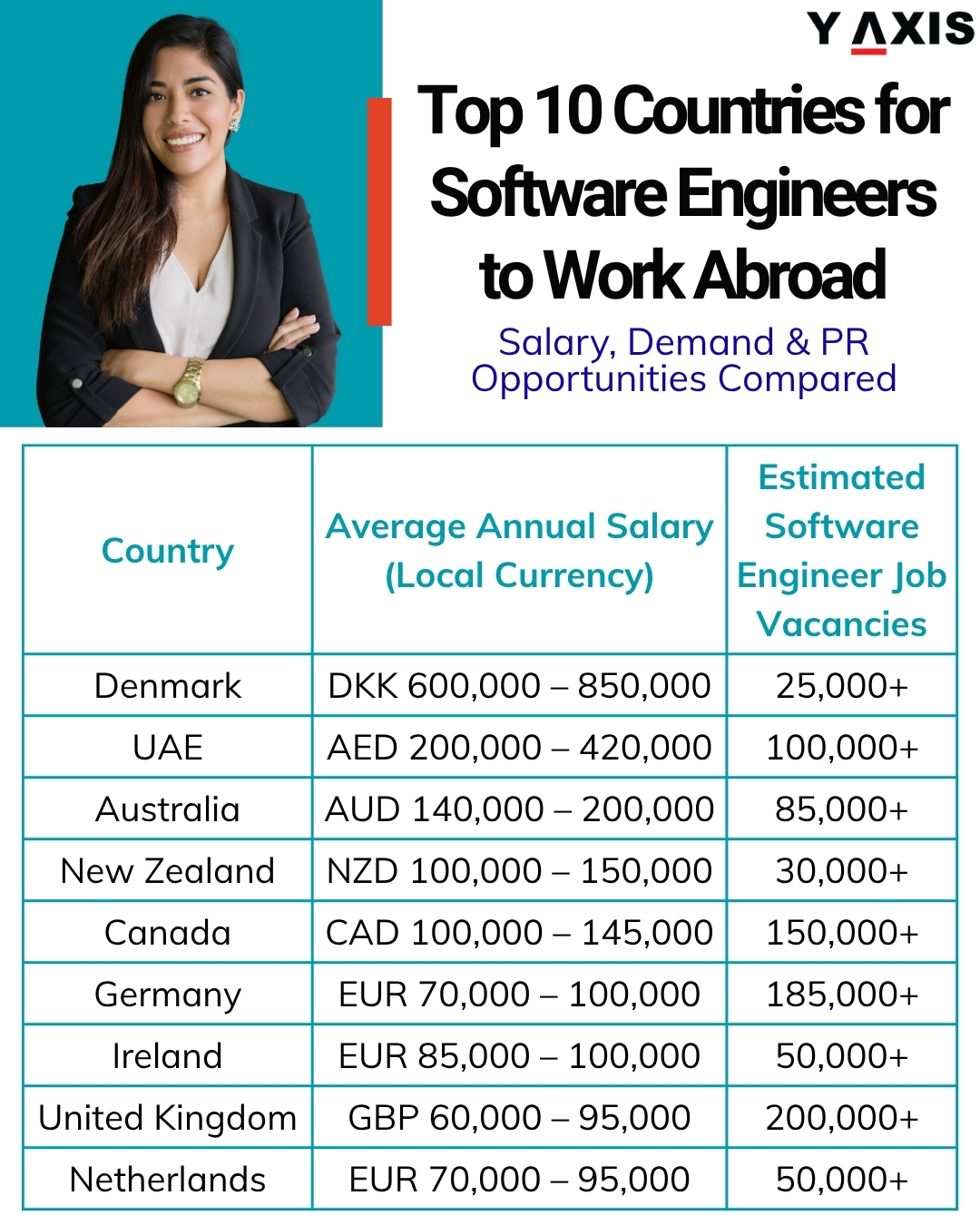
Top 10 Countries for Software Engineers to Work Abroad: Salary, Demand & PR Opportunities Compared