
Posted on October 29 2026
Australia vs. Germany for Engineering Professionals: Which Country Should You Choose?

By , Editor & Director
Updated October 29 2026
Australia and Germany offer engineering professionals competitive salaries, diverse job opportunities and career growth across multiple industries. Australia has opportunities in infrastructure, mining, construction and renewable energy, while Germany has a strong engineering sector focused on automotive, advanced manufacturing and industrial automation.
Both countries offer work visa options and pathways to long-term settlement. However, they differ in salaries, qualification recognition, language requirements, living costs and permanent residency pathways. The right choice depends on engineering specialisation, career goals, salary expectations and long-term settlement plans.
*Want to work abroad? Let Y-Axis help you through application process.
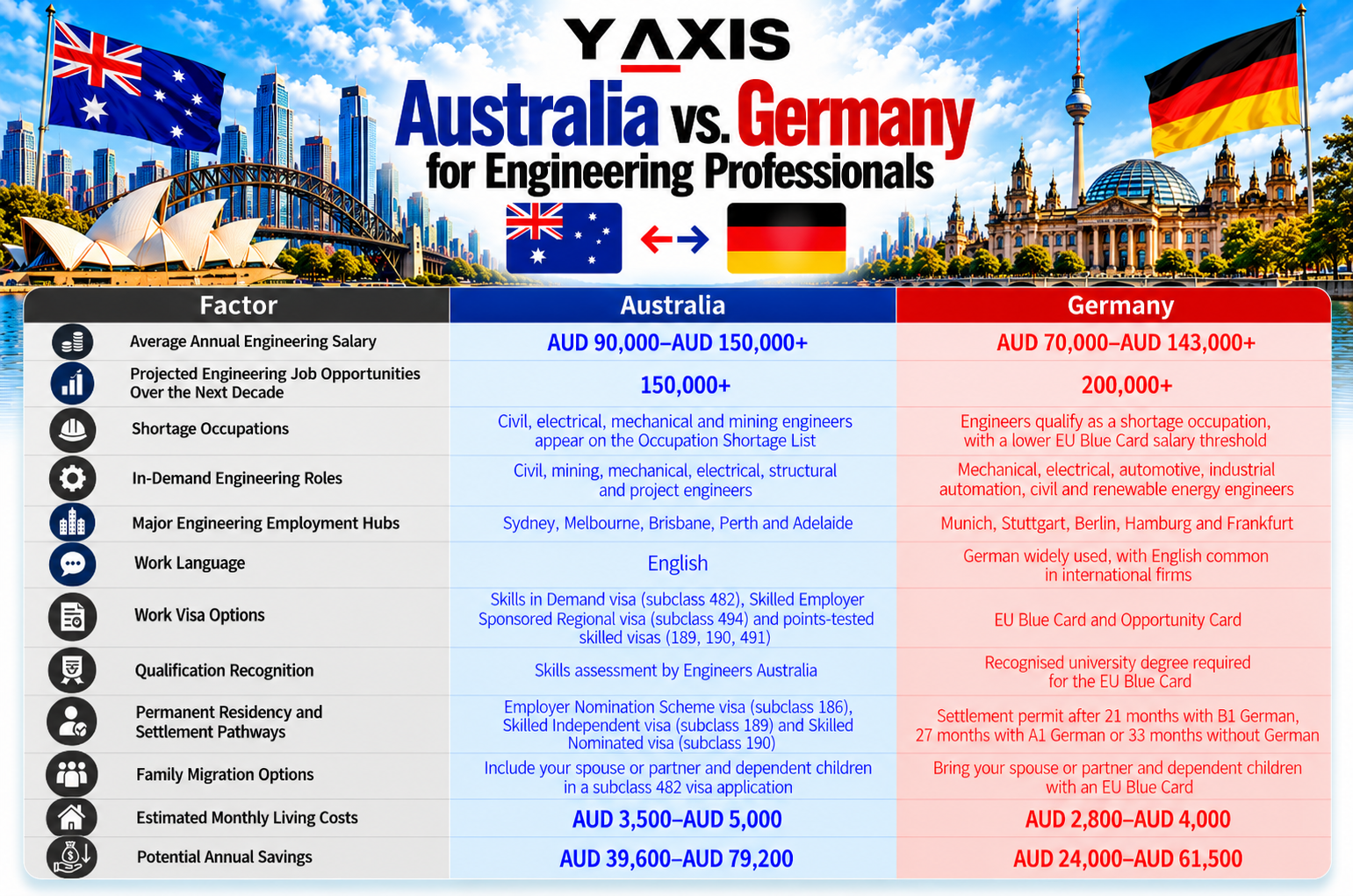
Australia vs Germany for Engineering Professionals: Quick Comparison
Australia offers English-speaking workplaces and skilled migration pathways, while Germany provides access to Europe's established industrial and manufacturing sectors. The key differences lie in salary potential, language requirements, living costs, work visa options and pathways to permanent residency.
| Factor | Australia | Germany |
|---|---|---|
| Average Annual Engineering Salary | AUD 90,000–AUD 150,000+ | €45,000–€90,000+ |
| Projected Engineering Job Opportunities Over the Next Decade | 150,000+ | 200,000+ |
| Shortage Occupations | Civil, electrical, mechanical and mining engineers appear on the Occupation Shortage List | Engineers qualify as a shortage occupation, with a lower EU Blue Card salary threshold |
| In-Demand Engineering Roles | Civil, mining, mechanical, electrical, structural and project engineers | Mechanical, electrical, automotive, industrial automation, civil and renewable energy engineers |
| Major Engineering Employment Hubs | Sydney, Melbourne, Brisbane, Perth and Adelaide | Munich, Stuttgart, Berlin, Hamburg and Frankfurt |
| Work Language | English | German widely used, with English common in international firms |
| Work Visa Options | Skills in Demand visa (subclass 482), Skilled Employer Sponsored Regional visa (subclass 494) and points-tested skilled visas (189, 190, 491) | EU Blue Card and Opportunity Card |
| Qualification Recognition | Skills assessment by Engineers Australia | Recognised university degree required for the EU Blue Card |
| Permanent Residency and Settlement Pathways | Employer Nomination Scheme visa (subclass 186), Skilled Independent visa (subclass 189) and Skilled Nominated visa (subclass 190) | Settlement permit after 21 months with B1 German, 27 months with A1 German or 33 months without German |
| Estimated Monthly Living Costs | AUD 3,500–AUD 5,000 | €1,800–€2,500 |
| Family Migration Options | Include your spouse or partner and dependent children in a subclass 482 visa application | Bring your spouse or partner and dependent children with an EU Blue Card |
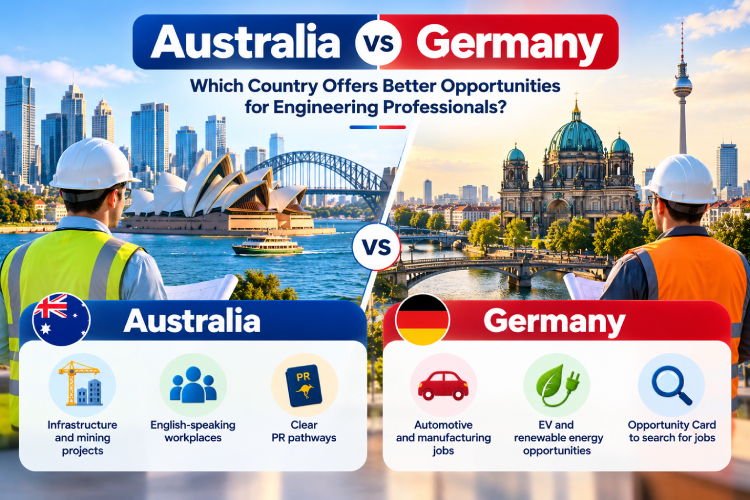
Australia vs Germany: Which Country Offers Better Opportunities for Engineering Professionals?
Australia offers engineering professionals jobs in infrastructure, mining and renewable energy, along with English-speaking workplaces and skilled migration pathways. Germany offers engineering careers in automotive manufacturing, mechanical design, industrial automation and clean energy.
Australia is a strong choice if you want:
- Roles in civil, structural, mining, mechanical and electrical engineering
- Projects in infrastructure, mining and renewable energy
- English-speaking workplaces across engineering industries
- Employer sponsorship through the Skills in Demand visa (subclass 482)
- PR pathways through the Employer Nomination Scheme (subclass 186), Skilled Independent visa (subclass 189) or Skilled Nominated visa (subclass 190)
- Employer superannuation contributions for retirement savings
*Planning to work in Australia? Get expert guidance from Y-Axis professionals.
Germany is a strong choice if you want:
- Jobs in automotive, mechanical, manufacturing and automation engineering
- Opportunities in electric vehicles and renewable energy
- Reduced EU Blue Card salary thresholds for shortage occupations
- The Opportunity Card to search for jobs without a job offer
- Faster settlement pathways with German language skills
- Family reunification options for your spouse and children
*Planning to work in Germany? Get expert guidance from Y-Axis professionals.
Australia vs Germany: Salary, Living Costs and Savings for Engineering Professionals
Australia offers high-paying salaries for engineering professionals in mining, infrastructure and electrical engineering. Germany provides strong career opportunities in automotive, mechanical engineering and industrial automation, alongside public services and affordable housing in many cities. Comparing salaries, taxes, rent and daily expenses helps engineers assess potential savings in both countries.
| Factor | Australia | Germany |
|---|---|---|
| Annual Engineering Salary (Before Tax) | AUD 90,000–AUD 150,000 | €45,000–€90,000 |
| Monthly Gross Salary | AUD 7,500–AUD 12,500 | €3,750–€7,500 |
| Estimated Monthly Take-Home Pay | AUD 5,900–AUD 9,200 | €2,400–€4,300 |
| Monthly Rent for a 1-Bedroom City-Centre Apartment | AUD 1,700–AUD 3,100 | €600–€1,800 |
| Monthly Grocery Costs | AUD 550–AUD 700 | €250–€350 |
| Monthly Public Transport Costs | AUD 120–AUD 225 | €63–€120 |
| Monthly Utilities, Internet and Mobile | AUD 250–AUD 350 | €200–€400 |
| Estimated Total Monthly Living Costs | AUD 2,600–AUD 4,400 | €1,100–€2,700 |
| Potential Monthly Savings | AUD 3,300–AUD 6,600 | €1,300–€3,200 |
| Potential Annual Savings | AUD 39,600–AUD 79,200 | €15,600–€38,400 |
| Lower-Cost Cities for Engineers | Adelaide, Perth and Brisbane | Leipzig and Dresden |
| Higher-Cost Engineering Cities | Sydney and Melbourne | Munich and Frankfurt |
| Retirement Benefits | 12% employer superannuation contribution | State pension insurance (9.3% each from employer and employee) |
*Plan Your Engineering Career Abroad? Book a Free Consultation with Y-Axis Today.
FAQs
Which country is better for engineers, Australia or Germany?
Australia is a strong option for civil, mining, mechanical and electrical engineers seeking English-speaking workplaces and skilled migration pathways. Germany offers opportunities in automotive, mechanical, manufacturing and industrial automation engineering.
Which country pays engineers more, Australia or Germany?
Australia often offers higher gross salaries in mining, infrastructure and electrical engineering. Germany offers competitive salaries in automotive, mechanical engineering and industrial automation. Earnings depend on experience, specialisation, employer and location.
Is it easy for engineers to get a job in Australia?
Engineers can find opportunities in civil infrastructure, mining, construction, electrical engineering and renewable energy. Job prospects depend on experience, qualifications and employer requirements. Engineers applying through migration pathways may need a skills assessment from Engineers Australia.
Is it easy for engineers to get a job in Germany?
Germany offers engineering jobs in automotive manufacturing, mechanical design, industrial automation and renewable energy. Relevant qualifications and industry experience improve job prospects, while German language skills can expand employment options.
Do engineers need to speak German to work in Germany?
German is not mandatory for every engineering job. Some multinational companies offer English-speaking roles, but German language skills help engineers access more vacancies, communicate with colleagues and integrate into the workplace.
Which visa is best for engineers moving to Australia?
Engineers with a job offer may consider the Skills in Demand visa (subclass 482). Those pursuing skilled migration without employer sponsorship can explore the Skilled Independent visa (subclass 189) and Skilled Nominated visa (subclass 190), depending on their occupation, points score and visa requirements.
What is the EU Blue Card, and can engineers apply for it?
The EU Blue Card allows qualified non-EU professionals to work in Germany with a recognised qualification, a suitable job offer and the required salary. Engineers can apply if they meet these requirements. Lower salary thresholds apply to shortage occupations, including designated engineering occupations.
Can engineers get permanent residency in Australia or Germany?
Australia offers permanent residency through pathways such as the Employer Nomination Scheme (subclass 186), Skilled Independent visa (subclass 189) and Skilled Nominated visa (subclass 190). In Germany, EU Blue Card holders can apply for a settlement permit after 27 months of qualifying employment, or after 21 months with German language skills at B1 level, provided they meet the remaining requirements.
Which country has a lower cost of living for engineers, Australia or Germany?
Living costs depend on the city and lifestyle. Some German cities have lower housing costs than Sydney and Melbourne, while taxes and social security contributions affect take-home pay. Comparing salaries, rent, transport and everyday expenses helps estimate potential savings.
Can engineers move to Australia or Germany without a job offer?
Yes. Australia's Skilled Independent visa (subclass 189) does not require employer sponsorship or a job offer, but applicants must meet its points-tested requirements. Germany's Opportunity Card (Chancenkarte) allows people who meet its qualification, language, financial and other requirements to enter the country and search for work without a prior job offer.
Tags:
Australia vs Germany
engineering jobs in Australia
engineer salary in Australia
engineering jobs in Germany
Australia skilled migration
Germany EU Blue Card
engineering visa Australia
Australia PR for engineers
work abroad for engineers,
engineering career opportunities
Share
Latest Article
Popular Post
Trending Article
Posted On October 29 2026
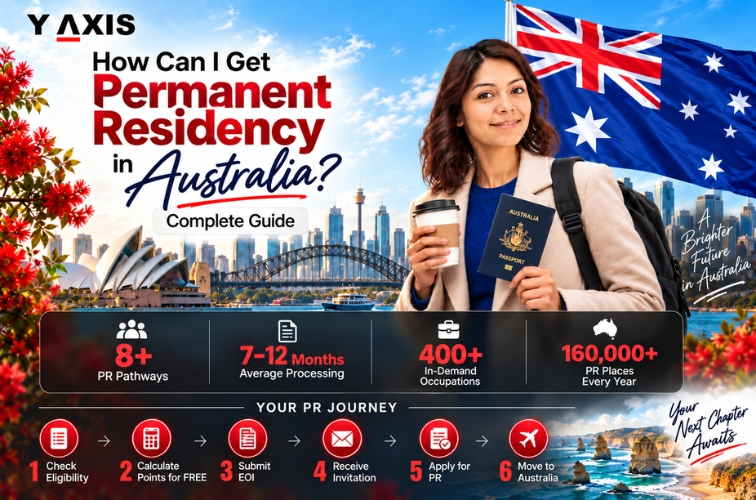
How Can I Get Permanent Residency in Australia?