

Posted on February 16 2026
10 Million Jobs in Europe over the Next Decade – Freshers, Experienced & Professionals Can Apply

By , Editor
Updated February 16 2026
Europe is expected to create over 10 million new and replacement jobs over the next decade, driven by labour shortages, workforce retirements, and major economic investments. With more than 30% of workers projected to retire, employers are expanding hiring across key industries, increasing jobs in Europe for freshers, skilled workers, and experienced professionals.
The European Union has committed over €1.8 trillion to infrastructure, clean energy, housing, and digital transformation. These investments are accelerating Europe job opportunities in healthcare, IT, engineering, construction, logistics, manufacturing, and renewable energy. The Europe job outlook remains strong as companies continue to address skill shortages. Top countries such as Germany, Ireland, the Netherlands, France, and Sweden are actively hiring foreign workers. Many employers are offering Europe visa sponsorship jobs and work permit options like the EU Blue Card, providing excellent long-term career opportunities.
*Want to work in Europe? Avail Y-Axis Resume Marketing Services to find the right job faster.
Why Europe is a Top Destination for Global Job Opportunities?
- High demand for skilled workers due to labour shortages and workforce retirements
- Competitive salaries with strong long-term career growth opportunities
- Opportunity to live and work in multiple European countries
- Access to free or subsidised healthcare and social security benefits
- Opportunities in leading global industries such as IT, healthcare, engineering, and clean energy
- Pathways to long-term residence and permanent settlement in many countries
Europe Job Market Outlook and Employment Growth Over the Next Decade
The Europe job market outlook remains highly positive, with millions of new jobs expected over the next decade due to economic expansion, workforce retirements, and growing demand for skilled professionals. Many European countries are facing long-term labour shortages, creating strong Europe job opportunities across both technical and non-technical sectors. Rapid investment in infrastructure, clean energy, healthcare, and digital transformation is further accelerating employment growth.
Key Europe job market trends over the next decade include:
- Over 10 million new and replacement jobs expected across Europe
- Strong demand for skilled workers in healthcare, IT, engineering, and construction
- Increasing Europe visa sponsorship jobs due to labour shortages
- Rapid growth in renewable energy, technology, and infrastructure sectors
- Rising demand for both freshers and experienced professionals
- Expanding opportunities for foreign workers across multiple European countries
Also Read…
Fast-Track Hiring Options in Europe for Skilled Professionals
Most In-Demand Jobs in Europe over the Next Decade
Europe is facing ongoing labour shortages, creating strong demand across several industries. As economies grow and more workers retire, employers are increasing hiring to fill essential roles. These jobs in Europe offer stable employment, competitive salaries, and long-term career opportunities.
Many employers are also offering Europe visa sponsorship jobs to attract skilled workers and address workforce gaps. As a result, Europe job opportunities are expected to remain strong across multiple sectors over the next decade.
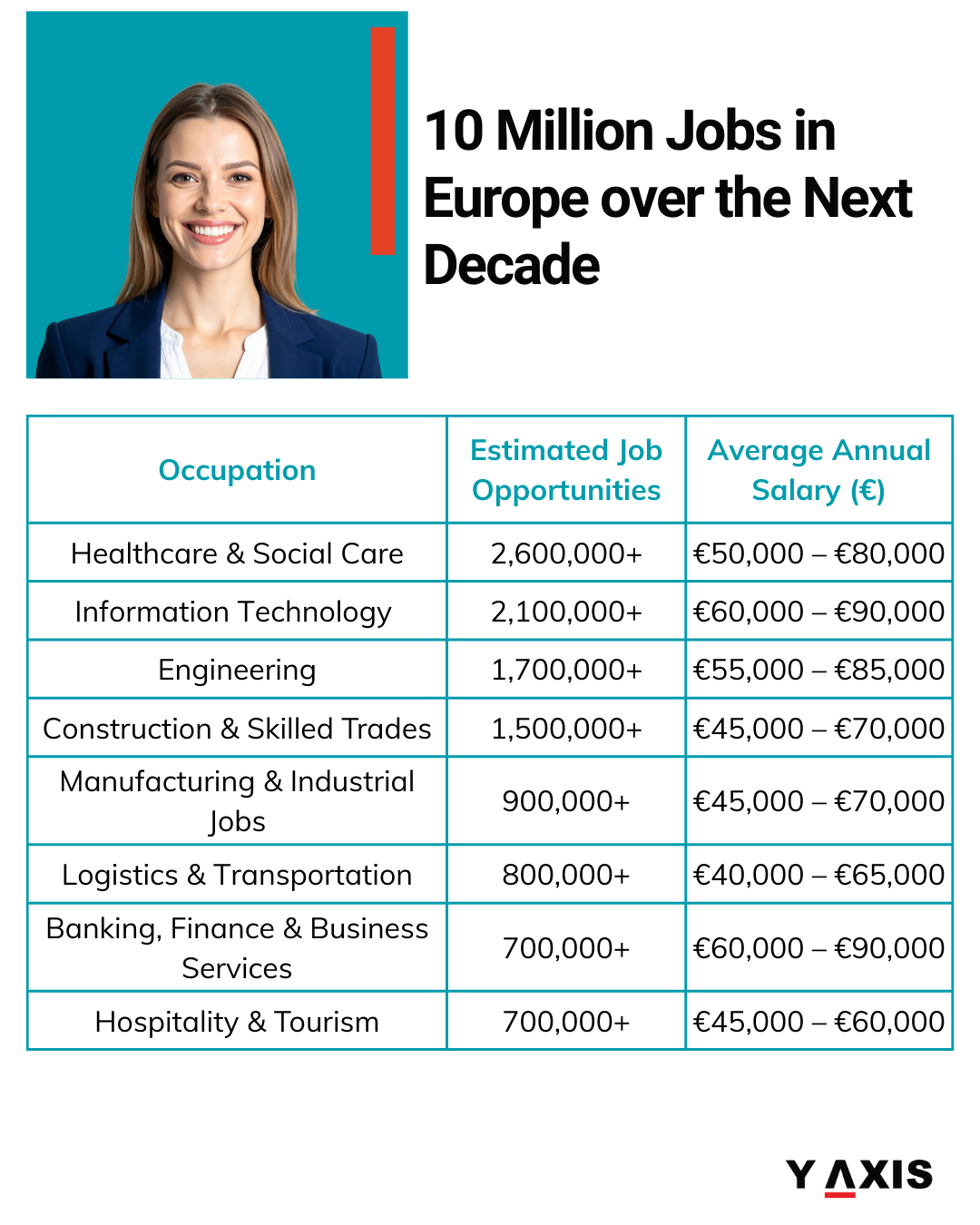
Most in-demand jobs in Europe over the next decade include:
|
Occupation |
Estimated Job Opportunities |
Average Annual Salary (€) |
|
Healthcare & Social Care |
2,600,000+ |
€50,000 – €80,000 |
|
Information Technology |
2,100,000+ |
€60,000 – €90,000 |
|
Engineering |
1,700,000+ |
€55,000 – €85,000 |
|
Construction & Skilled Trades |
1,500,000+ |
€45,000 – €70,000 |
|
Manufacturing & Industrial Jobs |
900,000+ |
€45,000 – €70,000 |
|
Logistics & Transportation |
800,000+ |
€40,000 – €65,000 |
|
Banking, Finance & Business Services |
700,000+ |
€60,000 – €90,000 |
|
Hospitality & Tourism |
700,000+ |
€45,000 – €60,000 |
Top 10 European Countries with the Most Job Opportunities
Several European countries are experiencing labour shortages and actively hiring skilled and entry-level workers across multiple industries. Strong economies, growing industries, and workforce retirements are increasing jobs in Europe, especially in countries investing heavily in technology, healthcare, infrastructure, and clean energy. Many employers in these countries also offer Europe visa sponsorship jobs, making them popular destinations for foreign workers seeking long-term career opportunities.
Top European countries with the most job opportunities include:
|
Country |
In-Demand Sectors |
Average Annual Salary (€) |
|
Germany |
IT, Engineering, Healthcare, Manufacturing, Skilled Trades |
€55,000 – €85,000 |
|
United Kingdom (UK) |
IT, Healthcare, Engineering, Finance, Construction |
€52,000 – €87,000 |
|
Ireland |
IT, Finance, Healthcare, Pharmaceuticals, Technology |
€60,000 – €95,000 |
|
Netherlands |
IT, Data & AI, Engineering, Logistics, Finance |
€55,000 – €90,000 |
|
Switzerland |
Banking, IT, Engineering, Pharmaceuticals, Finance |
€80,000 – €120,000 |
|
France |
Engineering, IT, Healthcare, Aerospace, Construction |
€45,000 – €75,000 |
|
Sweden |
IT, Engineering, Renewable Energy, Manufacturing |
€50,000 – €80,000 |
|
Spain |
IT, Healthcare, Construction, Hospitality, Tourism |
€40,000 – €60,000 |
|
Austria |
Engineering, Manufacturing, IT, Construction, Healthcare |
€50,000 – €75,000 |
|
Portugal |
IT, Technology, Startups, Tourism, Business Services |
€40,000 – €55,000 |
Best Paying Jobs in Europe and Growing Career Opportunities
Europe offers a wide range of high paying jobs across industries facing skill shortages and strong economic growth. Many of these roles are in technology, healthcare, engineering, and finance, where employers are actively hiring skilled professionals. These jobs in Europe provide excellent salaries, long-term career stability, and strong Europe job opportunities due to ongoing demand.
Best paying jobs in Europe with strong career opportunities include:
|
Sector |
High-Paying Job Roles |
Job Outlook |
|
IT and Software |
Software Engineers, AI Specialists, Cybersecurity Experts, Cloud Engineers |
Very High |
|
Engineering |
Civil Engineers, Mechanical Engineers, Electrical Engineers, Engineering Managers |
Very High |
|
Accounting and Finance |
Financial Managers, Accountants, Investment Analysts, Auditors |
High |
|
Human Resource Management |
HR Managers, Talent Acquisition Specialists, HR Business Partners |
Moderate to High |
|
Hospitality |
Hotel Managers, Chefs, Hospitality Managers, Tourism Specialists |
Moderate to High |
|
Sales and Marketing |
Sales Managers, Digital Marketing Specialists, Business Development Managers |
High |
|
Healthcare |
Doctors, Medical Specialists, Pharmacists, Healthcare Managers |
Very High |
|
STEM |
Data Scientists, Researchers, AI Engineers, Technology Specialists |
Very High |
|
Teaching |
Secondary School Teachers, International School Teachers, Language Teachers |
Moderate to High |
|
Nursing |
Registered Nurses, Specialist Nurses, Elderly Care Nurses |
Very High |
Who Can Apply for Jobs in Europe?
Europe offers strong job opportunities for graduates, skilled professionals, and experienced workers across high demand sectors such as healthcare, IT, engineering, finance, construction, logistics, manufacturing, and education.
Due to ongoing labour shortages and workforce retirements, many employers are actively hiring foreign workers to fill critical roles. Qualified candidates with a job offer can apply for Europe visa sponsorship jobs or work permits such as the EU Blue Card, providing access to long-term employment and career growth.
Graduates and Entry-Level Candidates
Graduates can apply for entry-level jobs in Europe in roles such as IT support, customer service, administration, hospitality, healthcare assistance, and logistics. Many companies offer graduate programs and training opportunities, allowing candidates to gain international work experience and start their careers.
Mid-Level Professionals
Professionals with 2–8 years of experience are in high demand across IT, healthcare, engineering, finance, and construction. Employers are actively offering Europe visa sponsorship jobs to attract qualified workers and fill skill shortages.
Skilled and Senior Professionals
Experienced professionals are needed in sectors such as technology, healthcare, engineering, finance, and manufacturing. These roles offer higher salaries, leadership opportunities, and long-term career growth through skilled worker visas and EU Blue Card programs.
Read more…
Visa Sponsorship Jobs in Europe for Skilled Professionals
How to Apply for Jobs in Europe from Abroad?
Europe has a strong demand for skilled and qualified workers across industries such as healthcare, IT, engineering, construction, and logistics. Due to ongoing labour shortages, many employers are actively hiring foreign workers and offering Europe visa sponsorship jobs. With the right qualifications, skills, and preparation, candidates can access a wide range of Europe job opportunities and build long-term careers in leading European countries.
Step 1: Identify countries and industries with high demand based on your skills and experience.
Step 2: Create a European-style CV highlighting your qualifications, skills, and relevant work experience.
Step 3: Apply through job portals such as LinkedIn, Indeed, and company career websites.
Step 4: Attend virtual interviews and get a job offer
Step 5: Apply for a Work Visa
*Want to apply for Jobs in Europe? Sign up with Y-Axis Resume Marketing Services to find the right job faster.
Work Visa Options in Europe for Foreign Professionals
Europe offers several work visa options for foreign professionals to live and work legally across its member countries. Due to ongoing labour shortages, many employers are offering Europe visa sponsorship jobs and supporting skilled workers through various work permit programs. These visas allow qualified candidates to access Europe job opportunities and build long-term careers across growing industries.
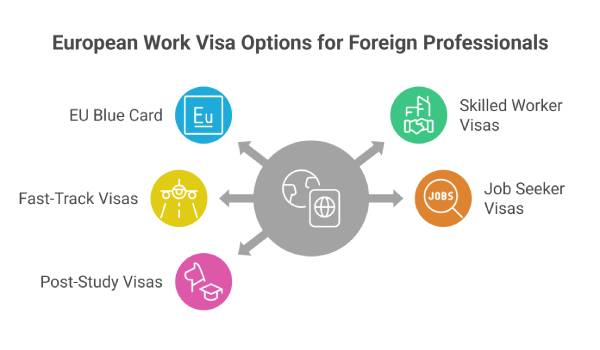
Main work visa options in Europe for foreign professionals include:
EU Blue Card
The EU Blue Card is one of the most common visas for highly skilled professionals with a valid job offer and required salary level. It allows foreign workers to live and work in most EU countries and provides a pathway to long-term residency and career stability.
Country-Specific Skilled Worker Visas
Many European countries offer skilled worker visas to hire foreign professionals in shortage occupations. Examples include Germany’s Skilled Worker Visa, Ireland’s Critical Skills Employment Permit, the UK Skilled Worker Visa, and the Netherlands Highly Skilled Migrant Visa.
Fast-Track and Talent Visas
Fast-track and talent visas are designed for highly skilled professionals, especially in technology, engineering, and research fields. These visas offer faster processing and simplified requirements, allowing professionals to work in Europe more quickly.
Job Seeker Visas
Some countries, such as Germany and Austria, offer job seeker visas that allow professionals to enter the country without a job offer and search for employment. Once a job is secured, the visa can be converted into a work permit or EU Blue Card.
Post-Study Work Visas
Post-study work visas allow international graduates to stay and work in Europe after completing their studies. Graduates can gain work experience and later apply for skilled worker visas or long-term work permits.
Step-by-Step Application Process for Europe Work Visa from Abroad
Step 1: Secure a job offer from a European employer
Step 2: Check your visa eligibility requirements
Step 3: Gather essential documents including your passport, job offer letter, qualifications, and work experience proof
Step 4: Apply through the official embassy or immigration website of the destination country
Step 5: Once approved, travel to Europe and begin working legally
*Want to apply for Europe Work Visa? Get expert guidance from Y-Axis.
Cost of Living in Europe for Skilled Workers and Professionals
The cost of living in Europe varies depending on the country, city, and lifestyle. Western and Northern European countries such as Switzerland, Germany, and the Netherlands generally have higher living costs, while countries like Spain and Portugal offer more affordable options. Despite higher expenses in some regions, competitive salaries and strong Europe job opportunities help professionals maintain a good standard of living.
Average monthly living costs in Europe include:
|
Expense Category |
Average Monthly Cost (€) |
|
Accommodation (Rent) |
€700 – €1,500 |
|
Food and Groceries |
€250 – €400 |
|
Transportation |
€50 – €150 |
|
Utilities and Internet |
€100 – €200 |
|
Health Insurance |
€50 – €150 |
|
Total Estimated Cost |
€1,150 – €2,400 |
Best Time to Apply for Jobs in Europe for Skilled Professionals
Europe offers job opportunities throughout the year, but certain periods have higher hiring activity. Many employers recruit continuously due to ongoing labour shortages, especially in healthcare, IT, engineering, and construction. Applying during peak hiring seasons can improve your chances, but skilled professionals can find jobs in Europe year-round.
Key hiring periods in Europe for skilled professionals include:
- January to March: Peak hiring season with the highest number of job openings
- April to June: Strong hiring across IT, healthcare, engineering, and construction
- September to October: Second major hiring period after summer holidays
- July to August: Slower hiring due to vacation season, but hiring continues in essential sectors
- November to December: Limited hiring, but some employers continue recruiting for urgent roles
- Year-round: Ongoing hiring due to labour shortages and continuous demand for skilled workers
Tips to Increase Your Chances of Getting a Job in Europe
Europe offers strong job opportunities across multiple industries, but competition can be high for certain roles. Employers are actively hiring skilled workers, especially in sectors facing labour shortages.
Follow these tips to improve your chances of getting hired:
- Apply for jobs in high demand sectors such as healthcare, IT, engineering, and construction
- Prepare a professional European-style CV highlighting your relevant skills and experience
- Apply through trusted job portals such as LinkedIn, Indeed, and company career websites
- Improve your English communication skills and technical expertise
- Apply to multiple countries to increase your job opportunities
- Gain relevant certifications and work experience in your field
FAQs
Are there job opportunities in Europe for foreign workers?
Yes, there are strong job opportunities in Europe for foreign workers due to labour shortages, workforce retirements, and economic expansion. Many European countries are actively hiring international professionals across sectors such as healthcare, IT, engineering, construction, logistics, and manufacturing. Employers are offering Europe visa sponsorship jobs to fill skill gaps and support business growth. These jobs in Europe provide competitive salaries, stable employment, and long-term career opportunities for skilled workers and professionals seeking international work experience and career advancement.
Which countries have the most job opportunities in Europe?
Germany, the United Kingdom, Ireland, the Netherlands, Switzerland, France, Sweden, Denmark, Norway, and Spain offer the most Europe job opportunities due to strong economies and labour shortages. Germany leads in engineering and healthcare, while Ireland and the Netherlands offer excellent IT and technology roles. The UK provides opportunities in finance, healthcare, and construction. Many employers in these countries offer Europe visa sponsorship jobs, making them top destinations for foreign workers seeking stable employment and long-term career growth.
What are the most in-demand jobs in Europe?
The most in-demand jobs in Europe include healthcare professionals, software developers, engineers, construction workers, logistics professionals, and renewable energy specialists. Nurses, caregivers, and doctors are highly needed due to ageing populations. IT roles such as cybersecurity specialists, data analysts, and AI engineers are also growing rapidly. Skilled trades such as electricians and welders are in demand. These Europe job opportunities offer competitive salaries, visa sponsorship options, and excellent career growth for qualified professionals across multiple industries.
Can freshers apply for jobs in Europe?
Yes, freshers can apply for entry-level jobs in Europe in sectors such as IT support, hospitality, logistics, customer service, and administration. Many companies offer graduate programs, internships, and training opportunities to help fresh graduates gain experience. Europe job opportunities for freshers are increasing due to labour shortages across industries. Entry-level jobs provide valuable international work experience, career development, and opportunities to grow into higher-paying roles over time with the right skills and experience.
Do European employers offer visa sponsorship jobs?
Yes, many European employers offer Europe visa sponsorship jobs to hire foreign workers, especially in sectors facing labour shortages such as healthcare, IT, engineering, construction, and manufacturing. Visa sponsorship allows professionals to legally live and work in Europe. Countries such as Germany, Ireland, the Netherlands, and the UK actively sponsor skilled professionals. These Europe job opportunities provide stable employment, career growth, and pathways to long-term residency for qualified foreign workers.
What is the EU Blue Card and who can apply?
The EU Blue Card is a work permit designed for highly skilled foreign professionals who have a valid job offer and meet salary requirements. It allows workers to live and work in most European countries and provides access to long-term employment. Professionals in IT, engineering, healthcare, and finance commonly qualify. The EU Blue Card provides access to Europe job opportunities, career growth, and pathways to permanent residency, making it one of the best visa options for skilled foreign workers.
What is the average salary for jobs in Europe?
The average salary for jobs in Europe ranges from €40,000 to €90,000 per year depending on the country, industry, and experience level. IT professionals, engineers, and healthcare workers earn higher salaries, especially in countries such as Switzerland, Germany, and Ireland. Skilled workers in construction and logistics also earn competitive wages. These Europe job opportunities provide financial stability, career advancement, and strong earning potential for professionals working across different sectors.
Is it easy to get a job in Europe as a foreign worker?
Getting a job in Europe is easier for professionals with skills in high demand sectors such as healthcare, IT, engineering, and construction. Labour shortages have increased Europe job opportunities for foreign workers. Many employers offer Europe visa sponsorship jobs to attract qualified candidates. Having relevant qualifications, work experience, and a professional CV improves your chances of securing employment. Applying to multiple countries and high demand sectors can further increase your chances of getting hired.
How can I apply for jobs in Europe from abroad?
You can apply for jobs in Europe through online job portals such as LinkedIn, Indeed, and company career websites. Start by preparing a professional CV and applying for relevant roles. Many employers offer Europe visa sponsorship jobs for skilled workers. After applying, attend interviews and secure a job offer. Once selected, you can apply for a work visa such as the EU Blue Card or skilled worker visa to legally live and work in Europe.
What qualifications are required to work in Europe?
The qualifications required to work in Europe depend on the job role and industry. Most Europe job opportunities require relevant education, professional skills, and work experience. IT and engineering roles require technical degrees or certifications, while healthcare jobs require medical qualifications. Skilled trades require vocational training and certifications. Meeting these requirements improves your chances of securing Europe visa sponsorship jobs and building a successful career in Europe.
Are there high paying jobs in Europe?
Yes, Europe offers many high paying jobs, especially in sectors such as IT, healthcare, engineering, and finance. Roles like software engineers, data scientists, doctors, and engineering managers earn excellent salaries. Countries such as Switzerland, Germany, Ireland, and the Netherlands offer some of the highest salaries. These Europe job opportunities provide strong financial stability, career growth, and visa sponsorship options, making Europe an attractive destination for skilled professionals seeking better earning potential.
What is the cost of living in Europe?
The cost of living in Europe varies depending on the country and city. On average, monthly living expenses range from €1,200 to €2,500, including accommodation, food, transport, and utilities. Countries such as Spain and Portugal offer more affordable living, while Switzerland and the Netherlands are more expensive. Many jobs in Europe offer competitive salaries that help professionals cover expenses and save money while maintaining a comfortable lifestyle.
Which industries are growing fastest in Europe?
The fastest growing industries in Europe include healthcare, information technology, engineering, renewable energy, construction, and logistics. These sectors are expanding due to economic growth, infrastructure projects, and clean energy investments. Europe job opportunities are increasing in these industries as employers face labour shortages. Skilled professionals in these sectors can access stable employment, visa sponsorship jobs, and long-term career growth across multiple European countries.
Can I get permanent residency after working in Europe?
Yes, many European countries offer permanent residency options for foreign workers after working legally for several years. Programs such as the EU Blue Card provide pathways to permanent residency and long-term settlement. Permanent residency allows professionals to live and work freely in Europe. Europe job opportunities provide excellent pathways for skilled workers to build stable careers and settle permanently with their families.
Are there jobs in Europe without experience?
Yes, there are entry-level jobs in Europe available for candidates without experience, especially in hospitality, logistics, customer service, retail, and administration. Many employers provide training programs to help new workers develop skills. Europe job opportunities for beginners are increasing due to workforce shortages. These roles allow freshers to gain valuable experience, improve their skills, and grow into higher-paying positions over time.
Which visa is best for working in Europe?
The EU Blue Card and skilled worker visas are the best visa options for working in Europe. These visas allow foreign professionals to live and work legally in European countries. Many employers offer Europe visa sponsorship jobs through these visa programs. The EU Blue Card is especially popular for skilled professionals and provides access to long-term employment, career growth, and permanent residency opportunities.
Do I need English to work in Europe?
Yes, English is widely used in many European workplaces, especially in international companies and industries such as IT, healthcare, engineering, and finance. Many Europe job opportunities are available for English-speaking professionals. While some jobs may require local language skills, many employers accept English-speaking candidates. Having strong English communication skills improves your chances of getting hired and advancing your career.
Is Europe good for career growth?
Yes, Europe offers excellent career growth opportunities due to strong economies, global companies, and expanding industries. Many Europe job opportunities provide competitive salaries, professional development, and international work experience. Skilled professionals can advance their careers in sectors such as IT, healthcare, engineering, and finance. Working in Europe also provides access to global networks and long-term employment opportunities.
How long does it take to get a Europe work visa?
The processing time for a Europe work visa usually ranges from 4 to 12 weeks depending on the country, visa type, and application process. EU Blue Card and skilled worker visa processing times vary by country. Many employers assist with visa sponsorship jobs, which can speed up the process. Once approved, professionals can travel to Europe and begin working legally.
Why is Europe hiring foreign workers?
Europe is hiring foreign workers due to labour shortages, ageing populations, and economic expansion across multiple industries. Many workers are retiring, creating demand for skilled professionals. Europe job opportunities are increasing in healthcare, IT, engineering, construction, and logistics. Employers are offering Europe visa sponsorship jobs to fill these roles and support long-term economic growth.
Tags:
jobs in europe
europe job opportunities
europe job outlook
work in europe
europe visa sponsorship jobs
europe employment opportunities
high demand jobs in europe
europe job market forecast
europe work visa
European countries hiring foreign worker
Share
Latest Article
Popular Post
Trending Article
Posted On February 18 2026
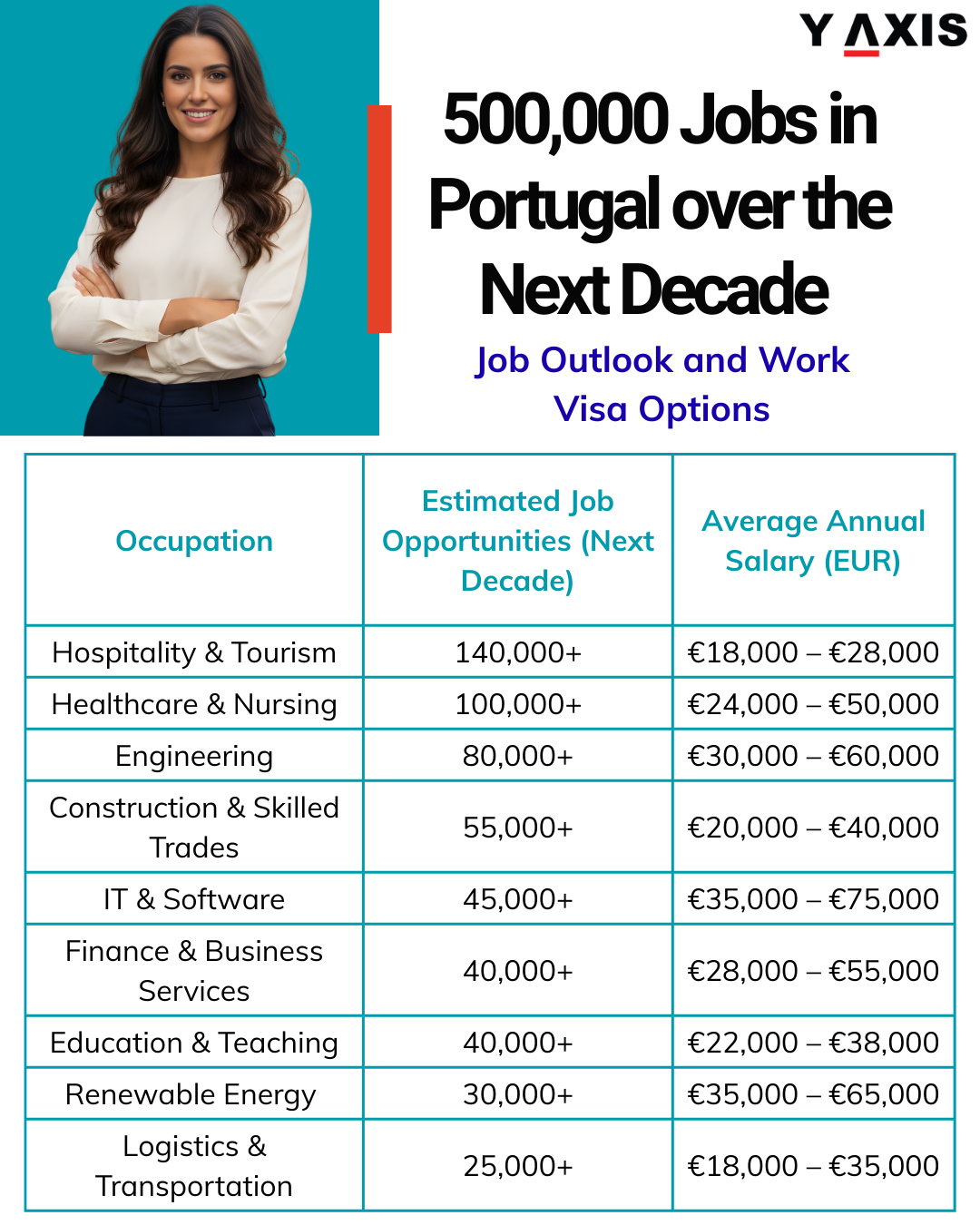
500,000 Jobs in Portugal over the Next Decade : Job Outlook and Work Visa Options